Written By: Jonathan
Fact Checked By: Caroline Dezendorf
Reviewed By: Matt Tanner
Without a second doubt, The Toyota Highlander is really built for adventure lovers, and when you addon the Toyota Highlander Bike Rack really enhances the thrill and adventurious activities as you can carry you bicycles without stress.
Also, there are many Highlander owners that actually uses their SUV for road trips, weekend camping, mountain biking and of course daily commuting as well, which is why you need a really high quality bike rack for Toyota Highlander that can protects the bikes from damages and also prevents strain on the vehicle’s structure, rear hatch or roof systems as well.
Even, the Highlander itself has a facotry-installed 2-inch hitch receiver on many trims, that makes the hitch-mounted bike racks the most preferred and truly secure option for many owners.
However, there’s a roof-mounted systems are also common, but specifically great for owners who already use crossbars or need space for more gear as well.
Which is why, these are the 5 Best Bike Rack for Toyota Highlander that provides ultimate conveience to transport a road bike, mountain bike, heavy e-bike or children’s bike as well.
Common Types of Bike Racks That are Fully Compatible with the Toyota Highlander
Choosing the right type of bike rack for the Toyota Highlander is important because vehicle size, height, rear spoiler design, and hitch configuration all affect which rack will work best.
Different racks offer varying levels of support, access, and safety, so understanding how each type fits the Highlander helps ensure you get the safest and easiest option.
The Highlander comes with a factory or aftermarket hitch and also supports roof bars, making it suitable for many rack styles.
However, some racks work better than others depending on the weight of the bikes, the number of bikes, ease of loading, and whether you need access to the rear hatch when installing the bikes.
Below are the four main bike rack types commonly used for the Toyota Highlander and how well they perform in real life.
1. Hitch-Mounted Bike Racks
Hitch-mounted racks are the most recommended option for the Toyota Highlander because the vehicle typically has a 2-inch Class III hitch receiver, which provides stronger support and better weight-carrying capacity.
This type of rack attaches directly to the hitch frame rather than to the glass, roof, or body panel, making it more secure for heavier bikes, including electric bikes, which often weigh between 50 and 70 pounds.
Many hitch racks have a tilt or swing-away feature that allows the user to open the Highlander’s rear liftgate without removing the bike, which is helpful for road trips or loading luggage.
Some models also have built-in locks, anti-rattle systems, and wheel trays for greater security and stability.
Comparing hitch sizes, a 2-inch receiver is stronger than a 1.25-inch receiver and is more compatible with heavier racks, specially those designed for e-bikes or four-bike configurations.
One advantage of a hitch rack is its lower loading height, making it easier for users of any height to mount a bike.
The disadvantage is that, depending on the rack’s design, it may block the rear camera, sensors, or license plate, and folding or swing-away designs can be more expensive.
Still, for most Highlander owners, a hitch rack is the safest and most user-friendly option.
2. Roof-Mounted Bike Rack
A roof-mounted rack is another option for the Highlander, specially for drivers who already have factory crossbars or aftermarket roof bars installed.
These racks allow bikes to be mounted directly on the vehicle’s roof, leaving the trunk and interior completely open.
Roof racks are ideal for carrying lightweight bikes like road bikes or gravel bikes and are commonly used by active cyclists who travel with other rooftop gear like cargo boxes, skis, or kayaks.
However, because the Toyota Highlander is a tall SUV, measuring approximately 68 to 70 inches long depending on trim, loading bikes from the top can be difficult, specially for shorter users or those with heavier bicycles.
Roof racks are not suitable for e-bikes because they increase lifting height and weight.
Another consideration is clearance, as placing a bike on top increases the vehicle’s height and can pose clearance issues in garages, parking structures, car washes, or on low bridges.
While this provides excellent visibility and security, the downside is that wind noise and increased aerodynamic drag can slightly reduce fuel efficiency.
3. Trunk-Mounted Strap Racks
Trunk-mounted strap racks are sometimes considered a more affordable option, but they aren’t suitable for most Toyota Highlander models due to the vehicle’s rear spoiler.
The Highlander has a large, protruding, plastic rear spoiler that can damage the strap rack if pressure or weight is applied to it.
Some strap racks advertise a “spoiler-safe” design, but users should carefully consult the manufacturer’s fit guide before purchasing.
These racks work by securing the strap to the liftgate, making them lightweight and easy to remove, but they are less stable than hitch racks and cannot support heavier bikes.
They can also block the rear camera or prevent the rear hatch from opening.
Trunk-mounted racks may work for occasional, short-distance use or for owners with standard non-electric bikes, but they are not recommended for long trips, rough roads, or heavy luggage.
For many Highlander owners, this type of rack is only a temporary or backup solution, not a long-term solution.
4. Spare Tire or Ladder-Mounted Racks
Spare tire or ladder-mounted racks are generally not suitable for the Toyota Highlander because the vehicle doesn’t have an external spare tire mount or rear ladder like an off-road SUV or RV.
These rack types are designed for vehicles like the Jeep Wrangler or some vans and are not compatible with the Highlander’s rear hatch design.
Because there are no proper contact points for mounting such racks, users should not consider this category for the Highlander.
The lack of mounting surface, weight support, and structural strength makes these options unpractical.
Basic Key Points to Consider When Buying a Bike Rack for a Toyota Highlander
Choosing the right bike rack for your Toyota Highlander is easy when you understand the most important considerations for safety, convenience, and long-lasting reliability.
Because the Highlander is a mid-size SUV with a sturdy frame and hitch system, many racks will fit, but not all will be able to support the exact weight or design of your bicycle.
Before purchasing, it’s important to consider how many bikes you plan to carry, whether you’re carrying a standard road bike or a heavier electric bike, and how often you’ll need to access the rear cargo area.
Features like a secure locking system, strong weight capacity, tilt or swing access, and compatibility with specific bike frame shapes can make the difference between a smooth travel experience and the worry of constant adjustments or damage.
By understanding these considerations, Highlander owners can choose a rack that will keep both bike and vehicle safe and comfortable for long trips or everyday rides.
1. Weight Capacity
Weight capacity is one of the most important considerations, specially if you plan to transport heavy bicycles like e-bikes.
Standard bicycles typically weigh between 20 and 35 pounds, while electric bikes can weigh 50 to 70 pounds or more, depending on the battery size and frame material.
Toyota Highlanders often come equipped with Class III hitches, which can support sturdy racks designed for heavy loads, making them ideal for e-bike-rated hitch racks.
A rack should never exceed the hitch’s maximum tongue weight rating, as excessive loads can impact driving stability, braking performance, and suspension behavior.
Checking both the rack’s weight and the total weight of the bikes ensures safe and reliable transport without overstressing the vehicle.
2. Number of Bikes
The number of bikes you plan to transport determines the size and design of rack you should choose.
Some Highlander owners only need to transport one bike, while others may carry two, three, or even four bikes for family activities or group trips.
Hitch-mounted racks are ideal for multiple bikes because they offer better stability and spacing than trunk racks.
Roof racks are generally more suitable for one or two bikes, as loading more bikes on the roof can be difficult and require less space.
Before choosing a capacity, it’s helpful to consider future needs, such as a growing family, a new cycling hobby, or switching to a heavier or different type of bike.
3. Security Features
Security features help protect both the bicycle and the rack from theft or accidental movement during travel.
Many high-quality racks have integrated locking cables, hitch locks, or keyed locking systems that secure the bike and prevent unauthorized removal.
Anti-wobble mechanisms are also important because they minimize movement between the rack and hitch receiver, helping maintain stability on highways, uneven surfaces, or long-distance travel.
Having a robust security system also provides peace of mind when parking on trails, in shops, or at rest stops during road trips.
4. Hitch Size Compatibility
Understanding hitch size is crucial to choosing the right bike rack.
Toyota Highlander models typically come with a 2-inch Class III hitch receiver, which supports more durable and larger capacity racks.
Some smaller racks are designed for 1.25-inch receivers, but these are typically lighter and cannot support larger or heavier bikes.
The 2-inch hitch size not only increases strength but also improves compatibility with advanced features like a four-bike carrier, e-bike tray, or swing-away design.
Purchasing a rack that matches the hitch size ensures a secure fit and prevents looseness or instability while driving.
5. Clearance and Access
Clearance and access features make bike racks more convenient for everyday use, specially with the Highlander’s rear liftgate.
Tilt-down racks allow bicycles to remain mounted while the rack tilts forward, creating space to open the trunk without removing anything.
Some premium racks have a full swing-away feature, which moves the entire rack to the side and provides full access to the rear cargo area.
These designs are helpful during road trips when you need quick access to storage space for coolers, backpacks, tools, or outdoor gear.
6. Frame Compatibility
Frame compatibility ensures that your specific bike fits properly and securely in the rack.
Bike shapes and sizes vary, including mountain bikes, carbon-fiber road bikes, step-through frames, fat-tire bikes, and children’s bicycles.
Some racks have adjustable wheel trays, universal arm grips, or dedicated attachment points to accommodate different frame styles.
Fat-tire racks are ideal for mountain or off-road bikes, while platform-style racks provide better support for e-bikes and carbon frames because they don’t put pressure on the frame.
The 5 Best Bike Racks for Toyota Highlander – Ultra-Stable Racks
The Compatibility & Specific design of these bike racks give me ultra-stability and becomes truly useful during the drive to carry bikes in a comfortable way.
#1. Saris
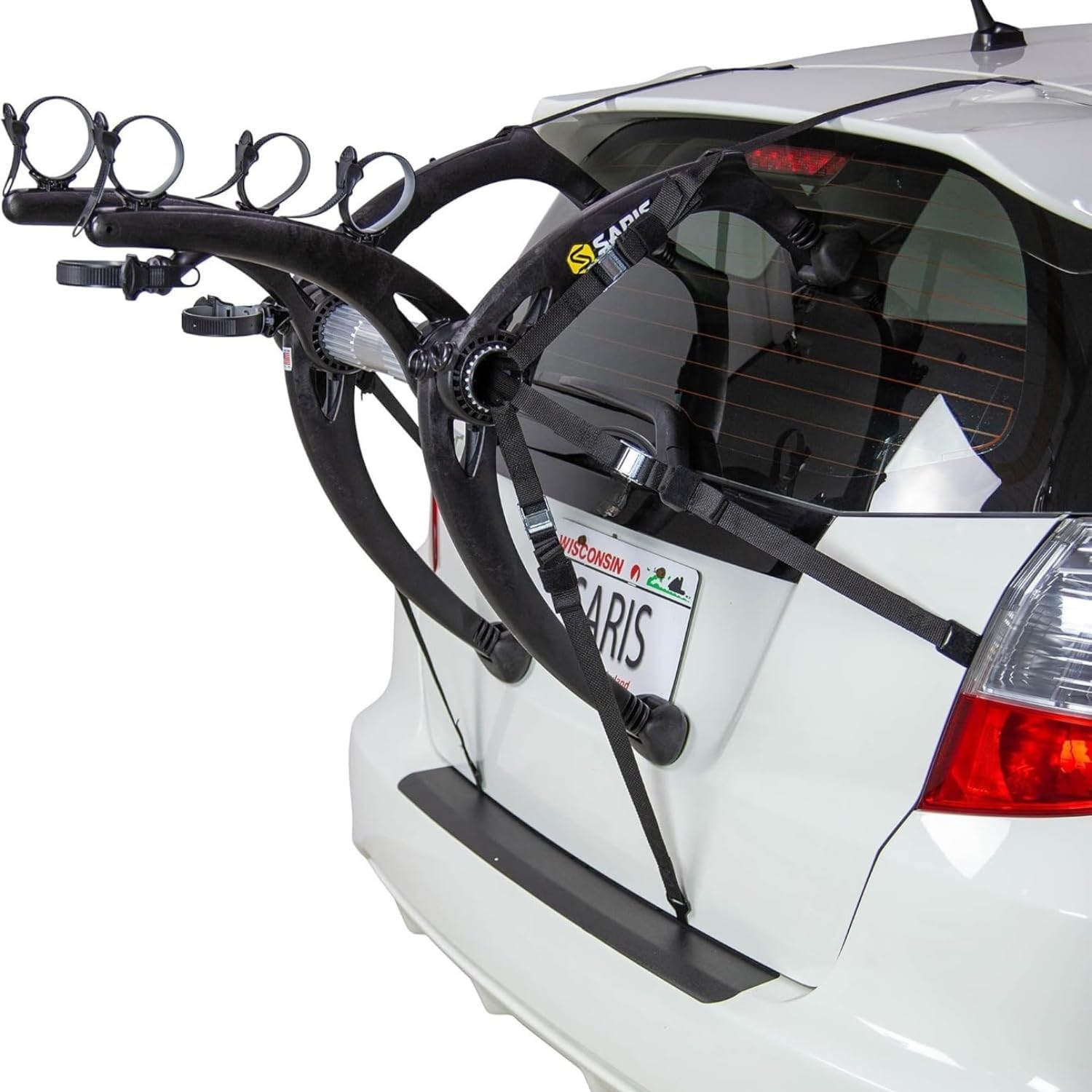
So, this is the Saris Bones EX which is well-known for trunk-mounted bike rack and it is light and easy to carry.
Even, you can install it with the straps and hooks and it is designed to reduce the contact points so it is less likely to rub paint when it properly fit and tightened in the correct way.
As well as, it comes with the injection-molded arms and legs that keeps the rack solid for years to come and there’s rubber feet that articulate to protect the paint as well.
#2. Allen

Without a doubt, it is a heavy-duty trunk bike rack that is easy to use and very stable on the road.
Even it is made to carry 2-bike with each bike supported by its wheels, which literally lowers stress on fragile frames and makes loading much simpler.
Also, you can tie downs individual bikes and secure them to protect bicycles during the journey.
As well as, there are padded lower frame that actually keeps your bicycle away from the vehicle to prevent any kind of scratches and dents.
#3. STUDTREX

Now, STUDTREX is the manufacturer of this premium bike that that blends a sturdy design with smooth operation and there are lots of helpful features are available for reuglar riders as well.
As well as, you can carry 2-Ebikes with these racks of 170 lbs capacity that makes them truly useful and highly reliable.
Plus, you can easily fold them, tilt them according to your convenience, even it comes with the anti-theft hitch and wheel locks that makes them highly protective.
#4. IKURAM R

Now, IKURAM R is the designer of this high quality bike rack that can carry 2 bicycles easily.
Additionally, Alloy Steel and High Quality Rubber material is used to build this Toyota Highlander bike rack and these materials actually provides durability and reliability that can carry your bikes safely during drive.
Moreover, you can easily tilt it down to access the bicycles, it is to give you convenient access to rear of vehicle with easy-to-use tilt-down feature.
As well as, you can fold it up quickly whenever the bike racks are not inuse that makes them compact transport and easy to store as well.
#5. Allen
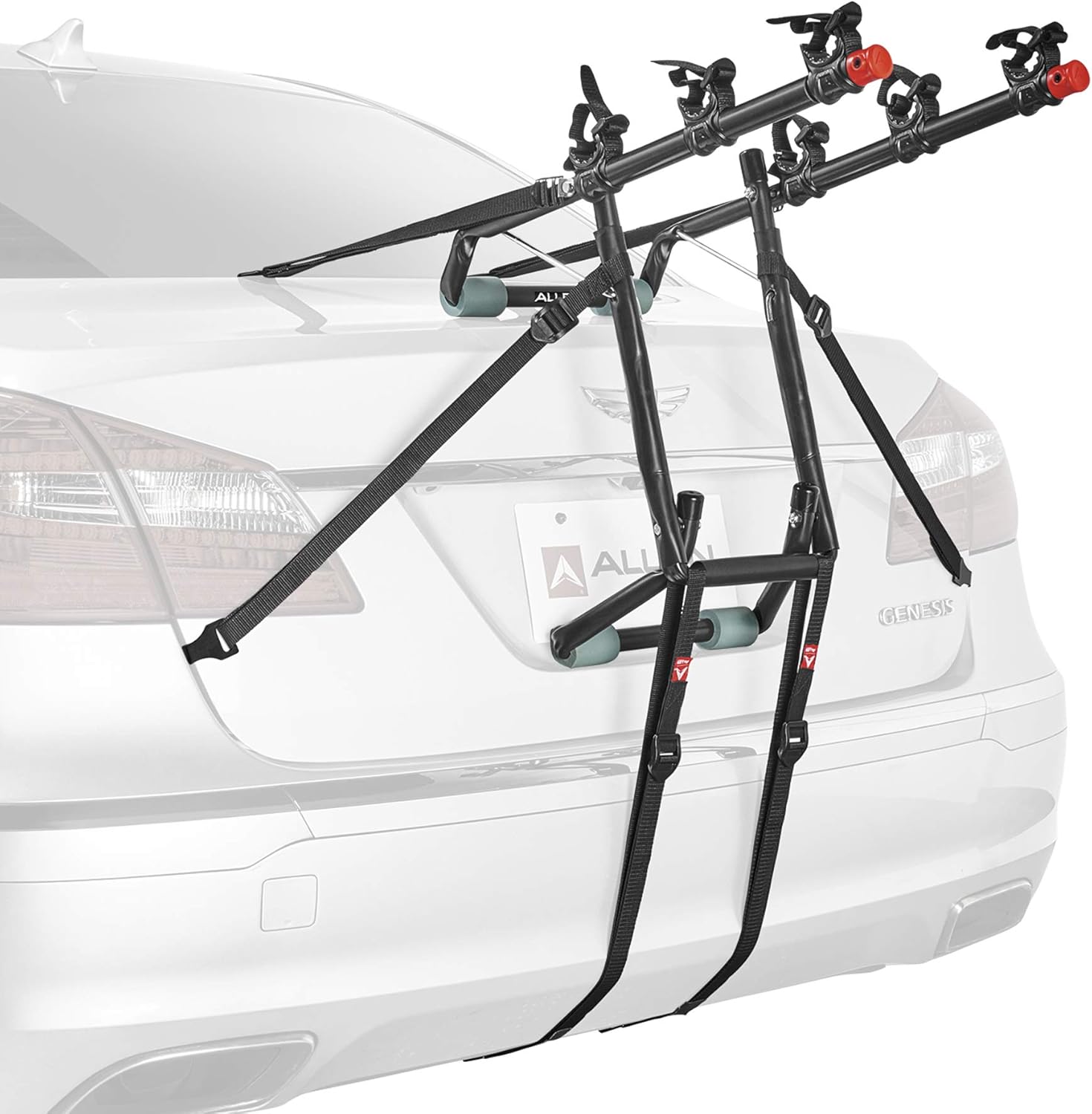
Now, with this Allen Sports trunk bike rack you can carry 3 bikes in one go, also alloy steel is used to give it durability.
Yes, you can also fold it fully flat for easy storage, even it has padded lower frame that literally protects vehicle, and left and right side straps are available to make it truly stable during drive.
Not only this, you can tie-down individual bicycles to protect them.
How to Install Toyota Highlander Bike Rack – Full Guide
Installing a bike rack on a Toyota Highlander is easy once you understand the basic setup and installation of different racks.
The Highlander is designed with robust mounting points, including the factory hitch receiver on many trims and the ability to support aftermarket hitch installations, roof crossbars, or accessory rails.
Proper installation ensures the rack is stable, secure, and safe to use, while also preventing damage to the bike, vehicle paint, sensors, or spoilers.
The installation method depends on the type of rack, but regardless of your choice, it’s important to follow the manufacturer’s instructions, use the correct tools, and regularly check the rack for tightness and wear.
A properly installed rack won’t move, dent body panels, or interfere with driving safety, making this step essential for long-term use and confidence on the road.
1. Installing a Hitch Rack
Installing a hitch-mounted rack on a Toyota Highlander is generally easy because the vehicle typically comes with a 2-inch Class III hitch receiver that fits most good-quality racks.
The process typically involves sliding the rack’s hitch bar into the receiver opening, securing it with the provided locking pins or bolts, and tightening any anti-wobble devices to prevent movement during driving.
Some racks, depending on their design, may require assembly of support arms or wheel trays before mounting.
Basic tools like a wrench or socket set may be required to tighten the fasteners or stabilizing arms.
Once the rack is installed, it’s important to perform safety checks, including confirming that all bolts are tight, testing the tilt or swing function, ensuring the rack doesn’t obstruct the exhaust or sensors, and, if necessary, verifying that the brake lights and license plate are still visible.
After loading the bikes, check the straps, wheel holders, and frame clamps to ensure everything is secure before driving.
2. Installing a Roof Rack
Crossbars are required to install a roof-mounted rack on the Highlander, as the roof bike rack attaches to these bars, not directly to the roof.
Many Highlander models come with factory side rails, so users may only need to install compatible crossbars before installing the bike rack.
Spacing and width should match the rack’s mounting system, and many manufacturers provide recommended distances for stable loading and aerodynamic performance.
Once the crossbars are secured, the bike rack can be attached and tightened using clamps, bolts, or a locking system.
Proper positioning is essential so that the bike remains level and doesn’t tilt forward or backward.
After installation, test load the bike to ensure you can safely lift and secure it, as the Highlander’s roof height is higher than sedans.
A final check for clearance is essential, specially for low-rise garages, overhead parking entrances, or car washes.
3. Preventing Spoiler Damage
If you’re considering installing a trunk-mounted strap rack for your Toyota Highlander, it’s specially important to protect the spoiler from damage, as the rear spoiler is made of plastic and not designed to withstand weight or pressure.
Some strap racks place their upper hooks or straps on or above the spoiler, which can cause cracking, warping, or paint damage.
To avoid this, it’s important to consult the rack manufacturer’s fit guide, as only some models are designed to properly bypass or clear a spoiler.
Soft contact points, adjustable arms, or foam pads can help alleviate pressure, but even with these features, careful alignment is required.
Check the straps regularly during travel, as vibration can cause shifting, which can lead to damage over time.
For many owners, avoiding trunk racks altogether and opting for a hitch-mounted rack or roof rack is the safest option to protect both vehicle and bike.
Read More:
How to Safely Carry Bikes on Toyota Highlander Bike Racks
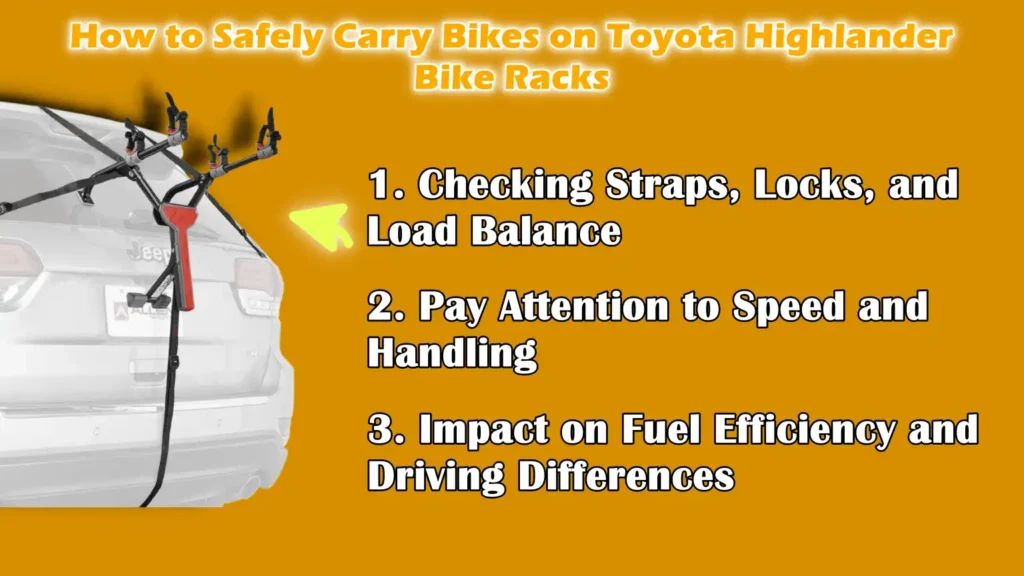
Safety is crucial when transporting bikes with racks on a Toyota Highlander, as excess weight and unnecessary items can impact the vehicle’s handling, braking, and wind resistance.
Taking a few simple but essential steps can prevent accidents, damage, and sudden movements while driving.
Although modern bike racks are designed to be secure and stable, they still require regular inspections before and during travel to ensure everything is tight and properly aligned.
Understanding how speed, load balance, and aerodynamics change when transporting a bike helps you drive with greater confidence and avoid unnecessary risks.
By adopting practical safety habits, Highlander owners can keep their bikes, rack system, and vehicle safe while enjoying a comfortable ride on highways, city streets, or rough roads.
1. Checking Straps, Locks, and Load Balance
Before driving, it’s important to check that all straps, clamps, and locking parts on the rack are tight and are holding the bicycle securely in place.
A properly secured bike should not wobble or bounce from side to side while driving.
If using a hitch-mounted rack, tightening the anti-wobble system reduces vibration and wear on the hitch receiver.
For roof racks, double-check that the contact points between the wheels and the frame are secure, as air pressure increases at high speeds.
Ensuring proper load balance is also crucial, specially when carrying multiple bikes, as uneven weight distribution can impact vehicle stability.
It’s helpful to recheck the setup after driving the first few miles, as straps may become loose or slightly slack during initial movement.
2. Pay Attention to Speed and Handling
Carrying a bike changes the Toyota Highlander’s aerodynamics, which means the vehicle may handle differently, specially when driving at high speeds or in strong winds.
Sudden braking, sharp turns, and rapid acceleration should be avoided as these can put increased pressure on the rack and bike.
Hitch racks typically add to the vehicle’s length, so more space may be required when reversing or parking.
Roof racks increase the vehicle’s height, so it’s specially important to pay attention to bridge signs, parking decks, and drive-through clearances.
Driving at moderate speeds reduces wind drag, noise, and stress on mounting points, making for a safer and more comfortable ride.
3. Impact on Fuel Efficiency and Driving Differences
Bike racks, specially when bikes are attached, increase drag and weight, which can reduce fuel efficiency.
Roof racks generally have a greater impact on fuel efficiency because they are higher in the airflow path, while hitch racks have a smaller impact on efficiency but still add obstruction and weight.
The average drop in fuel efficiency can range from a few miles per gallon with a roof rack to a slight decrease with a hitch rack, depending on speed and cargo weight.
Drivers may also notice slight changes in acceleration, braking, and steering response, specially when carrying heavier bikes like e-bikes.
Being aware of these changes helps you drive more smoothly and safely while reducing stress on the engine and transmission.
How to Maintain and Care Toyota Highlander Bike Rack
Properly caring for a bike rack extends its life, protects bikes during transport, and ensures it continues to perform reliably even after years of use with your Toyota Highlander.
Because bike racks are exposed to weather, dirt, and constant vibration from driving, they require regular inspection and cleaning like any other piece of outdoor equipment.
Maintenance is specially important if the rack is used frequently or for long road trips, as minor issues like loose bolts, worn straps, or rust spots can become major problems if ignored.
A well-maintained rack provides better stability, reduces noise and movement, and helps prevent unnecessary damage to the bike.
Understanding basic care practices makes purchasing it easier and prevents premature wear, helping you get the best performance from your setup for the long term.
1. Rust and Corrosion Prevention
Rust and corrosion can weaken metal parts and reduce the strength of mounting points, specially if the rack is exposed to rain, snow, humidity, or coastal winds.
To reduce the risk of rust, it’s beneficial to keep metal parts clean and dry whenever possible and to apply protective lubrication or anti-rust spray to bolts, joints, and moving parts.
Many high-quality racks are made of powder-coated steel or aluminum, which helps prevent rust, but regular inspection is still necessary.
If rust spots develop, lightly sanding the area and applying a protective coating can prevent further corrosion.
Keeping hardware tight and checking for paint chips or exposed metal helps prevent long-term damage.
2. Cleaning After Rain, Snow, or Road Salt
Cleaning the rack after exposure to rain, snow, mud, or road salt is specially important, as salt and moisture can accelerate rust.
A light rinse with clean water helps remove dirt and salt buildup before it can damage metal surfaces.
If the rack has rubber straps, foam padding, or locking mechanisms, wiping them dry helps prevent cracks or mold over time.
After cleaning, let the rack air dry or wipe it with a towel to prevent moisture from accumulating in joints or bolt threads.
For roof racks, cleaning the crossbars and clamps ensures proper grip, while for hitch racks, cleaning debris from the receiver tube prevents rust and makes installation easier.
3. Seasonal Storage and Inspection Checklist
If the bike rack is not used during certain seasons, such as the winter months, storing it properly can extend its life.
Storing the rack in a dry place, like a garage or storage room, keeps it out of constant exposure to the weather.
Before storing it, inspecting the rack for loose hardware, worn straps, cracks, or missing rubber pads helps determine if anything needs repair.
Before reinstalling the rack for the next season, check important parts like bolts, locking mechanisms, wheel trays, and hitch connections to make sure everything is still secure and ready for use.
Annual inspections can prevent unexpected failures and keep the rack working smoothly when needed.
As well as, for the Highlander owners it really matters to chooce a 2-inch Class III rated rack that gives higher permitted tongue weight than a 1.25-inch Class II style, as it actually ensures that you are using equipment built to recognized load standards rather than just by guessing the capacity of the rack.[¹]
Conclusion – Best Bike Rack for Toyota Highlander
Yes, when you wanted to go to the vacation to the mountains, beaches or local trails then you just need a dependable bike rack for Toyota Highlander to give you proper cycling experience wherever you wanted that turns a vacation in true adventure.
The Highlander is a rugged and versatile SUV, making it perfect for a variety of racks, specially hitch-mounted and roof-mounted systems designed for multiple bikes or heavier electric bikes.
A good-quality rack not only protects bikes during travel, but also stabilizes the vehicle, increases safety, and makes loading and unloading much easier.
Whether you’re transporting lightweight road bikes, large mountain bikes, or modern e-bikes, paying attention to key factors like weight capacity, locking system, frame compatibility, ease of use, and installation design ensures a long-lasting, reliable, and enjoyable travel experience.
With proper installation, regular safety checks, and simple maintenance, a good bike rack can last for many years, supporting a variety of bikes to suit your needs, and making outdoor adventures easier, safer, and more organized.
For many owners, investing in the right rack becomes as valuable as the bike itself, allowing complete freedom to explore roads, trails, and travel destinations without worry.
Ultimately, the best bike rack is one that suits your usage style, keeps your belongings secure, and lets you cycle with confidence, convenience, and peace of mind every time you get behind the wheel.
Now, you can ask queries or related questions in the comment section below.
Frequently Asked Questions
Q1. What type of bike rack is best for a Toyota Highlander?
Answer: The best bike rack for a Toyota Highlander depends primarily on how many bikes you need to carry, how often you plan to use the rack, and whether you want something permanent or removable. Most Highlander owners prefer hitch-mounted racks because this SUV already has a good towing capacity and a stable rear structure that can safely support the bikes’ weight. Hitch racks are easy to load and don’t require lifting the bikes like roof racks do. However, roof racks are great if you want easy access to the trunk, while trunk-mounted options are more budget-friendly but may offer less stability. Choosing the right rack depends on a balance between convenience, cost, and travel frequency.
Q2. Can a Toyota Highlander support an e-bike on a rack?
Answer: Yes, the Toyota Highlander can support e-bikes on racks, but only if the rack is specifically rated for heavy bikes. Many e-bikes weigh between 50 and 70 pounds, which is more than most standard racks are designed for. When choosing a rack for an e-bike, it’s important to check the weight capacity of each bike and ensure it can support thicker tires or a wider frame if needed. Hitch-mounted platform racks are generally the safest option for electric bikes because they provide a sturdy foundation and are easy to load without excessive lifting.
Q3. Will bike racks block the rear camera or sensors?
Answer: Some racks may slightly block the rear camera or parking sensors, specially when bikes are mounted. Hitch racks are often located near the center of the camera line and may trigger an alert when the sensors detect the rack or bike frame. While this doesn’t impact driving safety, it may alter how backup assistance works. Some people choose racks with a tilt or fold feature so they can move the rack out of the way when they’re not carrying bikes, making everyday driving easier.
Q4. Do I need to install a hitch before using a bike rack on my Toyota Highlander?
Answer: If you plan to use a hitch-mounted rack, yes, a hitch receiver must be installed on your Highlander. Many Highlander models already come with a factory tow package, but if your model doesn’t, you can install an aftermarket hitch that will fit securely. The most common hitch size for Highlanders is a 2-inch receiver because it supports more weight and a wider range of bike rack brands. Once installed, hitch racks become one of the easiest systems for loading bikes.
Q5. Can I open the trunk with a bike rack installed on my Highlander?
Answer: Whether you can open the trunk depends on the style of rack. Hitch-mounted racks with a tilt or swing-away feature allow the trunk to open even when the rack is loaded. Platform racks with this design are very practical for families or travelers who need constant access to cargo space. However, trunk-mounted racks usually need to be removed before opening the trunk because they attach directly to the hatch. Roof racks provide full rear access, but require lifting the bikes.
Q6. Is it safe to drive long distances with a bike rack on a Toyota Highlander?
Answer: Yes, it is safe to drive long distances with a bike rack on a Toyota Highlander, as long as the rack is properly installed and the bikes are securely strapped. It’s a good practice to stop frequently during road trips and double-check the tightness of the straps, bolts, and frame, as wind, speed, and road vibrations can loosen parts over time. Choosing a sturdy, high-quality rack with a padded cradle, anti-sway technology, and a locking mechanism provides security and peace of mind during long trips.
Q7. How many bikes can a Toyota Highlander bike rack hold?
Answer: Most racks designed for the Toyota Highlander can hold two to four bikes, depending on the rack style and weight limit. Hitch-mounted racks can typically hold two to five bikes, while trunk-mounted racks can typically hold two or three. Roof racks may require different bike attachments, so capacity depends on the available crossbar space. Always consult the manufacturer so you don’t exceed the weight limit.
Q8. Will a bike rack damage my Highlander’s paint or body?
Answer: Most good-quality racks are designed to resist damage, but improper installation or poor-quality racks can cause scratches or dents. Trunk-mounted racks pose the greatest risk because they are attached to the vehicle with straps and hooks. Installing protective pads or using racks with soft rubber contact points can reduce the risk. Hitches and roof racks pose a much lower risk because they attach to fixed mounting points rather than touching painted surfaces.
References:
[1] J684_200507 – Trailer Couplings, Hitches, and Safety Chains—Automotive Type
https://www.sae.org/standards/j684_200507-trailer-couplings-hitches-safety-chains-automotive-type

Jonathan, the passionate owner of Bicycle Time, brings a lifelong love for bikes and automotive craftsmanship, that reflects into every corner of the shop. With deep passion in both cycling and automotive accessories, Jonathan is more than just an expert.