Written By: Jonathan
Fact Checked By: Caroline Dezendorf
Reviewed By: Matt Tanner
It doesn’t matter whether you ride daily or only on the weekends, but it is always the ideal bike rack that actually helps you to save lot of time, reduces hell lot of effort, so that you can enjoy totally stress-free bike transporation; whenever you wanted and whereever you wanted.
So, it is true that bike racks that comes with lot of features provides better stability, prevents scratches on paint, protects trunk hinges, reduces vibration while driving so that you can drive on the highways without facing stability problems.
Yes, there are modern racks that has anti-sway cradles, locking systems and those are made with the rust-resistent materials as well which literally makes them really durable and secure for long-term use.
You can actually transport a lightweight road bike, a mountain bike or even a heavier e-bike: but you just need to understand about the compatibility, weight limits ofyour bike rack and vehicle itself and of course there’s mounting methods that ensures the rack works efficiently with the Corolla’s structure.
Basically, you need to be really careful about their compatibility and that’s why we have researched and come up with these 5 Best Bike Rack for Toyota Corolls that fits perfectly without any kind of adjustment needed.
Why You Need the Right Bike Rack for Toyota Corolla
Choosing the right bike rack for your Toyota Corolla is crucial because it’s designed as a compact car, with a lightweight frame and a lower weight capacity than larger SUVs or trucks.
The Corolla is known for its reliability, fuel efficiency, and comfortable driving experience, but its small size means it can’t support a heavy or poorly fitted rack, which can compromise safety and performance.
A properly selected rack helps distribute weight evenly, protects the car’s structure, and ensures your bike remains secure while driving on city streets or highways.
The right rack also makes loading and unloading easier, specially for users who travel frequently or need quick access to their bicycles.
When the rack matches the Corolla’s design and weight limits, it prevents unnecessary stress on the vehicle, reduces wear on mounting points, and keeps both your bike and your car safe during travel.
1. Consider the Vehicle’s Size and Limited Luggage Space
The Toyota Corolla is designed with a compact trunk and limited storage space, making it nearly impossible to carry a full-size bike inside the car without removing the wheels or folding the seats.
Even with the seats folded, there’s limited space inside, and cramming bikes inside can damage the seat fabric, doors, or interior panels.
The trunk opening is also smaller than that of larger sedans or hatchbacks, making it difficult to store bikes safely.
Because of this, an external bike rack becomes a practical solution that allows cyclists to carry one or more bikes without compromising passenger space or comfort.
Racks also help passengers maintain visibility inside the car and keep the cabin clean, specially if the bike is covered in mud, dirt, or sand from the trails.
For Corolla owners who enjoy road cycling, commuting, or weekend mountain rides, the right rack makes transportation easier, safer, and more convenient.
2. Why Universal Racks Aren’t Always Right
Although many brands advertise “universal fit” bike racks, not all of them are fully compatible with the Toyota Corolla’s trunk size, bumper design, or structural support points.
The Corolla’s trunk lid is lighter than larger vehicles, which means some universal racks may put too much pressure on the hinges or mounting areas.
This can cause alignment issues, damage the paint, or reduce the trunk’s ability to open and close smoothly.
Universal racks may not match the angles or curves of the Corolla’s rear body design, which can cause the rack to move, slide, or rub against the car’s surface while driving.
Choosing a rack specifically tested and approved for the Toyota Corolla ensures a stable fit, improved security, and long-lasting durability without damaging the car.
3. Impact of Proper Fitment on Vehicle Paint, Trunk Operation, Fuel Efficiency, and Stability During Travel
A properly fitted bike rack helps protect the vehicle in many ways, specially during long-distance trips.
When the rack is securely fitted, it prevents the straps and metal parts from rubbing against the paint, reducing the risk of scratches, dents, or chipping.
Proper fitting also ensures that the trunk opens and closes smoothly, without straining the hinges or bending the metal structure.
Another important benefit is fuel efficiency.
If the rack and bike are securely fitted and properly aligned, they create less wind drag, which helps maintain better fuel economy than racks that move up and down or shake at high speeds.
Stability is also an important factor, as a secure fit prevents the bike from moving or shaking when driving on rough, winding, or uneven roads.
This reduces noise, prevents accidents, and provides peace of mind when traveling with your bike.
What are the Types of Bike Racks Compatible with the Toyota Corolla
Several types of bike racks work well with the Toyota Corolla, and the right choice depends on how often you travel with your bike, how many bikes you need to carry, and whether your Corolla is a sedan or hatchback.
The most commonly used rack types for this vehicle are trunk-mounted racks, hitch-mounted racks, and roof-mounted racks, as these options are designed to fit compact cars without major modifications.
Each rack type offers different advantages in terms of convenience, stability, and price, so understanding how they work with the Corolla helps you make the best decision.
Some models are better suited for casual riders who travel occasionally, while others are designed for those who go on longer trips or carry heavier bikes like mountain bikes or e-bikes.
By knowing how each option fits and works, Corolla owners can safely transport their bikes while protecting their car’s body, paint, and structure.
1. Hatchback vs Sedan Fitment Differences
The Toyota Corolla is available in both sedan and hatchback versions, and each body style impacts bike rack compatibility differently.
Sedans have a separate trunk section, making it easier to install a trunk-mounted rack, while hatchbacks have a liftgate that must support the weight of the rack when opened or closed.
Because hatchback liftgates are often lighter and more curved, not all racks will sit flat or firmly on the surface, meaning stability and weight distribution are more important.
Hitch racks and roof racks fit both body styles the same, but installation points may vary depending on the year and trim.
Understanding these differences helps prevent damage to hinges, paint, or structural areas and ensures a secure fit for safe driving.
2. Trunk-Mounted Bike Racks
Trunk-mounted racks are one of the most popular options for Toyota Corolla owners because they are inexpensive, lightweight, and don’t require permanent installation.
These racks attach to the trunk lid using adjustable straps, hooks, and soft pads that protect paint and surfaces and keep the rack firmly in place.
They’re great for carrying one or two bikes, making them ideal for most daily commuters and weekend cyclists.
However, because they put pressure on the trunk, proper fitting is essential to prevent the metal from warping or obstructing the trunk latch.
These racks are best for lightweight bikes and short- to medium-distance trips where easy access and quick installation are essential.
3. Hitch Bike Racks
Hitch-mounted racks are one of the most secure and stable options for carrying bikes on a Toyota Corolla, specially if you travel frequently or carry heavy bikes.
To use a hitch rack, the car must have a compatible hitch receiver, typically a Class I hitch, as compact cars like the Corolla are not designed for towing heavy loads.
Once installed, the hitch rack holds the bikes without putting pressure on the trunk or roof, making loading easier and reducing the risk of scratching the paint or damaging the vehicle.
Some hitch rack designs allow access to the entire trunk and provide sturdy support for multiple bikes.
These are often chosen by cyclists who cycle frequently, travel long distances, or carry mountain bikes, e-bikes, or heavy frames.
4. Roof Bike Racks
Roof-mounted racks offer a more secure option and can be used on Corolla models with factory-installed roof rails or crossbars.
These racks keep the bike away from the rear of the vehicle, meaning the trunk remains fully usable without removing the rack.
This option works best for lightweight bikes, road bikes, or carbon frames, as lifting the bike onto the roof requires more effort.
Roof racks may slightly increase wind noise and reduce fuel efficiency due to increased drag, but they offer excellent stability and a clean mounting approach without contact with the trunk or bumper.
This system is ideal for riders who value a sturdy mount and don’t mind the increased lifting effort.
5. Spare Tire Compatibility – If applicable to specific model
Most Toyota Corolla models don’t have a rear spare tire like some SUVs or off-road vehicles, meaning spare tire racks aren’t generally compatible with this car.
However, older Corolla models with aftermarket spare tire carriers or special modifications may support this style.
As this setup isn’t common and isn’t designed for standard Corolla configurations, it’s only useful in specific situations where the vehicle has been customized.
For most owners, trunk-mounted, hitch-mounted, and roof-mounted racks are the main practical options.
Basic Key Points to Consider Before Going for Toyota Corolla Bike Rack
Before choosing a bike rack for your Toyota Corolla, it’s important to understand that not every rack performs the same, and the wrong choice can impact your vehicle, your bike, and even your travel experience.
A good rack should match the Corolla’s design, support your bike’s weight, and remain secure during long drives or rough road conditions.
The number of bikes you plan to carry, the type of cycling you do, and how often you’ll use the rack all help determine which style is best.
The right bike rack improves convenience, protects your vehicle’s paint and structure, and ensures your bikes remain safe and stable during transportation.
Considering these factors before purchasing can help prevent problems like a poor fit, vehicle damage, unstable mounting, or difficulty using the rack over time.
1. Compatibility with Corolla Trims and Years
Different Toyota Corolla model years and trims may have slight differences in trunk size, bumper height, roof rails, or hitch compatibility.
This means that a rack that fits one Corolla may not fit another.
For example, the rear design of the Corolla hatchback differs from that of the sedan, and some trunk-mounted racks may require special adjustments or may only be approved for certain years.
Checking the compatibility chart from the manufacturer ensures that the rack fits properly and provides secure support.
This step is important because even slight differences in angle or mounting point can affect stability and long-term vehicle safety.
2. Number of Bikes and Weight Capacity
The number of bikes you need to transport and their total weight play a key role in choosing the best rack.
Light road bikes weigh much less than mountain bikes or electric bikes, which means a rack with a lower weight limit may work for one but not the other.
Most compact car racks are designed for one or two bikes, while hitch racks can support three or four, depending on the model.
Exceeding the weight limit can put pressure on the trunk, hitch mount, or roof bars, causing the bike to bend, become unstable, or be damaged while driving.
Choosing a rack with sufficient capacity ensures both safety and convenience.
3. Material Strength and Weather Protection
Bike racks are exposed to sun, rain, dust, and road debris, so choosing racks made from sturdy materials like aluminum or high-quality steel ensures long-lasting performance.
Coated metal surfaces, rust-resistant bolts, and weatherproof straps help prevent rust, specially in high-humidity areas or on winter roads with salt.
Strong materials also help distribute weight evenly and reduce movement during travel.
A sturdy rack not only protects your investment but also reduces the need for replacement or repairs.
4. Rack Security and Anti-Theft Features
A reliable bike rack will also help protect your bicycle from theft, specially if you park in public places or go on long trips.
Many modern racks have locks for the bike frame and sometimes even a locking system to secure the rack to the vehicle so it can’t be easily removed.
These features make a huge difference when storing valuable bikes or traveling long distances.
Easy locking systems also provide peace of mind and help prevent theft when the vehicle is unattended.
5. Easy Installation and Removal
Some bike racks are designed for quick installation and removal, while others may require more time and adjustment.
For Corolla owners who frequently use racks, the easy-to-install design saves time and reduces hassle.
Some hitch racks attach with a single tightening mechanism, while trunk racks may require strap adjustment for a proper fit.
A rack that’s easy to install and remove also prevents accidental scratches or misalignment during installation.
6. Foldability and Ease of Storage
Folding is an important feature when the rack is not in use.
Folding racks simplify home storage and reduce space in the garage or trunk.
Some models fold flat against the car when the bike is not stored, helping to avoid obstructions and reducing the risk of hitting the rack while moving around in the vehicle.
7. Impact on Rear Visibility and Trunk Access
A good bike rack should not block your view while driving or make it difficult to open the trunk.
Some racks allow access to the trunk without removing the bike, while others require a slight twist or pull before opening.
Hatchback owners should specially check this detail, as liftgates support the weight of a rack differently.
A well-designed rack is easy to use and reduces hassle during road trips, errands, or frequent commuting.
The 5 Best Bike Rack for Toyota Corolla – High Build Quality
Without a doubt, the structure and design are the actual things that is important in terms of having full compatibility and these are designed in a way to be compatible with Toyota Corolla perfectly.
#1. Allen
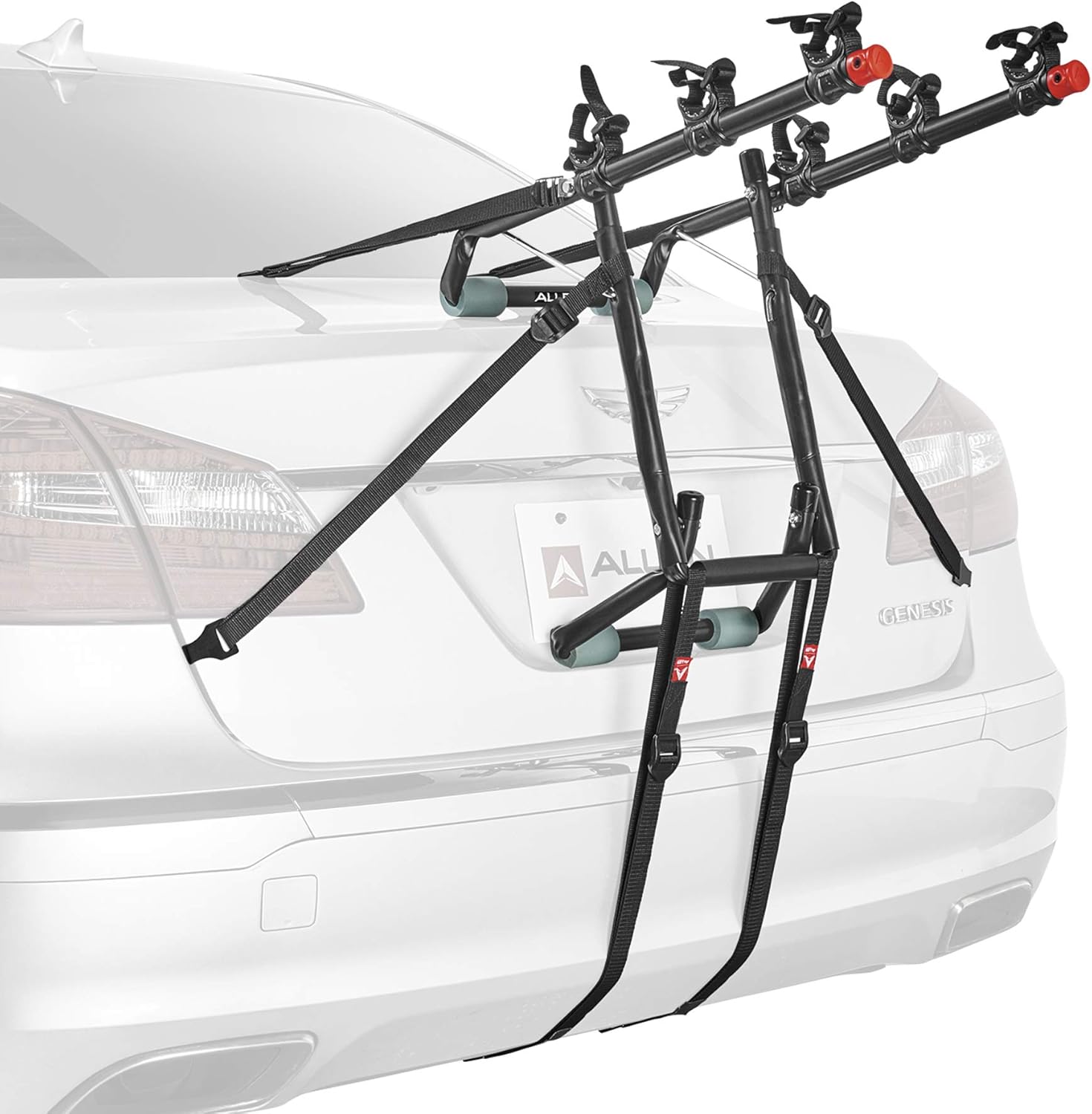
Now, this one again comes from the Allen Sports and it is really durable and stable trunk-mounted rack.
Also, it is made with the high quality alloy steel material that makes them truly durable and highly reliable for the longer-period of time.
Plus, this is just 4 kilogram in weight that is why it is lighter and easier to store than many other big racks.
You can easily carry up to 3 bicycles with ease, even there are padded lower frame that protects the vehicle, even comes with the left and right side straps to manage the lateral stability.
#2. Allen

The Allen Sports Deluxe is very well designed bike rack for Toyota Camry, these are just ready to use as you don’t need other kinds of accessories to install this trunk bike rack.
Yes, it comes with the side straps that increases lateral stability, basically it eliminates the inconvenience during the drive as it makes them truly stable.
As well as, you can tie down individual bike and secure them with highly precise way.
Not only this, its lower frame comes with the padded frame that keeps bicycles away from the vehicle as well.
#3. IKURAM R
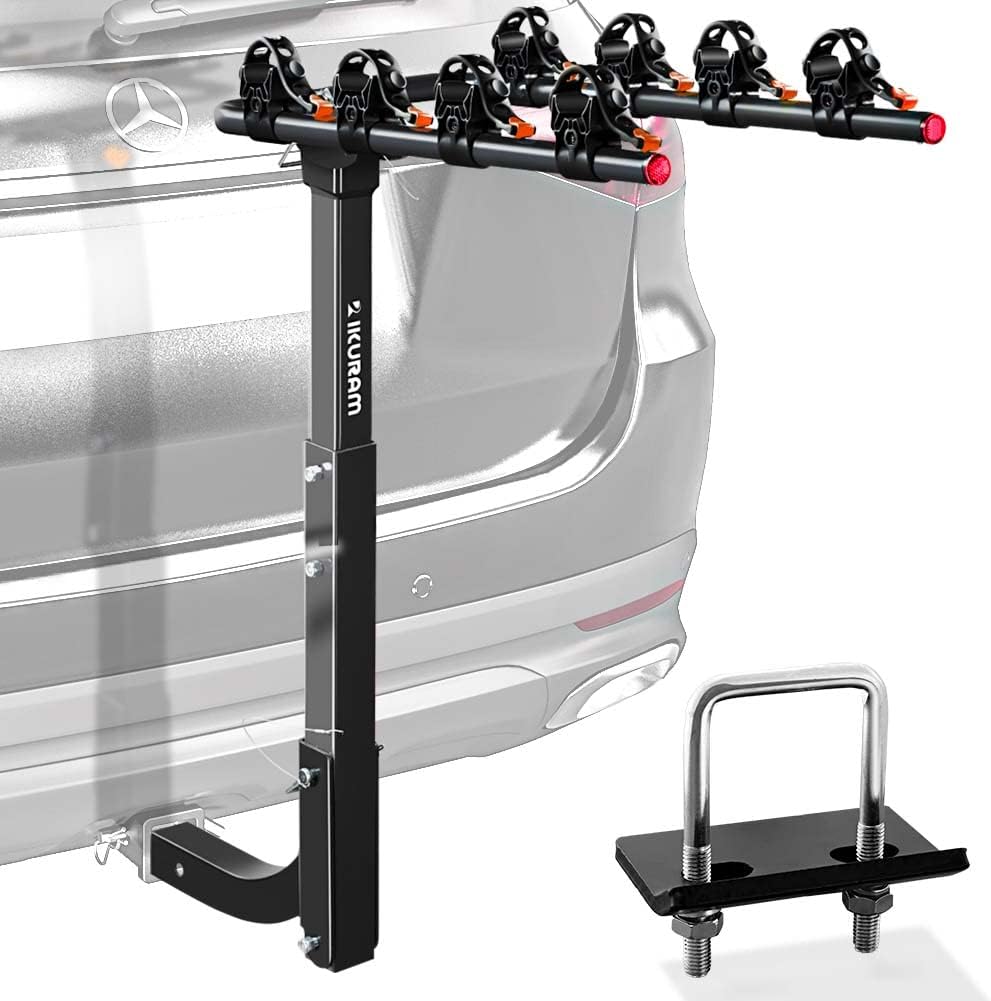
So, this bike rack for Toyota Camry is designed by IKURAM R, it supports 4 bikes so that you can easily have the trip with your friends and family without missing out anything.
Additionally, it is made with the Alloy Steel & Rubber materials that makes them truly durable and highly protective as well.
It comes with easy tilt-down access, which means you can access to the rear of the vheicle with easy-to-use tilt and down feature that makes the loading and unloading the bikes quiet effortlessly.
#4. Saris

This stylish trunk bike rack for Toyota Camry is manufactured by Saris Bones, the beautiful design and tyle makes them eye-soothing.
As well as, it is designed to fit most of the vehicles, even you can install it on those with the spoilers as well, because the rubberized feet actually protects your car’s finish and there’s coated straps that safeguards your bicycle as well.
It actually supports up to 2 bikes with the weight of each bike up to 35 lbs, even it comes with retcheting anti-sway straps that literally ensures a secure and stable hold for each of the bicycle.
Not only this, it has strong frame with injection-molded arms and legs, that actually provides great strength and rust-free durability for the long term use.
#5. Allen
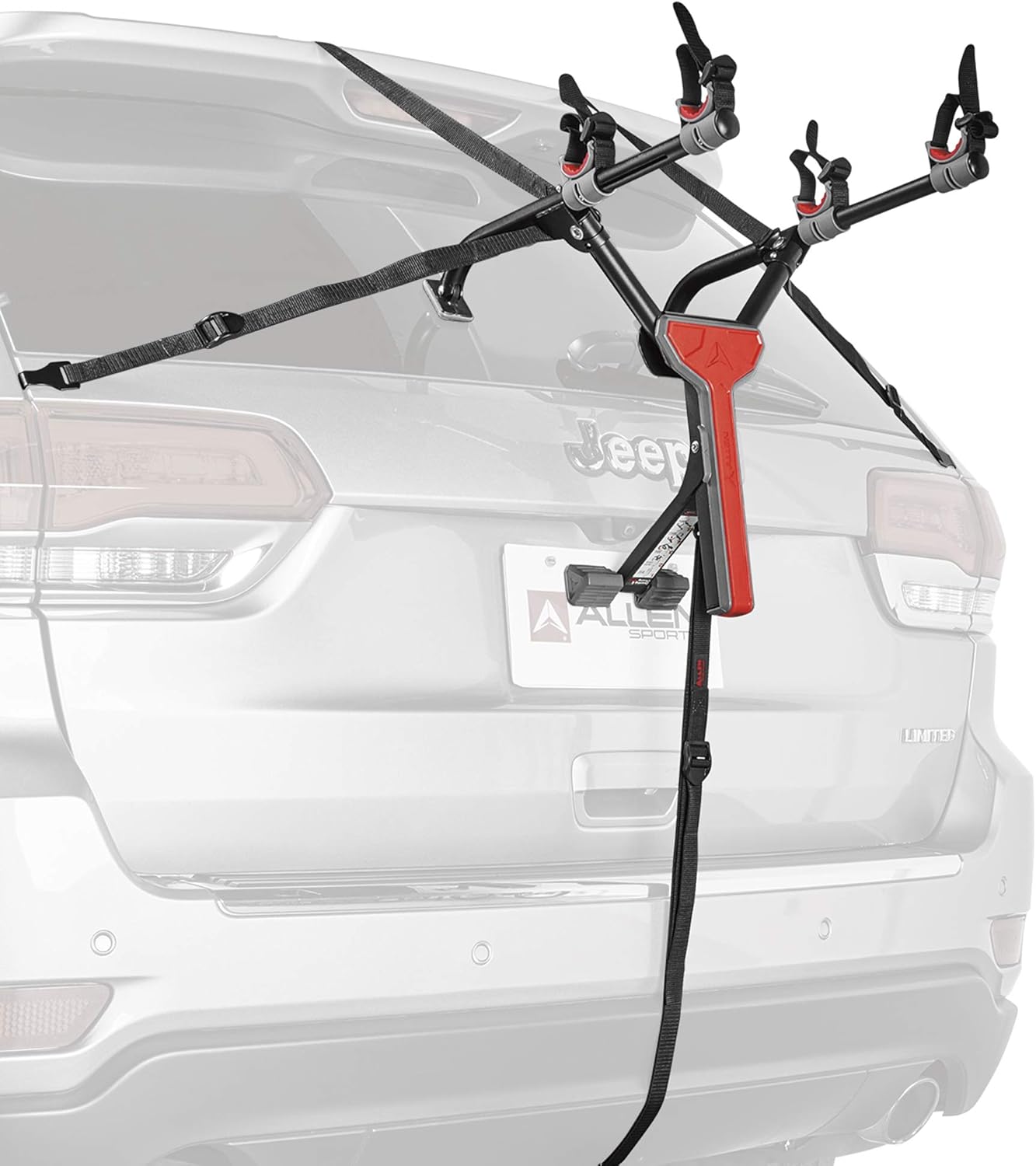
This Allen bike rack comes with the ultra compact folded design, which is why it makes this easy to handle and unloading and loading the bicycles easy.
Because of the compact design it is great for the travel or commuting.
Even, it comes with the padded lower frame that literally keeps bicycles away from the vehicle and you can tie-downs the indivicual bikes to protect your bicycle during drive.
How to Install Bike Rack for Toyota Corolla – Installation Guide
Installing a bike rack on a Toyota Corolla is easy once you understand how the different racks attach to the vehicle.
Because the Corolla’s frame is compact and the trunk and roof structures are lightweight, installation must be done carefully to avoid pressure damage, scratches, or unstable mounting.
The installation process depends on whether you choose a trunk-mounted rack, a hitch rack, or a roof rack.
Following the correct instructions ensures the rack remains securely attached while driving, whether at highway speeds or on rough roads.
A properly installed bike rack protects both your bike and your vehicle, ensuring long-term use without the need for frequent adjustments.
1. Instructions for a Trunk Rack
To install a trunk-mounted rack on a Toyota Corolla, start by positioning the rack in the correct location based on the manufacturer’s fit guide, which is usually centered above the license plate, with the contact points resting lightly on the trunk surface.
Adjust the arms to the correct angle so that the rack sits firmly without bending or wobbling.
Secure the top, side, and bottom straps to the trunk edges, ensuring the hooks sit firmly without bending the metal or lifting the rubber trim.
Tighten each strap evenly and check that the rack doesn’t move when pressure is applied.
Gently test the trunk opening to ensure the rack isn’t obstructing the latches or hinges.
Finally, mount the bike and attach additional stabilizing straps, if provided, to ensure the bike balances without swaying.
2. Instructions for Hitch Racks
Before installing the hitch rack, ensure that the Corolla is properly fitted with a Class I or compatible hitch receiver.
Once confirmed, slide the hitch rack mount into the receiver and tighten the bolts or locking pins to prevent movement.
Some racks have an anti-wobble mechanism that must be fully engaged for a secure fit.
Place the rack upright and ensure it is locked in place.
Load the bike onto the rack, securing it with frame clamps, wheel trays, or straps, depending on the rack’s design.
Ensure the weight is evenly supported and the bike remains stable when moving.
If the rack has a tilt feature, test trunk access and ensure that no part of the bike obstructs rear visibility or brake lights.
3. Instructions for Roof Racks
For a roof rack, ensure your Corolla has compatible crossbars or factory rails.
Place the bike mount on the crossbar and tighten the attachment points until the rack feels sturdy without slipping.
Check the alignment to ensure it’s straight and centered.
Carefully lift the bike onto the roof, maintaining balance to prevent falling or scratching the car.
Secure the bike using the rack’s clamping system, which is usually located around the frame or front fork, and tighten the wheel straps to stabilize both tires.
Test the stability by gently shaking the bike to ensure nothing moves.
4. Safety Checklist After Installing Toyota Corolla Bike Rack
After installation, it’s important to ensure everything is properly secured before driving.
Check that all straps, bolts, clamps, and locking mechanisms are tight and that there’s no movement when pressure is applied.
Ensure the rack doesn’t block the brake lights, license plate, or rear visibility.
Ensure the weight is within the rack’s limits and the bike is mounted straight and stable.
If you’re planning a long drive, double-check all securing points during fuel stops or rest breaks.
Following this checklist ensures a safe trip and reduces the chance of rack failure or bike movement during the trip.
Read More:
How to Ensure Safety When Using a Bike Rack on a Corolla
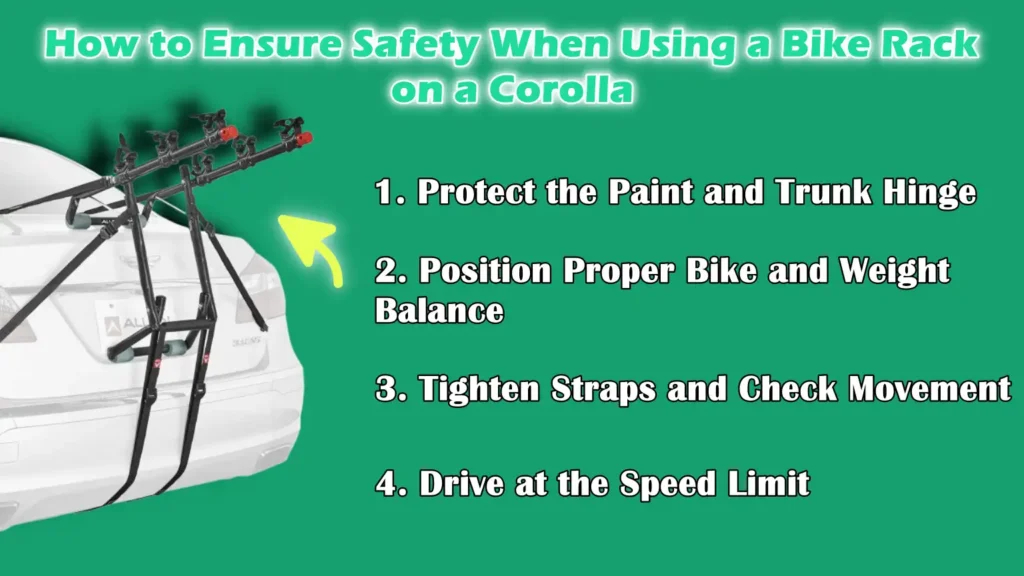
Using a bike rack on a Toyota Corolla can be safe and reliable, provided the rack is installed correctly and checked regularly during use.
Because the Corolla is a compact vehicle with lighter mounting points than larger SUVs or trucks, it’s crucial to pay attention to weight distribution, mounting pressure, and bike stability.
Proper safety precautions not only protect the vehicle but also ensure the bike remains secure during short trips, long journeys, and highway driving.
Taking extra time to set up the rack correctly, double-checking stability, and following the recommended driving precautions helps prevent accidents, damage, and unnecessary wear on the vehicle and rack.
1. Protect the Paint and Trunk Hinge
To protect your Toyota Corolla’s paint and trunk hinges when using a bike rack, ensure all contact points are padded and clean before installing the rack.
Dirt or small particles trapped between the rack pads and the vehicle’s surface can scratch paint over time, specially when wind and road vibrations increase friction.
Trunk-mounted racks put pressure on the hinges and metal edges, so maintaining consistent strap tension helps prevent bending or misalignment.
Using a protective film or soft rubber guard can further reduce wear, specially if the rack will be installed for a long time.
2. Position Proper Bike and Weight Balance
Proper bike positioning is important because it prevents excessive stress on the rack and the Corolla’s mounting points.
The heaviest bike should always be placed closest to the vehicle, and each bike should be placed in the center so that its weight does not fall on one side.
When transporting multiple bikes, maintaining equal distance prevents handlebars, pedals, or tires from touching and scratching each other during travel.
Keeping the bike frame level or slightly elevated improves aerodynamics and prevents slipping or swaying while riding.
3. Tighten Straps and Check Movement
Before driving, make sure every strap, clamp, hook, or locking mechanism is fully tightened and properly adjusted.
A loose strap could cause the rack to slip or the bike to move, potentially damaging the car or posing a road safety hazard.
After tightening, gently shake the rack and bike to check for any movement.
If anything moves or feels loose, readjust the straps or clamps before resuming your trip.
During long trips, specially on rough or uneven roads, it’s a good idea to gently re-check and tighten the straps to ensure continued safety.
4. Drive at the Speed Limit
When your Toyota Corolla is equipped with a bike rack, it’s important to reduce speed and avoid sudden or sharp movements.
Although most racks are tested for highway use, high speeds increase wind resistance and vibration, which can loosen straps or put excessive stress on mounting points.
Driving at moderate speeds, specially on windy or uneven roads, helps maintain stability and reduces stress on the rack system.
Maintaining a safe distance from other vehicles, avoiding sudden braking, and turning slowly also help prevent shifting or bouncing, which can damage the rack or bike.
How to Maintain Bike Rack for Toyota Corolla
Properly caring for your bike rack extends its lifespan and ensures it continues to function safely and reliably on your Toyota Corolla.
Because bike racks are exposed to external objects, weight pressure, movement, and road vibrations during use, regular maintenance prevents wear and keeps all parts functioning properly.
A well-maintained rack also protects your vehicle by reducing the risk of rust, loose fittings, or sharp edges that could scratch paint or damage mounting points.
Whether you use your rack occasionally or weekly, simple care practices like cleaning, lubricating, and checking connection points make a huge difference in its longevity and safety.
Proper maintenance also ensures that the rack holds the bike securely and reduces the risk of damage during travel.
1. Cleaning and Lubrication Tips
It’s important to clean the rack regularly because, over time, dirt, sand, road salt, and debris can accumulate on the moving parts and strap joints.
If left unattended, these small particles can cause scratches, rust, or premature wear.
To clean the rack, gently wipe it with mild soap and water, taking care to remove any dirt from the hinges, bolts, and strap connection points.
After cleaning, let it dry completely before applying lubricant to the joints, locking mechanisms, and any moving metal parts.
Silicone-based or bicycle-safe lubricants work best because they prevent rusting without damaging the rubber parts.
Keeping the strap clean and free of dirt also maintains a strong grip and prevents slipping during use.
2. Weather Protection – Rain, Snow, Rust Protection
Exposure to weather can affect metal and strap parts over time, specially if the bike rack is attached to the Corolla for a long time.
Rain and moisture can cause rust, while sunlight and heat can weaken plastic or rubber parts.
If you live in an area with snow or road salt, rust may occur more quickly, as salt accelerates metal oxidation.
Applying an anti-rust coating or covering the rack when not in use helps prevent long-term damage to the material.
If the rack will be installed in inclement weather, it’s important to periodically check the straps to ensure they are tight and the metal parts are secure.
3. Long-Term Storage Tips
When storing the bike rack in an unused area, ensure it is completely clean, dry, and lubricated before storing it.
Storing the rack in a cool, dry indoor location prevents rust and protects the straps from UV exposure or temperature cracking.
If the rack is foldable, store it folded to save space and prevent unnecessary stress on the hinges or arms.
Some racks come with storage bags or covers, which help protect them from dust and accidental damage.
Storing the rack properly ensures it’s always ready for the next trip and also prevents unnecessary wear and tear when not in use.
Common Mistakes That You Should Avoid
When using a bike rack with a Toyota Corolla, many users inadvertently make mistakes that can compromise safety, damage the car, or shorten the rack’s life.
Understanding these common mistakes can help you avoid unnecessary expenses, improve stability during travel, and ensure the rack performs as intended.
Because the Corolla is a compact vehicle with specific weight and mounting limits, small mistakes like using the wrong rack type or loading more weight than the recommended weight can put stress on the vehicle’s structure.
By knowing what to avoid, you protect your car, your bike, and the rack, ensuring a smooth and safe travel experience every time.
Even, there’s a study related to the roof racks and fuel use: so it founds out that the roof racks and rooftop cargo significantly increases the vehicle’s aerodynamic drag and that’s why the fuel consumption becomes high as well, actually roof racks contributes to a measurable increase in fuel use and that empty or poorly aerodynamic roof loads that actually leads to the heavy fuel use at the highway speeds, so if you frequently take long drives with bikes then you should consider hitch or trunk options that actually help you to reduce the fuel cost and wind noise as well.[¹]
1. Overloading the Rack
One of the most common mistakes is exceeding the weight limit or loading more bikes than the rack allows.
Each rack has a specific maximum weight capacity, which depends on the material’s strength and mounting method.
Exceeding this limit can cause the rack to bend, twist, or warp, potentially damaging the trunk, hitch receiver, or roof bars.
In a compact car like the Corolla, overloading can also impact driving stability, braking distance, and fuel efficiency, as excess weight alters the vehicle’s aerodynamics and handling.
To avoid stress damage, always check the rack’s official capacity and your bike’s weight.
2. Ignoring the Compatibility Chart
Some users believe that all racks are universal, but the Corolla’s design means that not every rack fits properly.
Ignoring the compatibility chart can result in poor fitment, instability, or damage to paint, trunk edges, or mounting points.
Fit guides provided by rack manufacturers are based on testing and engineering differences between vehicle years and trims.
For example, a rack designed for a Corolla sedan may not fit properly on a Corolla hatchback due to the shape and curve of the liftgate.
Following compatibility information ensures a safer and more reliable attachment that properly supports both car and bike.
3. Using a rack without a security lock
Another common mistake is installing a rack without using the proper locking mechanism for both the rack and bike.
Without a lock, bikes can easily be stolen in public parking areas, and in some cases, if the rack is not secured to the vehicle, it can be removed.
Many modern racks have built-in locks or security accessories, such as cable locks or threaded hitch pins, designed to prevent removal.
Investing in security features protects your bike and rack investment and can prevent costly damage, specially during long-distance trips or overnight stays.
4. Leaving Bikes Mounted for Long Periods of Time
Many users leave their bikes on racks for days or weeks, specially if they use them frequently.
However, leaving bikes mounted for long periods exposes them to weather, vibration, and the risk of theft, as well as putting constant pressure on the rack and vehicle.
Over time, this can cause rubber straps to wear out, hardware to loosen, or metal contact points to rub against the car, causing paint damage.
For the Toyota Corolla, which has a lightweight trunk and roof structure, excessive pressure can also affect alignment.
Removing bikes after use reduces unnecessary wear and extends the life of both the rack and vehicle.
Conclusion – Best Bike Rack for Toyota Corolla
So, it is true in many ways that after exploring about the compatibility, installation process, safety consideration and how to maintain the Toyota Corolla bike rack, then the decision becomes more clearer: as the ideal bike rack actually makes your journey more smoother and secure as well.
A properly chosen rack not only protects your bike but also helps preserve your car’s structure, paint, and rear visibility.
Modern racks are made from lightweight aluminum or composite steel that can handle varying weights, meaning many models are strong enough to carry multiple bikes without putting excessive strain on the vehicle.
Many Toyota Corolla owners opt for hitch racks for their stability and ease of loading, while trunk and roof racks remain popular due to their affordability and versatility.
The key is to focus on long-term benefits rather than the lowest price, as a high-quality rack ensures years of safe use, fewer adjustments, and less maintenance.
A properly installed and well-maintained rack helps prevent damage from road vibrations, excessive bike movement, and improper weight balance or loose straps.
Once correctly installed, a bike rack becomes a reliable tool that helps cyclists travel with ease, whether they’re commuting to work daily, hitting the trails on weekends, or embarking on long-distance outdoor adventures.
Many owners also find that using anti-theft locks, tightening systems, and weather-resistant coatings significantly extends the rack’s lifespan.
Ultimately, the best bike rack is one that securely fits your Corolla, safely transports your bike, and provides convenience every time you load, unload, or store your bike.
With proper care, correct installation, and attention to safety tips, your bike rack can remain reliable for thousands of miles of road trips, ensuring your Toyota Corolla remains a functional and bike-friendly vehicle for years to come.
Now, you can ask anything related that confusing you right now in the comment box below.
Frequently Asked Questions
Q1. What type of bike rack is best for a Toyota Corolla?
Answer: The best bike rack for a Toyota Corolla depends on how often you travel with your bike and how many bikes you need to carry. Many Corolla owners prefer hitch racks because they offer strong support, easy loading, and better stability during long trips. Trunk-mounted racks are also popular because they are inexpensive, lightweight, and don’t require a hitch, but they can obstruct rear trunk access and require careful strap adjustment to fit securely. Roof racks are another option and work well if you already have crossbars, providing excellent stability without blocking the trunk or rearview, although they require lifting the bikes. Choosing the best rack means considering convenience, frequency of use, and long-term durability.
Q2. Can I install a hitch-mounted bike rack on a Toyota Corolla?
Answer: Yes, a hitch-mounted bike rack can be installed on a Toyota Corolla, but you’ll need a Class I or Class II hitch because the Corolla is a compact sedan with a lower towing capacity than larger vehicles. Once the hitch is installed, most compatible racks can safely support one to two bikes, depending on the weight. Hitch racks are specially useful when you need a rack that doesn’t touch the car’s paint or require straps in the trunk, and they make loading much easier because the rack is lower to the ground. Many cyclists choose this option for frequent use or long road trips.
Q3. Will a bike rack damage my Toyota Corolla?
Answer: If a bike rack is installed properly, used responsibly, and regularly maintained, it won’t damage your Toyota Corolla. Trunk racks require more care because the straps, hooks, and pressure points are on the car’s paint, and without proper padding, scratches can occur. Hitch racks and roof racks have less direct contact with the vehicle, reducing the risk of paint damage. Many owners use protective film, rubber padding, or foam barriers to prevent marks. Keeping straps tight, cleaning dirt from mounting points, and inspecting the rack before each trip helps prevent paint scuffing, dents, or scratches.
Q4. How many bikes can a Toyota Corolla safely carry?
Answer: Most Toyota Corollas can safely carry one or two bikes using a trunk rack or hitch rack, depending on the weight of the bikes. Some sturdy hitch racks can accommodate three bikes, but you should check the rack’s stated weight limit and your vehicle’s hitch class to avoid overloading. Roof racks can also accommodate one or two bikes, depending on the strength of the crossbars and the rack’s design. Always consult the manufacturer’s instructions, as exceeding the weight limit may affect stability, put pressure on the car’s structure, or pose a safety hazard while driving.
Q5. Can I open my Corolla’s trunk with a bike rack?
Answer: Whether or not you can open the trunk depends on the type of trunk. Most trunk racks should not be opened with the trunk attached, as the weight and strain can damage the hinges or loosen the straps. Hitch racks often have a tilt-down or fold-down feature, allowing access to the trunk without removing the trunk or bike. Roof racks allow the trunk to open normally because they don’t block the rear door. Reviewing your rack’s design and features helps you understand how to safely access the trunk.
Q6. Is it safe to keep a bike rack on your Corolla at all times?
Answer: Installing a bike rack on a Corolla is possible, but not always recommended. Leaving the rack in place for extended periods can expose it to constant sunlight, moisture, and dirt, which can cause discoloration, rust, or weaken the straps. Hitch racks are safer to keep in place than trunk racks because they don’t rely on fabric straps that can deteriorate over time. Regularly replacing your rack, checking parts, tightening bolts, and cleaning contact areas can help prevent wear and rust.
References:
[1] Fuel consumption impacts of auto roof racks
https://www.sciencedirect.com/science/article/abs/pii/S0301421516300714

Jonathan, the passionate owner of Bicycle Time, brings a lifelong love for bikes and automotive craftsmanship, that reflects into every corner of the shop. With deep passion in both cycling and automotive accessories, Jonathan is more than just an expert.