
Written By: Jonathan
Fact Checked By: Caroline Dezendorf
Reviewed By: Matt Tanner
The fitment is the number 1 quality that differs the results and reliability as well, as you need to understand this basic thing that bike racks are not build the same and for a sedan like the Toyota Camry you need a perfectly compatible one.
Because, if you install the wrong one then it can literally affect safety, stability and even it can damage the vehicle as well.
Without a second doubt, the Toyota Camry is really popular sedans in the world with more than 18 million sold globally since 1982: and it is truly deserving data as well because it comes with smooth trunk design, lightweight rear panel and in some models it comes with a rear spoiler as well.
Which is why, the compatibility needs to be carefully considered, so you need a well-matched bike rack that should support the weight of your bike and still remains secure even during the long highway trips as well.
Now-a-days, modern bike racks also comes with the features such as: anti-sway technology, locking systems, reinforced straps, rubberized hooks and UV-resistant straps as well, which literally helps to prevent paint scratches and bike movement as well.
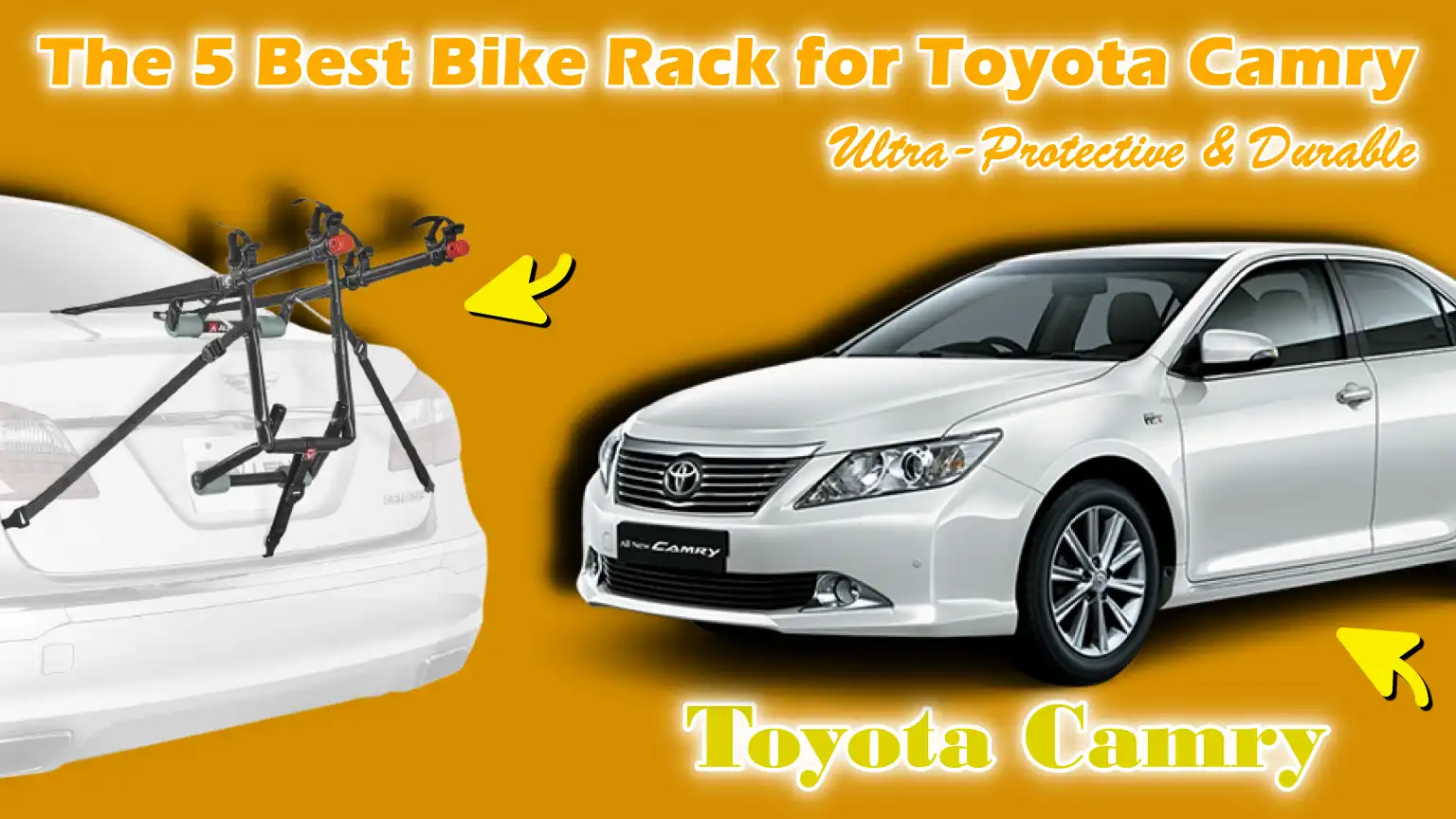
Now, these are the 5 Best Bike Rack for Toyota Camry that ensures safety, convenience and long-term value as well.
Let’s Understand Bike Rack Compatibility with the Toyota Camry
Selecting a bike rack for a Toyota Camry requires understanding how the vehicle’s design impacts fit, security, and longevity.
Unlike SUVs or trucks, sedans like the Camry have a softer rear trunk panel and a sloping body, meaning not every rack will attach securely.
Toyota Camry models from different years also vary in body shape, trunk construction, and bumper strength, making compatibility a necessity rather than a guess.
A properly fitted rack should not put excessive pressure on the trunk or bumper, support the appropriate weight, and should not block rear visibility or damage the exterior paint.
By understanding how your specific Camry model interacts with different rack designs, you can choose a more secure and reliable option that protects both your car and your bike.
1. Vehicle Body Style Considerations Sedan vs Hybrid vs Older Models
The Toyota Camry comes in several models, including gas-powered sedans, hybrids, and older generations.
Each model has a different trunk curve and trunk strength level.
Newer Camry models, specially those built after 2018, have a sportier shape and sharper trunk angles, making trunk-mounted racks more sensitive to strap placement and pressure points.
Hybrid versions sometimes use lighter trunk materials and may not handle heavier racks or multiple bikes as securely.
Older models, specially those built before 2012, typically have a flatter trunk surface, making them more compatible with a wider variety of racks.
Because of these differences, checking that the rack is verified for your Camry’s model year ensures a better fit and prevents damage.
2. Factory-Installed Spoilers and Fitment Challenges
Many Toyota Camry trims, such as the SE, XSE, and some hybrid models, come with built-in trunk spoilers.
Spoilers alter the way the rack sits in the trunk because the straps and support arms may not fit snugly against the surface.
When the spoiler is installed, some trunk-mounted racks may not fit properly or may not be properly stressed, which can cause paint damage, trunk alignment issues, or even rack failure while driving.
Some brands offer “spoiler-compatible” racks with longer arms or adjustable hooks designed for vehicles like the Camry.
If your Camry has a spoiler, it’s important to choose a rack specifically designed for that feature rather than assuming a standard rack will work.
3. Weight Capacity and Number of Bikes
When choosing a bike rack for your Camry, it’s important to understand the weight limit.
Most standard bikes weigh between 25 and 35 pounds, while electric bikes can weigh 50 to 70 pounds or more.
Trunk-mounted racks typically support one to three standard bicycles, depending on the model, but they aren’t suitable for heavier e-bikes.
Hitch racks can often hold two to four bikes and are better for heavier loads because the weight is supported by the hitch, not the trunk.
Roof racks require you to lift the bike overhead, so weight matters for convenience and safety.
Knowing your bike’s weight and matching it to the rack’s rating ensures a safe ride and doesn’t put excessive strain on the car’s structure.
4. Safety and Stability Requirements
A reliable bike rack should keep you stable while cycling, specially at highway speeds or on rough roads.
Important features that improve stability include anti-sway straps, locking clamps, rubber-coated hooks, and vibration-reducing frames.
The Toyota Camry’s sleek trunk and rear body shape make security features even more important, as loose or dangling straps can scratch paint or dislodge the rack.
Some racks also have built-in locks that secure both the bike and rack to the vehicle, reducing the risk of theft when parked in public areas.
Choosing a rack that remains sturdy without constant adjustments helps keep both bike and vehicle safe.
5. Legal Restrictions and Visibility Issues – License Plate, Brake Light
When using a bike rack on a Toyota Camry, it’s important to consider how the rack impacts rear visibility and compliance with legal regulations.
In many areas, blocking the rear license plate, brake light, or turn signal may be illegal or require additional accessories such as an auxiliary plate or light bar.
Hitch racks and hanging racks can obscure some of the rear view, while trunk racks are often tall but can still block the platform when the bike is loaded.
Ensuring that your bike rack and bikes don’t obstruct essential visibility can help avoid fines, increase safety, and comply with specific road rules in your area.
The Right Bike Rack Type for a Toyota Camry
Several types of bike racks work with the Toyota Camry, but each type functions differently and has its own advantages, depending on how often you travel, how many bikes you carry, and how secure you want the setup to be.
Trunk racks, hitch racks, and roof systems can all work for sedans like the Camry, but choosing the right type depends on factors like budget, ease of installation, bike weight, and long-term use.
For example, someone who rides occasionally may prefer a simple trunk rack, while someone with a heavier bike or who commutes long distances may benefit more from a hitch-mounted system.
Understanding the main rack categories will help you choose the most practical and safe option for your needs.
1. Trunk-Mounted Bike Racks
Trunk-mounted bike racks are one of the most common options for Toyota Camry owners because they attach directly to the trunk using straps, hooks, and padded support arms.
They are generally lightweight, easy to install, and more affordable than other types of racks, making them a popular option for casual or occasional commuters.
Many trunk racks can hold one to three bikes, depending on the model.
However, because they come into direct contact with the trunk surface, they require proper adjustment to avoid scratches or pressure damage.
These are best for standard bicycles rather than heavy e-bikes, as the excess weight can put pressure on the trunk structure.
2. Hitch-Mounted Bike Racks
Hitch-mounted bike racks attach to the trailer hitch mounted under the rear bumper.
This type of rack is one of the strongest and safest options for a Camry, specially for carrying heavy bikes or frequent travel.
Hitch racks keep weight low and off the trunk floor, protecting the car’s exterior and improving balance while driving.
Hitch racks come in two main styles: platform and hanging.
Platform racks support bikes by their wheels and are preferred for heavier or weaker bikes, while hanging racks support the bike by the frame and can hold more bikes at once.
This type of rack often accommodates two to four bikes and is also suitable for e-bikes when weight limits are met.
3. Roof-Mounted Bike Racks
Roof-mounted bike racks attach to the roof crossbars and allow bikes to be carried on top of the car instead of behind it.
This option keeps the trunk and hitch area clear, meaning there’s no risk of blocking visibility, license plates, or brake lights.
Roof racks are typically used by advanced riders or those who need extra storage along with a bike carrier.
While they offer strong stability, they require lifting the bike, which can be challenging for some users or those with heavier bikes.
Wind noise and reduced fuel efficiency can occur because the bike increases drag, specially at highway speeds.
Roof racks often work best when the Camry already has factory or aftermarket crossbars installed.
4. Spare Tire and Specialty Racks – Less Common but Unique
Spare tire bike racks and other specialty racks are less common for Toyota Camry owners because the sedan doesn’t have an external spare tire like many SUVs.
However, some specialty racks, such as suction-mounted racks or customized modular systems, can still be used in some cases.
Suction-based racks attach to the roof or trunk using a strong vacuum seal and are sometimes used by commuters or sports cyclists who need a lightweight and removable solution.
While these options can be effective, they require proper cleaning and maintenance to ensure secure attachment and prevent surface damage.
5. Rack Type Comparison Chart – Price, Capacity, Convenience
Comparing different rack types, it becomes clear that each option is designed for different users.
Trunk racks are generally the cheapest and easiest to install, but are best for lightweight bikes and short to medium distances.
Hitch racks offer the best balance of security, convenience, and weight support, but require hitch installation, which increases the price.
Roof racks offer flexibility and space in the rear of the vehicle, but can reduce fuel efficiency and require more lifting force.
Understanding these differences helps you choose the best rack type for your needs, ensuring you choose a safe and effective option for your Toyota Camry and riding lifestyle.
The 5 Best Bike Rack for Toyota Camry – Fully Compatible
Because of the customized design you can easily fit these bike racks to your Toyota Camry without any kind of adjustments or modifications.
#1. Allen

The Allen Sports Deluxe is very well designed bike rack for Toyota Camry, these are just ready to use as you don’t need other kinds of accessories to install this trunk bike rack.
Yes, it comes with the side straps that increases lateral stability, basically it eliminates the inconvenience during the drive as it makes them truly stable.
As well as, you can tie down individual bike and secure them with highly precise way.
Not only this, its lower frame comes with the padded frame that keeps bicycles away from the vehicle as well.
#2. Allen
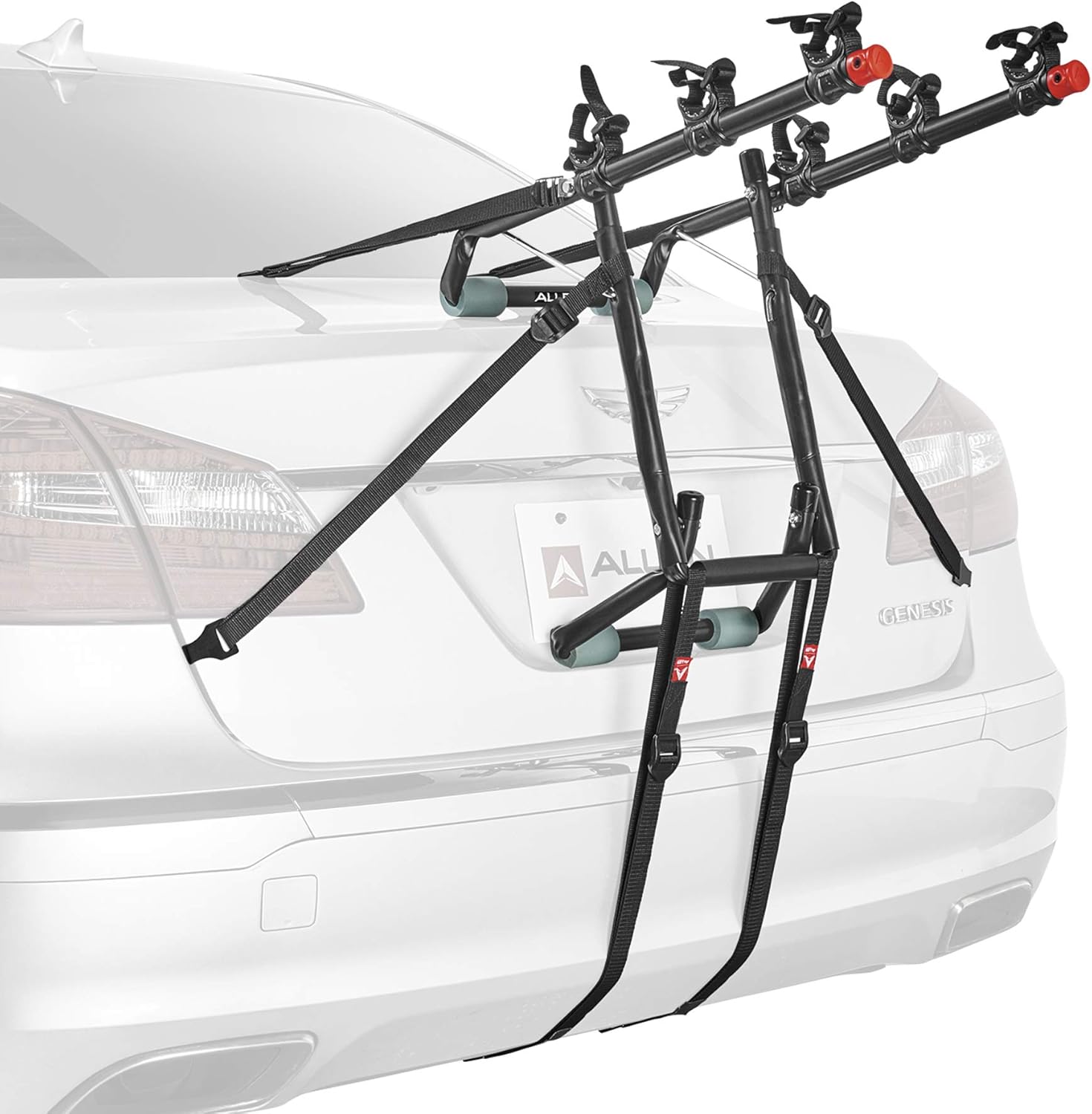
Now, this one again comes from the Allen Sports and it is really durable and stable trunk-mounted rack.
Also, it is made with the high quality alloy steel material that makes them truly durable and highly reliable for the longer-period of time.
Plus, this is just 4 kilogram in weight that is why it is lighter and easier to store than many other big racks.
You can easily carry up to 3 bicycles with ease, even there are padded lower frame that protects the vehicle, even comes with the left and right side straps to manage the lateral stability.
#3. IKURAM R
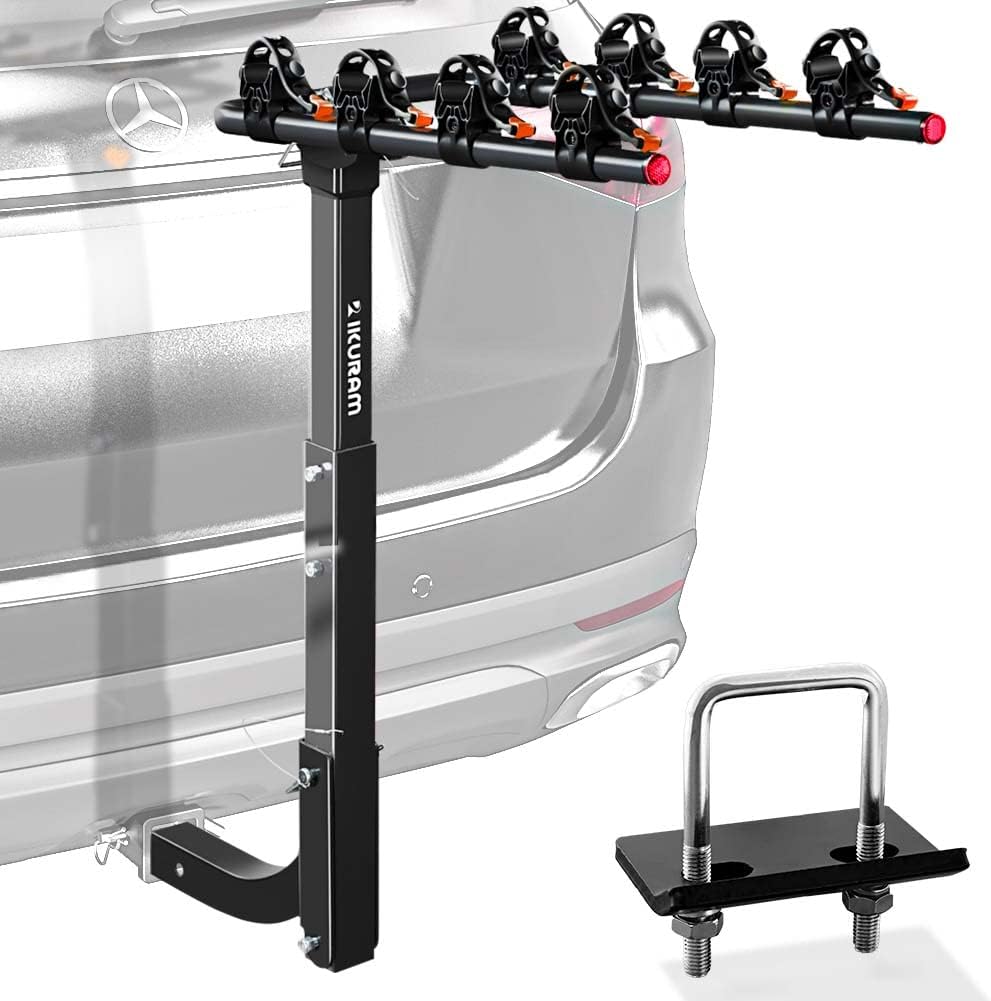
So, this bike rack for Toyota Camry is designed by IKURAM R, it supports 4 bikes so that you can easily have the trip with your friends and family without missing out anything.
Additionally, it is made with the Alloy Steel & Rubber materials that makes them truly durable and highly protective as well.
It comes with easy tilt-down access, which means you can access to the rear of the vheicle with easy-to-use tilt and down feature that makes the loading and unloading the bikes quiet effortlessly.
#4. Saris

This stylish trunk bike rack for Toyota Camry is manufactured by Saris Bones, the beautiful design and tyle makes them eye-soothing.
As well as, it is designed to fit most of the vehicles, even you can install it on those with the spoilers as well, because the rubberized feet actually protects your car’s finish and there’s coated straps that safeguards your bicycle as well.
It actually supports up to 2 bikes with the weight of each bike up to 35 lbs, even it comes with retcheting anti-sway straps that literally ensures a secure and stable hold for each of the bicycle.
Not only this, it has strong frame with injection-molded arms and legs, that actually provides great strength and rust-free durability for the long term use.
#5. Allen
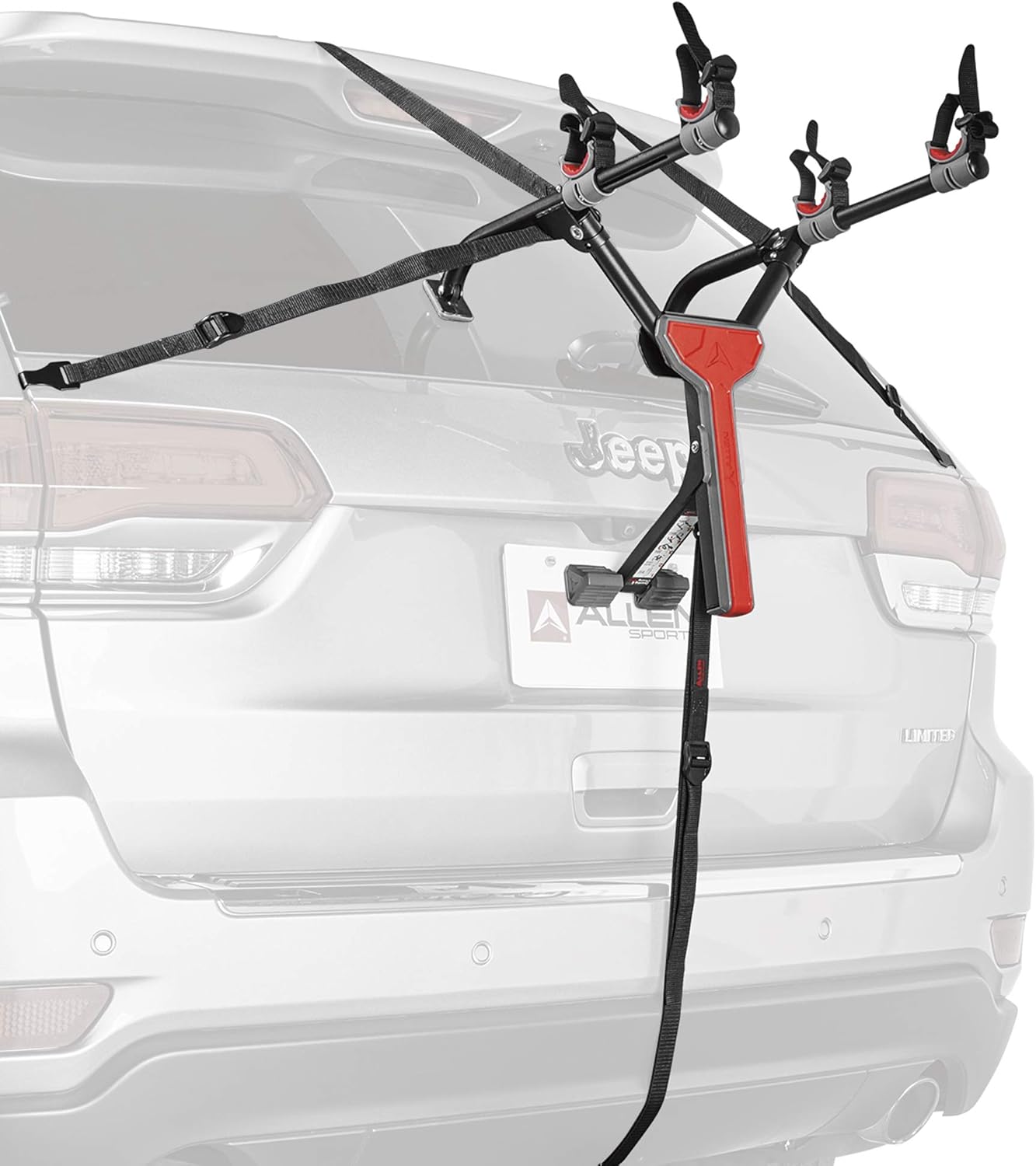
This Allen bike rack comes with the ultra compact folded design, which is why it makes this easy to handle and unloading and loading the bicycles easy.
Because of the compact design it is great for the travel or commuting.
Even, it comes with the padded lower frame that literally keeps bicycles away from the vehicle and you can tie-downs the indivicual bikes to protect your bicycle during drive.
How to Choose Hitch-Mounted Bike Racks for Toyota Camry
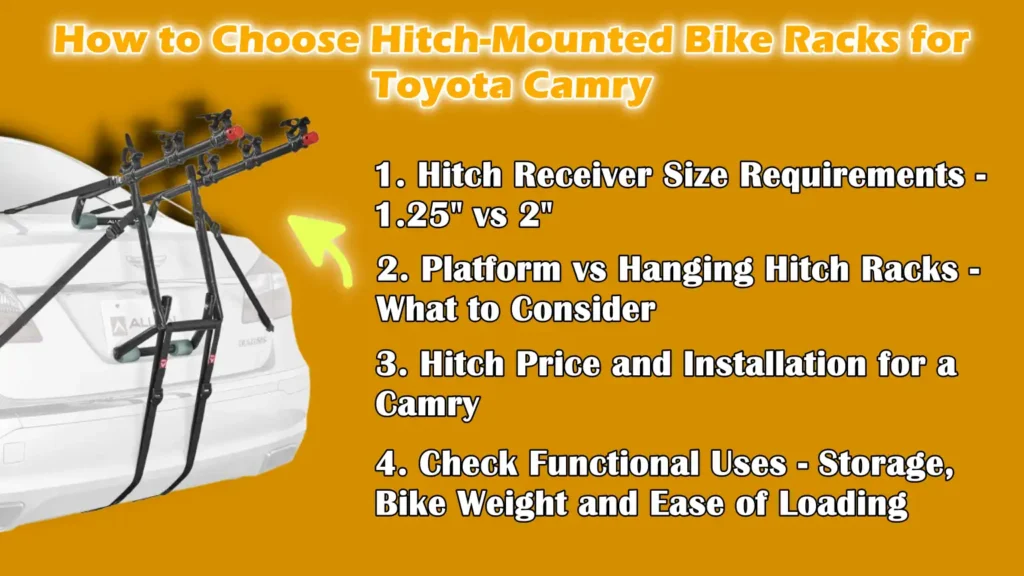
Hitch-mounted bike racks are considered one of the safest and most robust options for transporting bikes with a Toyota Camry, specially for long trips, heavy bikes, or frequent use.
Unlike trunk racks, hitch-mounted racks attach to the vehicle’s hitch receiver, placing the bike’s weight on the car’s frame rather than the trunk panel.
This reduces stress on the vehicle’s body and helps prevent scratches, paint damage, or trunk misalignment over time.
Hitch racks are also known for improved stability at high speeds, reduced movement during travel, and easier loading compared to roof racks, where the user must lift the bike up.
Many high-quality hitch racks have features like built-in locks, folding mechanisms, tilt functions for trunk access, and anti-sway systems, making transportation more secure and user-friendly.
For Toyota Camry owners who ride regular bikes or have heavier bikes like e-bikes or mountain bikes, hitch-mounted racks are often one of the most reliable long-term options.
1. Hitch Receiver Size Requirements – 1.25″ vs 2″
Most Toyota Camry models require a 1.25-inch hitch receiver because sedans are designed with smaller rear frame clearance than SUVs or trucks.
However, some heavy-duty racks may be compatible with a 2-inch adapter if the hitch class supports it.
Class I or Class II hitches are commonly used for sedans like the Camry, and both sizes can usually safely carry one to two bikes, depending on the weight of the rack and bikes.
It’s important to consult the manufacturer’s guidelines, as using a rack designed for a larger receiver without proper compatibility can reduce safety and stability.
2. Platform vs Hanging Hitch Racks – What to Consider
Hitch racks come in two main designs: platform and hanging.
Platform racks support the bike by the wheels and generally offer greater stability, making them ideal for heavier or more expensive bikes like electric bikes or full-suspension mountain bikes.
Hanging racks support the bike by the frame, allowing them to carry multiple bikes while remaining lightweight and compact.
Hanging racks are often more affordable and offer better space, but bikes with step-through frames or unique designs may require additional adapters.
Choosing between the two depends on the type of bike being transported, how often the rack will be used, and the user’s desire for convenience.
3. Hitch Price and Installation for a Camry
Installing a hitch on a Toyota Camry typically requires purchasing both a hitch receiver and installation services, unless you choose to install it yourself.
The price of a hitch receiver can vary depending on the brand and class level.
Installation typically takes one to two hours, and if you’re unfamiliar with automotive hardware, professional installation may be required.
Once installed, the hitch receiver is permanently attached, making future bike rack use quick and easy.
4. Check Functional Uses – Storage, Bike Weight, and Ease of Loading
Hitch-mounted racks are often easier to use because they require less effort to lift than roof-mounted systems.
This makes them specially useful for heavier bikes or riders who don’t want to lift their bikes overhead.
Many hitch racks can fold up when not in use or tilt away from the vehicle to access the trunk without removing the bikes.
Weight capacity typically ranges from two to four bikes, depending on the rack design and hitch class, and some racks have built-in locks or cable systems for security.
Because of these advantages, hitch racks are often chosen by regular riders, families, or anyone looking for a long-lasting and very stable solution.
Read More:
How to Have The Best Roof-Mounted Bike Racks for Toyota Camry
Roof-mounted bike racks are a sturdy and versatile option for Toyota Camry owners who want a clean and secure way to transport their bikes without using the trunk or hitch area.
These racks attach to the crossbars on the car’s roof and allow the bike to be stored upright or clamped onto the fork, depending on the rack style.
One advantage of roof racks is that they keep the rear of the car easily accessible, meaning the trunk can be opened without removing the bike.
Roof-mounted racks are also suitable for a variety of bikes, including road bikes, mountain bikes, and bikes with awkward frames that may not fit properly on hanging or trunk racks.
However, roof racks require lifting the bike, which may be difficult for some users or for heavier bikes like electric bikes.
They also affect airflow around the vehicle, which can impact fuel economy and cause wind noise at higher speeds.
For Camry owners who frequently travel for cycling or who require a permanent transportation setup, roof racks offer a reliable and professional solution when installed correctly.
1. Choose Roof Bars Factory vs Aftermarket Systems
Before using a roof-mounted bike rack, the Toyota Camry must have roof crossbars installed.
If the vehicle has roof mounting points, these bars can be installed at the factory, but many Camry models require an aftermarket system as sedans are less likely to have built-in crossbar capability.
Factory bars are designed specifically for the vehicle model and typically offer a seamless look, predictable fit, and tested weight limits.
Aftermarket systems, such as those from Thule or Yakima, are readily available and offer greater flexibility in bar style, material, and compatibility with additional accessories.
The most important thing is to ensure that the roof bars are properly rated for the weight of the rack and bike, as most roof systems have strict load limits for safety.
2. Fuel Efficiency and Wind Noise Considerations
Roof-mounted racks alter the vehicle’s shape and impact the airflow around it while driving.
Whenever a bike or rack is mounted on the roof, the vehicle experiences increased drag, which means the engine has to work harder to maintain speed.
This can reduce fuel efficiency, specially on long highway trips.
Wind noise can also increase because the rack is exposed to the air above the windshield.
Some racks are designed with an aerodynamic shape to help mitigate this effect, but any roof rack setup will generally be noisier and less fuel-efficient than driving without equipment on the roof.
Removing the rack when not in use can help reduce these effects.
3. Loading and Unloading Safety
Placing a bike on a roof rack requires lifting it high enough to fit over the crossbar or mounting point.
For lightweight bikes like road bikes, this process is usually manageable, but it can be difficult with heavier mountain bikes or electric bikes.
Users should stand securely, avoid excessive strain, and hold the bike firmly while attaching it to the rack.
Using a step stool or curb can make loading easier and safer.
It’s important to ensure the bike is securely secured before driving, as any movement could damage the car, rack, or bike.
4. Best Situations for Using a Roof Rack
Roof-mounted racks are most useful for Camry owners who need to keep the trunk empty or who already have other accessories like a cargo box or hitch attachment.
They’re also helpful for transporting bikes that are oddly shaped and won’t fit properly in a trunk or hitch rack.
Roof racks are specially useful for those who frequently commute by bike, participate in road cycling events, or need long-term storage.
When properly installed and used, they provide a neat and organized method of transportation, making them a reliable option for many cycling lifestyles.
Basic Safety, Maintenance, and Care Tips
Caring for and using your bike rack safely is just as important as choosing the right rack for your Toyota Camry.
Bike racks can bear weight, withstand wind pressure, and even be exposed during driving, so paying attention to how they’re installed and maintained helps prevent damage to both the rack and the vehicle.
Safe use starts with proper installation, as improperly installed racks can slip, become loose, or damage the vehicle.
Regularly check before every drive that the straps, clamps, or mounting points are tight and in place.
Cleaning the rack extends its life, as dirt, road salt, and moisture can weaken the metal or rubber parts over time.
Rack care also includes storing it properly when not in use.
With responsible use, a well-built rack can last for many years, safely transporting bikes on short daily commutes or long-distance trips.
Even, NHTSA says that there shouldn’t be anything that the rear lamp or reflector will be made inoperative when you add equipment, so if your rack or loaded bikes blocks the plate or lights then the auxiliary lighting or a license plate relocation so that you can stay legal and safe during drive.[¹]
1. Paint, Trunk Alignment, and Car Exterior Protection
Car exterior protection is paramount, specially when using trunk-mounted racks, which come into direct contact with the paint.
The rack must be securely in place without sliding, as frequent movement can cause scratches or dents.
Many racks come with rubber or foam pads to reduce pressure, but it’s important to check them regularly, as worn padding can prevent the paint from remaining protected.
For trunk-style racks, proper strap tension helps reduce the risk of trunk lid misalignment, as excessive pressure can bend the hinges or bend the metal inward.
Cleaning the mounting area before installing the rack also prevents trapped dirt from rubbing against the paint during vehicle movement.
For roof racks and hitch systems, checking for proper fit and avoiding excessive weight prevents stress on the mounting points and structural components of the car.
2. Locking and Theft Prevention for Both Racks and Bikes
Security is an important part of having a bike rack, specially if the rack will remain on the vehicle when parked in public areas.
Many racks have built-in locking systems that secure the bike to the rack and the rack to the vehicle, ensuring both are secure.
If the rack doesn’t have locks, aftermarket locking straps, cable locks, or integrated locking cores can provide greater security.
Locking both bike wheels is also helpful, specially if it has quick-release wheels that can be easily removed.
Theft prevention is easier when the rack and bike are locked with solid parts like a roof bar or hitch.
For trunk racks, using external cable locks around the frame and on the vehicle provides greater security when the bike is left unattended.
3. Maintenance Schedule – Tightening, Cleaning, and Inspecting Parts
A regular maintenance routine helps ensure the rack remains secure and reliable.
Before driving, it’s helpful to check the straps, bolts, or clamps to ensure nothing has come loose due to road vibrations.
After rain or a long drive, dirt, salt, or mud can accumulate inside the moving parts, so washing or wiping the rack down prevents rust and keeps the mechanism functioning properly.
Applying a light lubricant to the moving parts prevents rust and keeps them functioning properly.
Over time, rubber straps, pads, or plastic parts can wear, stretch, or break due to heat and pressure, so replacing these parts when necessary ensures the rack continues to hold the bike securely.
4. Weather Protection Tips – Rain, Snow, Dust, and Heat
Bike racks are designed for outdoor use, but harsh weather can impact their materials and performance.
During rainy weather, exposure to water can cause metal parts to rust, specially if the rack isn’t regularly cleaned and dried.
In winter, road salt can accelerate rust, so washing your rack more frequently helps prevent long-term damage.
Sunlight can fade or harden rubber or foam parts, specially on racks mounted in trunks, where there are pressure points on the vehicle’s body.
Storing your rack when not in use can help protect it from constant water exposure and keep it functioning properly for years to come.
In dusty conditions, sand and dirt can get into locking mechanisms or joints, so cleaning and inspecting your rack after off-road or long highway trips will keep it functioning and prevent deterioration over time.
Conclusion – Best Bike Rack for Toyota Camry
Without a doubt, a clear research and the right knowledge actually gives you ability to pick a best bike rack for Toyota Camry, so that it helps you to have the truly compatible and highly durable bike rack.
The Camry is a popular sedan with a reliable structure, which means many bike rack systems fit well with careful selection.
Whether you choose a trunk-mounted, hitch-mounted, or roof-mounted rack, the key is that the rack fits your vehicle’s model year, weight limit, and travel needs.
A well-installed bike rack not only protects your car and bikes, but also makes travel more enjoyable and stress-free.
Proper maintenance, security measures, and weather protection extend the rack’s life and help prevent damage over time.
With brands like Yakima, Thule, Saris, Elan Sports, and Kuat offering high-quality options, Camry owners have a wide range of reliable solutions.
Ultimately, the best rack is one that fits securely, carries your bike safely, meets your storage capacity, and supports your lifestyle, whether you ride locally or travel long distances.
With the right choice, bike transport becomes easy, safe and convenient for many years.
Now, you can give your feedback about this guide or ask related questions below.
Frequently Asked Quesitons
Q1. Can any type of bike rack be used on a Toyota Camry?
Answer: Many types of bike racks can be used on a Toyota Camry, but not every rack will fit the car properly. The most common racks that work with the Camry are trunk-mounted racks, hitch-mounted racks, and roof-mounted racks. Your choice depends on your Camry’s model year, whether you have a factory spoiler, and whether your car has a hitch. For example, if your Camry has a raised spoiler, many trunk racks may not fit properly because the straps may not fit properly. Hitch racks require a hitch receiver, which may need to be installed if your car doesn’t already have one. Roof racks require crossbars, which may be factory-installed or purchased separately. So, while the Camry is compatible with a variety of racks, checking compatibility for your specific model ensures a safe and correct fit.
Q2: How many bikes can a Toyota Camry safely carry?
Answer: A Toyota Camry can typically accommodate one to four bicycles, depending on the type of rack used and the weight capacity of the system. Trunk racks can typically accommodate two to three bikes, depending on the straps and pressure points. Hitch racks can accommodate two to four bikes and are often more robust and stable because they attach directly to the hitch receiver. Roof racks can typically accommodate one or two bikes at a time, as each bike mount is installed separately. Total weight is important, as some racks can accommodate multiple bikes but may have higher total weight limits. Consulting the rack manufacturer and checking the vehicle’s towing or load capacity helps prevent damage and improve road safety.
Q3: Do I need a hitch to use a bike rack on a Toyota Camry?
Answer: You’ll only need a hitch if you want to use a hitch-mounted bike rack. Trunk-mounted racks and roof-mounted racks don’t require a hitch. A hitch is a sturdy metal frame that mounts under the rear of the car. Many Camry owners prefer this because hitch racks are easy to load, provide strong support, and don’t damage the car’s paint. Hitch installation is typically done at an auto shop or dealership, and costs can vary depending on labor and parts. If you plan to transport heavier bikes, such as electric bikes, having a hitch also provides flexibility, as hitch racks typically have higher weight limits.
Q4: Will a bike rack damage the paint or body of my Toyota Camry?
Answer: Bike racks can damage paint or body panels only if they’re installed incorrectly or poorly maintained. Trunk racks come into direct contact with the car, and if dirt or sand gets trapped under the pads, it can scratch the paint. Straps that are too tight can also affect trunk alignment over time. Roof and hitch racks are less likely to damage the vehicle because they’re attached to fixed mounting points, but they should still be installed correctly. Cleaning the mounting area before installation, checking for movement, and regularly tightening the straps or bolts helps prevent damage. Using racks with padded contact points and anti-sway features keeps both the car and bike safe.
Q5: Can I install a bike rack on my Toyota Camry year-round?
Answer: Bike racks can be installed on the vehicle, but leaving them on for extended periods can shorten the rack’s life. Weather elements like rain, sun, snow, and road salt can affect rubber straps, metal surfaces, and locking mechanisms. If you don’t use the rack often, storing it indoors when not in use keeps your belongings safe and prevents theft. Roof racks generally last longer because removing the crossbars can be time-consuming. Hitch racks and trunk racks are easier to remove and store. Keeping the rack clean and regularly checking its parts can help it last longer even when attached to the car.
Q6: Is it safe to drive long distances with a bike rack on a Toyota Camry?
Answer: Yes, it is safe to drive long distances with a properly installed and well-secured bike rack. The key is to ensure that all straps, clamps, or bolts are tightened according to the manufacturer’s instructions. During long trips, it’s a good idea to stop occasionally and check the rack to ensure nothing has loosened due to wind or road vibrations. Using a rack with built-in security features, a locking system, and sturdy attachment points ensures both safety and stability. Properly balancing the weight and adhering to the stated weight limit helps prevent the rack from swaying, keeping both car and bike safe during long trips.
References:
[1] U.S. DEPARTMENT OF TRANSPORTATION NATIONAL HIGHWAY TRAFFIC SAFETY ADMINISTRATION
https://www.nhtsa.gov/sites/nhtsa.gov/files/documents/tp-111-v-01-final.pdf

Jonathan, the passionate owner of Bicycle Time, brings a lifelong love for bikes and automotive craftsmanship, that reflects into every corner of the shop. With deep passion in both cycling and automotive accessories, Jonathan is more than just an expert.