Written By: Jonathan
Fact Checked By: Caroline Dezendorf
Reviewed By: Matt Tanner
It is true that now-a-days, outdoor travel is increasing day-by-day among the electric vehicle owners as well, so just have a compatible bike rack for Tesla Model Y to ensure the safety and hell lot of convenience.
The Tesla Model Y actually comes with unique kind of features such as: a full panoramic glass hatch and it relies on heavily on sensors and cameras for parking and driver assistance, which is why you should always go with the highly and fully compatible bike rack for Tesla Model Y.
Because, not all the racks are safe for its design, also some rack may block the sensors or put the pressure on the glass as well, which again leads to the performance issues or damage as well.
As well as, we have come up with these 5 Best Bike Rack for Tesla Model Y that can securely carry one or multiple bikes and also provide ultimate protection to the vehicle’s technology, maintain the aerodynamic efficiency and ensure the safe travel on highways or off-road routes as well.
What are The Basic Things to Consider Before Choosing a Bike Rack for Tesla Model Y
Choosing the right bike rack for your Tesla Model Y requires understanding the vehicle’s structure, technology, and your personal biking needs.
Unlike many traditional SUVs, the Model Y features a full-glass rear hatch and relies on sensors and cameras for safety features such as Autopilot, rear parking assistance, and collision alerts.
Due to these unique features, not every universal or standard bike rack is safe to use.
The goal is to select a rack that securely holds your bikes without damaging the glass, blocking sensors, or affecting driving performance.
A well-matched bike rack should also be able to support the weight of your bikes, specially if you own heavy e-bikes or large mountain bikes.
Before purchasing, it’s crucial to understand the different rack styles, how they attach, and which type is best suited for your needs.
Taking the time to evaluate these factors ensures safe transportation, avoids unnecessary repairs, and makes every trip with your bikes more comfortable and stress-free.
1. Tesla Model Y Design Considerations
One of the most significant design details of the Tesla Model Y is its large panoramic glass hatch, which extends from the roof to the rear bumper.
This design looks modern and improves visibility, but it also means the rear cannot support traditional trunk-mounted bike racks that rely on straps and pressure points.
Applying weight to the glass could cause it to crack or shatter, resulting in very costly repairs.
Another important consideration is that the Model Y does not come standard with factory roof rails, so anyone interested in a roof-mounted bike rack will need to install crossbars separately from Tesla or a third-party brand designed to fit the Model Y.
Furthermore, the rear of the vehicle houses crucial cameras and parking sensors that assist with backing up and automatic driving features.
An improperly installed bike rack can obstruct these systems, potentially leading to warnings, inaccurate distance readings, or disruptions in driver assistance functions.
Understanding these design features helps owners avoid problems and choose a bike rack that works seamlessly with the Model Y’s structure and technology.
2. Rack Compatibility Types
People consider three main types of bike racks for the Tesla Model Y, and each has different advantages and limitations.
Hitch-mounted bike racks are often considered the best option because they attach to a hitch receiver below the rear bumper and, when properly installed, do not put pressure on the glass or significantly obstruct the sensors.
They are also robust enough to carry multiple bikes or heavier bikes like e-bikes.
If the owner has installed roof crossbars, roof-mounted racks are another option.
These racks generally keep the rear sensors clear and allow the trunk to open normally, but they require lifting the bikes higher, which can be difficult for some users.
They can also affect aerodynamics more than hitch racks and reduce battery range.
Trunk-mounted racks, while popular for many vehicles, are not ideal for the Tesla Model Y because they rely on straps and resting points that put pressure on the glass hatch.
This can cause damage and obstruct sensors, making them a risky and generally discouraged option.
3. Usage Needs and Scenarios
Your lifestyle and biking habits play a significant role in choosing the right bike rack.
Those who only bike on weekends or occasionally may prefer a simple, lightweight rack that can be easily removed when not in use.
A family that regularly transports two or more bikes can benefit from a sturdy rack designed for multiple mounting positions, specially one that is easy to load and unload.
Those with heavier bikes, such as electric bikes, cargo bikes, or fat-tire mountain bikes, should prioritize weight support and stable construction, as many lightweight bike racks are not designed to handle bikes weighing more than 20 to 30 kilograms.
Knowing where you travel, how often you transport bikes, and what types of bikes you own will help you determine whether a hitch-mounted rack, roof rack, or another option is best for your Tesla Model Y.
This planning ensures you choose a safe, convenient, and durable solution for long-term use.
Types of Bike Racks Suitable for the Tesla Model Y
Understanding the types of bike racks available for the Tesla Model Y helps owners choose an option that is safe and practical for daily driving or long trips.
Because the Model Y features a unique glass rear hatch, built-in sensors, and electric vehicle performance characteristics, not all traditional bike racks are suitable or safe.
The three most common types people consider are hitch-mounted racks, roof-mounted racks, and trunk-mounted racks.
Each option has different advantages, installation requirements, and limitations.
The right choice depends on riding habits, the number of bikes being carried, and whether the rack needs to carry lightweight road bikes or heavier models like e-bikes.
As the Model Y relies heavily on rear cameras and sensors for lane changes, parking, and safety features, the type of rack should also support these systems rather than block or interfere with them.
By comparing these rack types and understanding how they interact with the Tesla Model Y’s structure and technology, owners can choose a solution that protects the vehicle while making bike transport easy and more reliable.
1. Hitch-Mounted Bike Racks
Hitch-mounted bike racks are considered the most suitable and secure option for the Tesla Model Y because they attach directly to the hitch receiver rather than putting pressure on the glass hatch.
Many owners prefer this design because it offers robust stability, minimizes swaying or movement at higher speeds, and can safely carry heavier bikes such as e-bikes or mountain bikes.
These racks are compatible with Tesla’s factory-installed tow hitch as well as several reliable aftermarket hitch receivers specifically designed for the Model Y.
An important consideration for owners is checking the hitch tongue weight rating, which limits how much weight the rack and bikes can safely carry without affecting driving safety.
As the Model Y is an electric vehicle, adding a hitch rack may slightly alter aerodynamics, but the impact on driving range is typically less significant than with roof racks.
Hitch racks are also convenient because they allow for easy loading at waist height, which is helpful for those who don’t like lifting bikes overhead or who want quick loading and unloading.
2. Roof-Mounted Bike Racks
Roof-mounted bike racks are another option for Tesla Model Y owners, but they require crossbars as the Model Y does not come with factory roof rails by default.
Owners can install Tesla OEM crossbars or choose high-quality aftermarket options that securely fit onto the vehicle without damaging the roof structure.
Roof racks offer good space efficiency as they keep the rear of the vehicle accessible and do not block the trunk or rear cameras.
They are also a good option for lighter bikes or riders who prefer more cargo space or plan to tow something using the hitch.
However, there are some considerations.
Lifting bikes onto the roof can be difficult for some users, specially with heavier models.
Roof racks also increase wind resistance, meaning they can significantly impact battery range and highway efficiency.
For Model Ys with a panoramic glass roof, proper installation is crucial to avoid stressing the surface and maintaining a secure fit during long-distance driving.
3. Trunk-Mounted Bike Racks
Trunk-mounted bike racks are generally not recommended due to the design of the Tesla Model Y’s rear glass hatch.
These types of racks typically rely on straps and clamping points that apply pressure to the trunk area, but the Model Y’s hatch is primarily made of glass and is not designed to withstand direct force or added weight.
Using a trunk rack could cause the glass to crack or sustain damage from prolonged pressure, which may not be covered under Tesla’s warranty.
Another concern is interference with the sensors and backup camera, which may cease to function properly when a trunk rack is installed.
This could affect safety features such as parking assistance and prevent the car from providing accurate distance warnings.
While trunk racks are popular on many standard vehicles, they are not considered safe or practical for the Model Y and could lead to avoidable repair costs or performance issues.
For these reasons, most Tesla experts and owners opt for hitch-mounted or roof-mounted racks depending on their biking needs.
What are The Essential Accessories for Proper Fitment of Tesla Model Y Bike Rack
For the safe and successful use of a bike rack with the Tesla Model Y, having the correct supporting accessories is crucial, as the rack alone is not always sufficient for proper installation or secure transportation.
Tesla vehicles are built with precision, and installing a rack without the correct parts can affect the vehicle’s safety systems, stress the vehicle’s structure, or cause instability while driving.
Accessories such as hitch receivers, roof crossbars, bike frame adapters, and anti-wobble or locking systems help improve robustness, stability, and security during transportation.
These accessories also make loading and unloading bikes easier and ensure the rack fits securely on the Model Y without scratching the paint, damaging sensors, or blocking features like the backup camera.
Choosing the right accessories upfront ensures optimal performance, protects your investment in both the rack and the vehicle, and provides peace of mind when traveling short or long distances with your bicycle.
1. Hitch Receiver Options – Factory and Aftermarket
A hitch receiver is essential for anyone planning to use a hitch-mounted bike rack with the Tesla Model Y.
Tesla offers a factory-installed tow hitch option, designed to integrate seamlessly with the vehicle’s structure and electronics.
This option ensures the best compatibility but often needs to be ordered when purchasing the vehicle or installed by a certified service center.
For owners without a factory hitch, high-quality aftermarket hitches from reputable brands are available, many specifically engineered for the Model Y’s frame.
A key factor when choosing a hitch receiver is its tongue weight rating, which determines how much total weight it can safely support, including both the bike rack and the bicycles.
Proper installation of the hitch receiver enhances stability and ensures the bike rack remains secure, while also protecting the rear sensors and the vehicle’s frame.
2. Roof Crossbars and Adapters
For owners who prefer roof-mounted bike racks, roof crossbars are essential as the Tesla Model Y does not have permanent roof rails.
Tesla sells its own crossbars designed to securely fit into hidden connection points under the weatherstripping, and there are also aftermarket crossbar options that offer similar compatibility.
These crossbars serve as the base for mounting one or more roof-mounted bike racks.
In some cases, adapters are needed depending on the bike frame style or the mounting system used by the rack.
Correct installation of the crossbars is crucial, as improper fitting can lead to wind noise, reduced energy efficiency, or instability at high speeds.
With properly fitted crossbars, the roof rack becomes stable enough to carry bikes without affecting the structural integrity of the panoramic glass roof.
3. Frame Adapters for Step-Through or Children’s Bikes
Some bikes lack a traditional horizontal top tube on the frame, making them difficult to secure on many types of racks.
Step-through bikes, women’s frame designs, children’s bikes, and some electric bikes may require a frame adapter bar to create a stable mounting point.
This accessory connects between the seat post and the handlebar stem, creating a straight connection that allows the rack to securely and evenly hold the bike.
Using a frame adapter ensures the bike hangs straight, prevents rubbing, and remains secure during travel.
Without the correct adapter, the bike may wobble or sit unevenly, potentially causing instability or damage while driving.
4. Anti-Wobble and Locking Systems for Security
As the Tesla Model Y is often driven on highways and for long-distance trips, minimizing vibration and movement of the bike rack is crucial for safety and comfort.
Anti-wobble devices tighten the connection between the hitch receiver and the rack, ensuring the setup feels solid and doesn’t sway on turns or bumps.
Locking systems are equally important, as they prevent both the rack and the bikes from being removed or stolen when the vehicle is parked.
Many high-end bike racks include built-in cables, integrated locks, or key-operated mechanisms, but additional locks can be used for extra security.
With these safety accessories, the rack remains secure, stable, and better protected during travel, giving the driver complete peace of mind while transporting their bikes.
The 5 Best Bike Rack for Tesla Model Y – Great Built Quality
So, these are the ultra-protective and fully compatible bike rack for Tesla Model Y, which provides ultimate stability as well.
#1. Allen

The Allen Sports Deluxe is very well designed bike rack for Tesla Model Y, these are just ready to use as you don’t need other kinds of accessories to install this trunk bike rack.
Yes, it comes with the side straps that increases lateral stability, basically it eliminates the inconvenience during the drive as it makes them truly stable.
As well as, you can tie down individual bike and secure them with highly precise way.
Not only this, its lower frame comes with the padded frame that keeps bicycles away from the vehicle as well.
#2. Allen
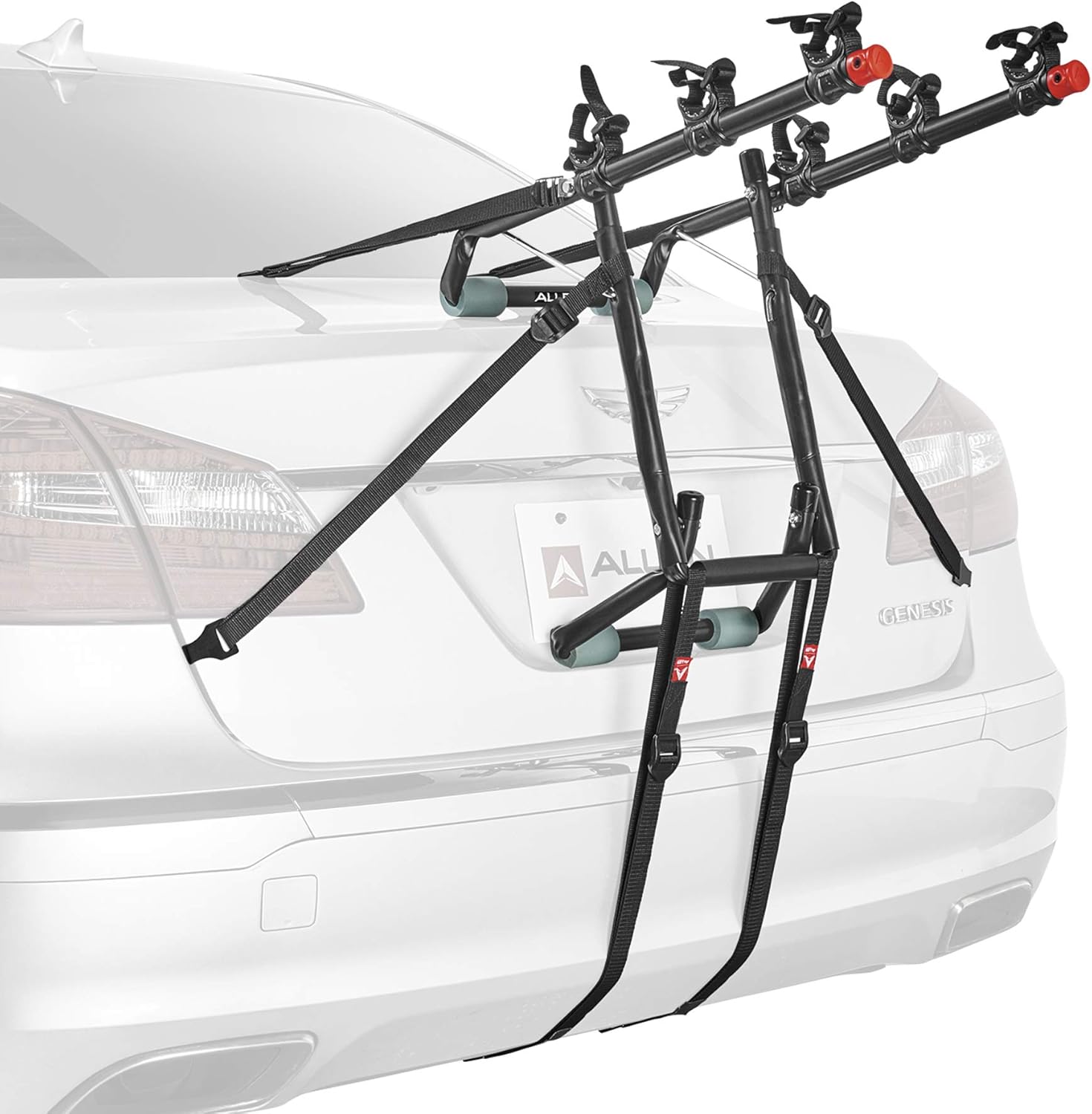
Now, this one again comes from the Allen Sports and it is really durable and stable trunk-mounted rack.
Also, it is made with the high quality alloy steel material that makes them truly durable and highly reliable for the longer-period of time.
Plus, this is just 4 kilogram in weight that is why it is lighter and easier to store than many other big racks.
You can easily carry up to 3 bicycles with ease, even there are padded lower frame that protects the vehicle, even comes with the left and right side straps to manage the lateral stability.
#3. IKURAM R
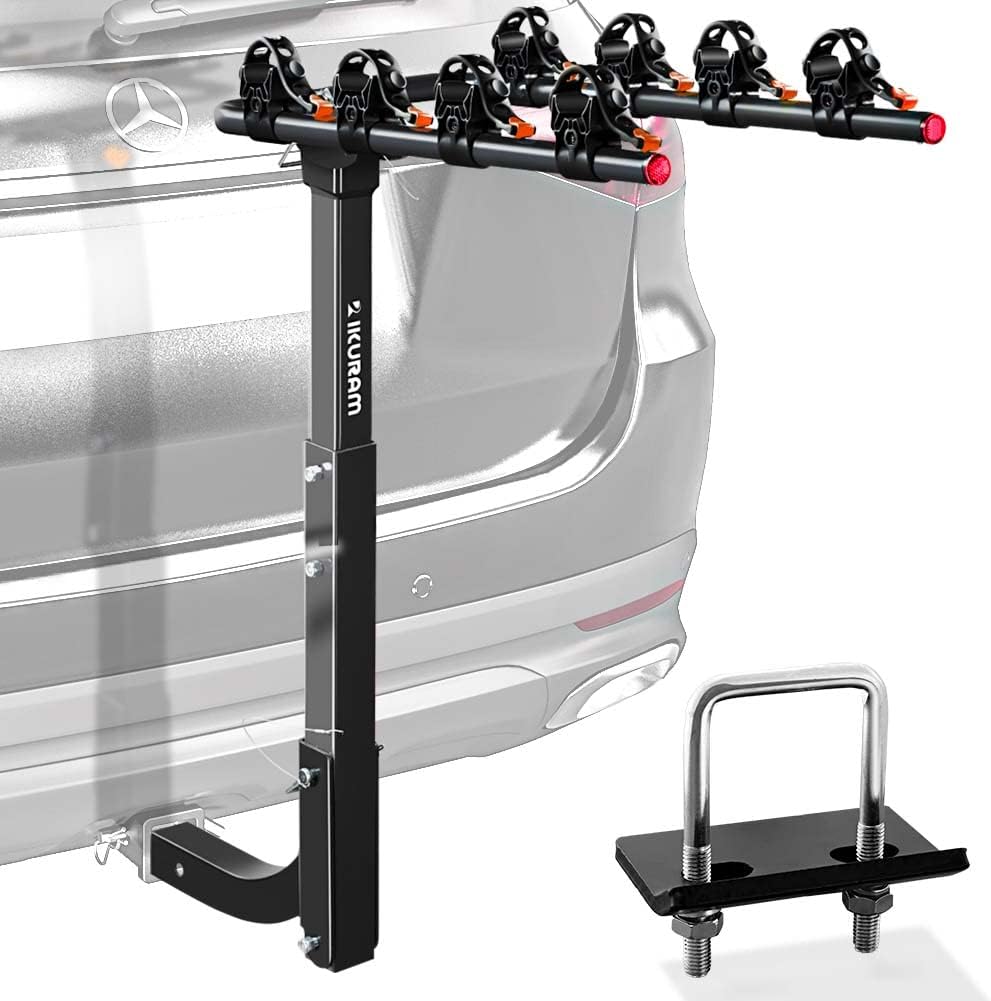
So, this bike rack for Tesla Model Y is designed by IKURAM R, it supports 4 bikes so that you can easily have the trip with your friends and family without missing out anything.
Additionally, it is made with the Alloy Steel & Rubber materials that makes them truly durable and highly protective as well.
It comes with easy tilt-down access, which means you can access to the rear of the vheicle with easy-to-use tilt and down feature that makes the loading and unloading the bikes quiet effortlessly.
#4. Saris

This stylish trunk bike rack for Tesla Model Y is manufactured by Saris Bones, the beautiful design and tyle makes them eye-soothing.
As well as, it is designed to fit most of the vehicles, even you can install it on those with the spoilers as well, because the rubberized feet actually protects your car’s finish and there’s coated straps that safeguards your bicycle as well.
It actually supports up to 2 bikes with the weight of each bike up to 35 lbs, even it comes with retcheting anti-sway straps that literally ensures a secure and stable hold for each of the bicycle.
Not only this, it has strong frame with injection-molded arms and legs, that actually provides great strength and rust-free durability for the long term use.
#5. Allen
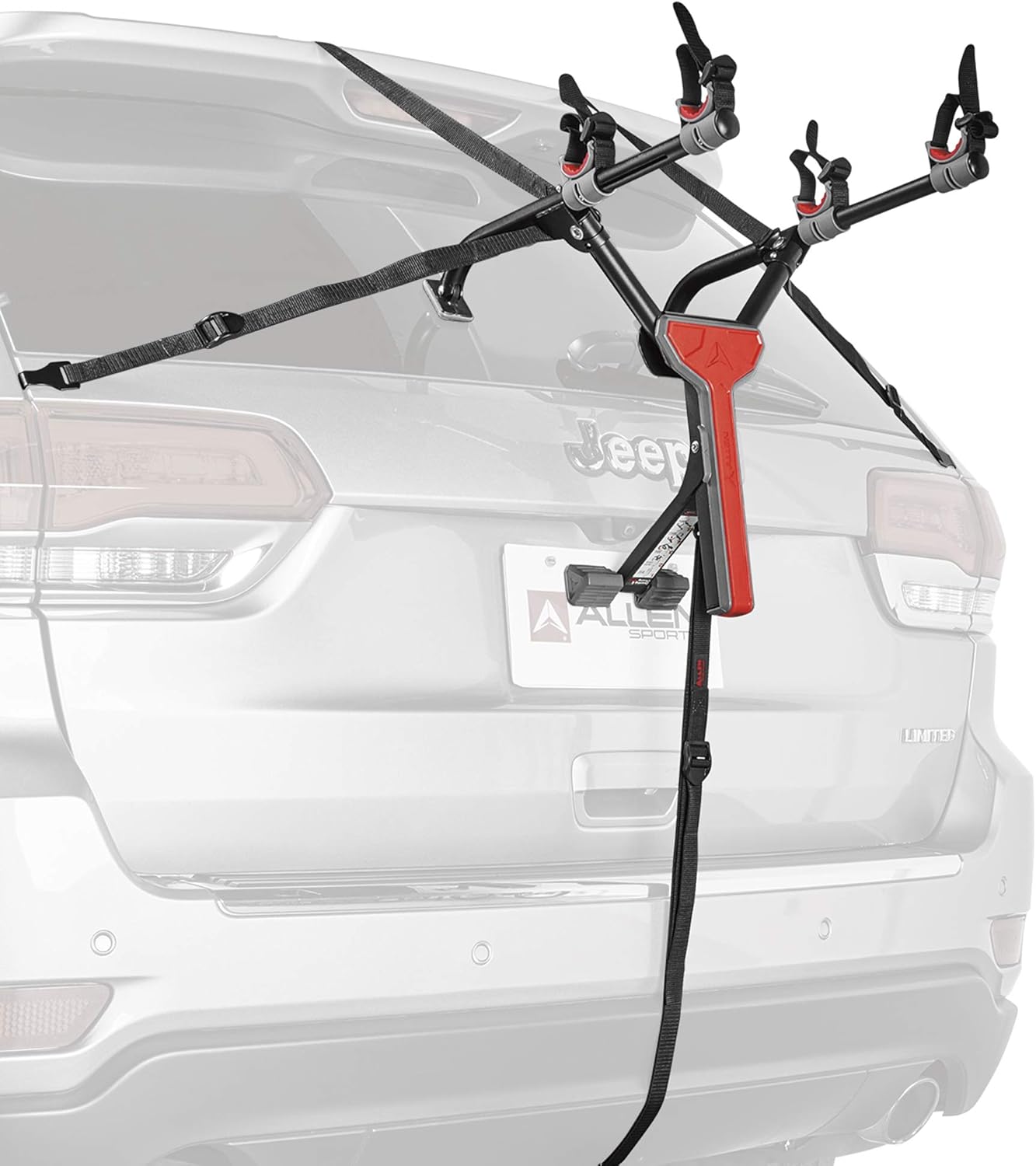
This Allen bike rack comes with the ultra compact folded design, which is why it makes this easy to handle and unloading and loading the bicycles easy.
Because of the compact design it is great for the travel or commuting.
Even, it comes with the padded lower frame that literally keeps bicycles away from the vehicle and you can tie-downs the indivicual bikes to protect your bicycle during drive.
How to Install Bike Rack for Tesla Model Y – Setup Guidelines
1. How to Install Hitch Rack on Tesla Model Y
Installing a hitch-mounted bike rack on a Tesla Model Y is a process that becomes straightforward when the correct steps are followed and the right equipment is used.
The goal of proper installation is to ensure the rack fits securely and snugly into the hitch receiver, protects the rear of the vehicle, and provides a stable platform for carrying one or more bicycles.
Because the Model Y has driver-assist sensors and a rearview camera, correct positioning of the rack is crucial to ensure the vehicle can still display warnings and that basic functions continue to operate correctly, specially when reversing or parking.
Installation should always be performed on level ground, and it’s helpful to test-fit the rack before loading bikes to ensure everything aligns properly.
Taking the time to double-check each step can help prevent issues such as swaying at high speeds, damage to the hitch, or weight shifting during travel.
Once properly installed, the rack should feel secure and stable, giving the owner confidence whether driving short distances or embarking on a long road trip.
1. Attaching the Hitch Receiver
If the Tesla Model Y already has a hitch receiver installed, the rack installation begins by sliding the rack’s mounting arm into the receiver opening.
Once aligned, a locking pin or bolt is inserted through the provided holes to secure the rack in place.
This pin prevents the rack from sliding or detaching while the vehicle is in motion.
After the pin is secured, it’s essential to tighten any built-in locking or tightening systems that may be part of the rack design.
These systems eliminate any excess play within the receiver opening, reducing movement and rattling.
If the Model Y does not have a factory-installed hitch, the hitch must first be installed according to the manufacturer’s instructions.
A properly installed hitch receiver forms the foundation of stability for the entire rack, so it must be securely fitted and checked before mounting the rack.
2. Loading and Securing the Bikes
Once the rack is securely mounted, the next step is loading the bicycles.
Most hitch-mounted racks are designed for easy loading at waist height, reducing strain and making the process easier for most users.
When placing the bikes on the rack, they should be level, balanced, and aligned according to the rack’s support system, whether it uses wheel trays, frame arms, or vertical supports.
After positioning the bikes, securing straps or locking arms must be tightened to hold the bikes firmly in place.
It’s crucial to check that the wheels, handlebars, and pedals are not loose or positioned in a way that could cause them to hit the car’s body or other bikes during travel.
For racks designed to hold multiple bikes, heavier bikes should be loaded closest to the vehicle for better weight balance.
3. Adjusting Anti-Swing and Tailgate Clearance
After the bikes are loaded and secured, the final step is adjusting the anti-swing components and confirming that there is sufficient clearance between the rack and the vehicle’s tailgate.
Anti-swing features are designed to prevent the bikes from colliding with each other or swaying during bumps, turns, or uneven surfaces.
Most racks have stabilizing straps or tightening knobs that secure the mounting arms and prevent movement.
It’s also helpful to check that no part of the bike or rack touches the rear window or painted surfaces.
If the rack has a tilt function, testing it at this stage ensures that the tailgate can be partially or fully opened when needed, specially during road trips.
Once all adjustments are complete, a short test drive around the parking area helps confirm that the installation is sturdy, secure, and free from any vibrations or noises.
Following these steps makes traveling with bikes on a Tesla Model Y safer, easier, and more enjoyable.
2. How to Install Tesla Model Y Roof Rack
Installing a roof-mounted bike rack on a Tesla Model Y requires special attention due to the vehicle’s smooth panoramic glass roof and the lack of traditional raised roof rails.
Correct installation ensures that the glass is not damaged, stability is maintained at highway speeds, and excessive wind noise or vibration is avoided.
The main objective is to correctly position the crossbars, securely attach the rack, and ensure sufficient clearance between the bikes and the roof surface.
A properly installed roof rack provides a sturdy and secure base for carrying one or more bicycles and helps prevent damage from improper installation or movement during travel.
Taking the time during installation also ensures the rack remains secure during acceleration, braking, turns, and long journeys.
As the Model Y relies heavily on aerodynamics for range efficiency, correct positioning of the rack can also help minimize energy loss and wind resistance.
When done correctly, the roof rack setup provides secure transportation for bicycles without compromising the vehicle’s structure or technology.
1. Positioning the Crossbars
Before installing a roof-mounted bike rack, it is crucial to correctly position the crossbars on the Tesla Model Y.
The crossbars serve as the foundation of the rack system, and without them, most roof rack models cannot be installed.
The Tesla Model Y has specific mounting points hidden beneath the weatherstripping where the crossbars attach, and the bars should be positioned according to the recommended spacing specified by Tesla or the crossbar manufacturer.
This spacing helps distribute the weight evenly and prevents excessive pressure on the panoramic glass roof.
Once installed, the crossbars should be securely tightened using the provided torque specifications, ensuring they are stable and do not move when pulled or pushed.
Proper alignment also ensures that the bikes remain level and stable during driving.
Checking for any movement before mounting the rack is crucial, as loose crossbars can cause wind noise, vibrations, or instability during use.
2. Rack Mounting Procedure
With the crossbars properly installed, the next step is to mount the bike rack.
Depending on the model and design, the rack is typically secured to the crossbars using clamps or bolts.
During installation, the rack should be centered and aligned to ensure the weight of the bikes is balanced and the mounting mechanism receives full support.
Each connection point should be securely tightened, and it is recommended to follow the manufacturer’s torque settings or tightening instructions to prevent the rack from loosening during driving.
Once mounted, it’s beneficial to gently shake or pull on the rack to ensure it doesn’t move.
A properly mounted rack should feel stable and secure, even before loading the bikes.
After this step, the rack is ready for loading, and final adjustments can be made after placing and securing the bikes.
3. Ensuring Clearance with Panoramic Sunroof
The final step is to ensure there is sufficient clearance between the rack, the bicycles, and the panoramic glass sunroof.
The Tesla Model Y’s glass roof is robust, but it should never come into direct contact with the bike frames, pedals, wheels, or accessories during installation or driving.
Clearance becomes even more crucial when the bike is large, has high handlebars, or is fitted with accessories such as a water bottle cage or mounted equipment.
Some owners opt for racks with wheel trays and vertical clamps because they help stabilize the bike and securely lift it above the roof surface.
Additionally, it’s essential to ensure that the sunroof can open safely with the rack installed.
In most cases, it’s advisable to avoid opening a panoramic roof when the rack and bike system are in place, as movement or wind pressure could cause contact or vibration.
Once the clearance is confirmed and the rack is fully tightened, a short test drive helps verify that there are no unusual noises or movements.
3. How to Check Safety of Bike Rack for Tesla Model Y
Before driving with a bike on a Tesla Model Y, a thorough safety check is crucial, given the vehicle’s heavy reliance on technology such as sensors, cameras, and driver-assist systems.
These checks help ensure the rack remains stable, the bikes are secure at varying speeds, and the rack installation doesn’t interfere with vehicle features or damage other parts of the car.
A proper safety check also minimizes the risk of vibrations, loosening, or movement during travel, specially on highways or rough roads.
Taking a few minutes to verify every detail can prevent costly repairs, increase driving confidence, and ensure the safety of both the rack system and the bikes being transported.
Whether it’s a hitch-mounted or roof-mounted rack, maintaining proper installation and performing regular safety checks makes bicycle transport easier, safer, and more reliable.
1. Torque Settings
Before driving, it’s essential to confirm that all bolts, clamps, screws, hitch pins, and fastening points are tightened to the recommended torque levels specified by the bike rack manufacturer.
Torque settings are critical because overtightening can damage mounting points, while undertightening can cause hardware to loosen or vibrate during driving.
Many modern racks include torque-limiting tools or indicators to help ensure proper tightening.
For roof-mounted racks and crossbars, accurate torque protects the panoramic glass roof and prevents movement at high speeds.
For hitch-mounted racks, the correct torque ensures a secure connection between the rack and the receiver, minimizing rattling or stress on the hitch frame.
Performing this step regularly, specially before long trips, helps maintain long-term safety.
2. Clearance from Sensors and Cameras
The Tesla Model Y relies on ultrasonic sensors, radar, and rear-view cameras for features such as autonomous driving, collision warning, and parking assistance, so it’s crucial to check the clearance between the rack and these systems.
A properly installed rack should not touch or block the backup camera, but some changes in display are normal when the rack is loaded.
If sensors are completely blocked, the vehicle may display warnings or disable certain driver-assist features.
For hitch racks, ensuring that bikes don’t hit the bumper or block the camera helps avoid false alerts.
With roof racks, ensure the system doesn’t interfere with the roof area where autonomous driving detects the surrounding environment.
If a sensor is blocked, adjusting the rack or repositioning the bikes may help restore proper alignment.
3. Test Driving with the Rack Empty and Loaded
After installation and initial checks, the best way to confirm stability and performance is a short test drive.
First, driving with the rack empty allows the owner to detect any rattles, vibrations, or excessive movement.
If anything seems loose or noisy, adjustments should be made and tightened before loading the bikes.
Then, repeating the test drive with the bikes loaded confirms that the final setup is secure.
Testing first on a smooth road and then on a slightly rougher surface reveals how the rack will behave during regular use.
The driver should observe changes in handling, braking response, and whether the bikes or rack shift while turning.
When everything remains stable and quiet, the setup is considered safe for normal driving and long-distance travel.
Read More:
How to Ensure Weight Capacity, Durability, and Safety
Understanding the weight capacity, durability, and safety requirements for a bike rack on a Tesla Model Y is crucial, as the vehicle’s specific structural limitations and design features affect how much weight it can safely carry.
The rack’s strength, mounting position, and the type of bikes being transported all impact long-term safety and performance.
Choosing a rack compatible with the Model Y’s engineering helps prevent damage, improves stability during travel, and ensures the rack performs well under varying road and weather conditions.
1. Tesla Model Y Hitch Tongue Weight Limits
The Tesla Model Y has a hitch tongue weight limit, typically around 160 pounds when using the official Tesla tow package.
This rating includes the rack and all bikes loaded onto it.
Exceeding this limit can affect handling, suspension, braking distance, and the long-term integrity of the hitch mounting point.
Keeping the weight within the limits specified by Tesla provides better control and reduces stress on the chassis.
Checking both the rack manufacturer’s rating and Tesla’s limits helps prevent improper loading and improves safety during short and long-distance travel.
2. Differences in Carrying Regular Bikes vs E-Bikes
Regular bicycles typically weigh between 20 and 35 pounds, but e-bikes can weigh 45 to over 70 pounds depending on battery size and frame design.
Because e-bikes are heavier, not all racks can support them.
Hitch-mounted racks are generally the best option for carrying e-bikes as they offer a lower lifting height and provide more robust support.
When transporting e-bikes, many owners remove the battery before loading to reduce weight and protect sensitive components from overheating.
Understanding the weight differences between bike types helps in choosing the right rack and avoiding overloading.
3. Material Comparison: Aluminum vs Steel vs Composites
The material of a bike rack impacts its durability, weight, corrosion resistance, and long-term performance.
Aluminum racks are lightweight and corrosion-resistant, making them easy to handle and ideal for frequent installation and removal.
Steel racks are stronger and often more stable when carrying heavier loads like e-bikes, but they may require a protective coating to prevent rust over time.
Composite material racks offer a good balance of strength and weather resistance, but they may not support as much weight as steel designs.
Considering the differences in materials helps match the rack to its intended use and environment.
4. Weather Impact and Corrosion Protection
Weather exposure significantly affects how long a rack will last when exposed to rain, heat, dust, snow, or salt.
Coatings such as powder coating or anodized finishes can help prevent corrosion and extend the rack’s lifespan.
Stainless steel hardware, rubber straps, and UV-resistant plastics prevent deterioration or weakening in harsh weather conditions.
Keeping the rack clean and dry when not in use reduces the risk of corrosion, specially if you drive in coastal or snowy areas where salt is common.
Proper care improves safety, protects your investment in the rack, and ensures reliable performance for years of use.
What are The Impact on Vehicle Performance After Installation of Tesla Model Y Bike Rack

It’s crucial to understand how a bike rack affects the performance of a Tesla Model Y, as electric vehicles react differently to added weight, air resistance, and external attachments compared to gasoline-powered cars.
Bike racks alter the airflow around the vehicle, add extra weight, and create new pressure points, which can impact handling, braking distance, noise levels, and energy efficiency.
Because EVs rely on precise aerodynamics and battery efficiency, even minor changes can make a noticeable difference in real-world performance, specially at highway speeds.
Knowing how each type of rack affects performance helps owners choose the best option based on how often they travel, the distances they cover, and the type of bicycles they carry.
1. Aerodynamics and Energy Consumption
Roof racks significantly increase air resistance because they are mounted in the path of the main airflow, creating more drag and turbulence as the vehicle moves.
This increased drag can lead to higher energy consumption, particularly when driving at speeds above 50 mph, where air resistance has a greater impact on efficiency.
Hitch-mounted bike racks, on the other hand, have a much smaller impact on aerodynamics because they are mounted at the rear of the vehicle and are mostly shielded by its natural shape.
In various real-world driving tests, roof racks can increase power consumption by 10 to 25 percent depending on speed and load, while hitch racks typically result in only minor changes in efficiency.
This is why many Tesla drivers prefer hitch racks when long-distance travel is common.
2. Impact on Range
When a bike rack is installed and bicycles are loaded onto it, the real-world range of a Tesla Model Y can be reduced, specially during long journeys or when driving at high speeds on the highway.
With a roof rack and bicycles, the range reduction can sometimes reach 15 to 40 percent, depending on factors such as wind direction, weight, road elevation, and weather conditions.
Hitch racks typically result in much less range loss, approximately 5 to 12 percent in most reported cases.
This is because roof-mounted bicycles create more aerodynamic drag, while hitch-mounted setups are more streamlined.
Understanding the estimated impact on range helps drivers plan charging stops and avoid unexpected battery depletion during trips.
3. Noise and Vibration
Bike racks can generate increased noise and vibration while driving, specially if the rack is not properly installed or the bicycles are not securely fastened.
Wind noise is more common with roof-mounted racks as the air directly hits the exposed frames, wheels, and cables, sometimes resulting in whistling or humming sounds at higher speeds.
Hitch racks generally produce less wind noise, but rattling sounds can occur if the fasteners loosen over time.
To minimize noise and vibration, users should tighten straps, use anti-wobble clamps, regularly check bolts, and remove any loose bike accessories such as pumps or water bottle cages before driving.
By following these steps, users can ensure a quieter and smoother driving experience while keeping the rack secure.
What are The Security Features of Tesla Model Y Bike Rack
Security is a crucial aspect when choosing a bike rack for the Tesla Model Y, as both bicycles and racks can be expensive, and theft can occur in both public and private parking areas.
Modern bike racks often feature built-in locking systems designed to secure both the rack and the bicycles during travel or when the vehicle is parked.
As the Model Y is frequently used for road trips and outdoor activities, a robust security system minimizes the risk of loss and provides peace of mind, specially when stopping at restaurants, charging stations, or overnight accommodations.
A rack with proper locking features not only protects the bikes but also prevents damage from unwanted tampering or attempts at forced removal.
1. Integrated Locking Mechanisms
Many high-quality bike racks now come with built-in locks that secure the bikes directly to the rack using a key or combination control.
These locks are often designed as retractable cables, locking knobs, or frame-mounted systems that tightly attach around the bicycle frame or wheels.
Integrated locking systems are advantageous because they eliminate the need for additional hardware and reduce the likelihood of forgetting an essential security accessory.
Some locks also incorporate tamper-resistant mechanisms and hardened steel components that make them difficult for thieves to cut with tools.
For Tesla Model Y owners, an integrated locking feature provides an extra layer of security, specially during short stops or quick errands.
2. Hitch Locks, Wheel Locks, Cable Locks
Additional accessories such as locking hitch pins prevent the rack itself from being removed from the vehicle, which is important because thieves sometimes target the rack rather than the bikes.
Wheel locks and frame locks secure specific parts of the bicycle, preventing the removal of components such as wheels or seat posts.
Cable locks are wrapped around multiple bikes and rack frames, providing increased security in situations where several bicycles or accessories are mounted.
For heavier e-bikes, robust and corrosion-resistant cable locks or thick chain locks offer greater security due to their higher value and removable battery systems.
Using multiple locking methods simultaneously increases security and makes theft attempts even more difficult and time-consuming.
3. Anti-Theft Considerations When Parking
When parking for extended periods, specially in public areas, choosing a visible and well-lit location can help deter theft attempts.
Removing detachable items such as batteries, GPS units, or quick-release wheels makes the bike less appealing to thieves.
Some Tesla owners also activate the car’s Sentry Mode, which uses the onboard cameras to monitor suspicious activity around the vehicle and record any activity.
This feature can help deter theft and provide video evidence if needed.
For longer trips, some users prefer hitch racks with a folding feature that allows them to lock the rack closer to the car’s body.
By combining secure hardware, smart parking choices, and Tesla’s built-in monitoring features, owners can protect their bicycles and maintain a secure setup even when traveling or leaving their vehicle unattended.
How to Care and Maintain Tesla Model Y Bike Rack
Proper maintenance of the bike rack used on a Tesla Model Y can extend its lifespan, improve safety, and ensure consistent performance even with frequent travel and varying weather conditions.
A well-maintained rack remains secure, reduces the likelihood of corrosion or wear, and protects the surfaces of both the bicycle and the vehicle.
Because the Model Y may face rain, coastal environments, snow, or dusty areas depending on the driving location, regular maintenance helps prevent rust, loosening of parts, or a decrease in load capacity over time.
The goal of long-term care is to keep every component functioning as it did when new, whether the rack is hitch-mounted, roof-mounted, or stored during certain seasons.
1. Cleaning and Lubrication Schedule
Regular cleaning of the rack removes dirt, moisture, salt, and road grime that can gradually damage metal coatings or plastic surfaces.
If the rack is made of steel, cleaning helps prevent rust, specially around weld joints or moving components.
Aluminum racks resist corrosion better, but still benefit from occasional cleaning to remove debris that could affect sliding arms or clamps.
Washing with mild soap and water and then drying is usually sufficient.
Moving parts such as hinges, locking arms, ratchets, and quick-release mechanisms may require lubrication every few months to ensure smooth operation.
Silicone or lithium-based lubricants are often preferred because they protect the mechanics without damaging rubber surfaces or weakening the grip.
2. Inspection of Straps, Bolts, and Locking Mechanisms
Over time, straps, bolts, and locking systems can loosen slightly due to road vibrations or temperature changes.
Regular inspections help prevent safety hazards such as movement, rattling, or reduced load security during transport.
Rubber straps or Velcro ties should be checked for cracks or stretching, specially after exposure to extreme heat or cold.
Bolts and fasteners should be tightened according to the manufacturer’s torque recommendations, particularly if the rack is used frequently or for carrying heavy bikes such as e-bikes.
Locking mechanisms should be tested periodically to ensure that keys turn smoothly and that cables are not frayed or damaged, as a faulty lock can compromise security against theft.
3. Seasonal Storage Tips
If the bike rack is not being used during the winter months or for extended periods, properly storing it helps preserve the materials and minimize wear and tear.
Hitch racks can be removed and stored indoors to protect them from road salt and moisture.
Roof racks can also be stored when not transporting bikes to reduce aerodynamic drag and improve fuel efficiency.
Storing the rack in a dry place prevents rubber parts from cracking and protects metal surfaces from rusting.
Some users apply protective sprays or covers to safeguard exposed hardware during long-term storage.
Storing the rack with components slightly loosened rather than fully tightened reduces stress on the straps and mechanisms, keeping them flexible and ready for use when the riding season returns.
Common Mistakes That You Should Avoid After Installation of Model Y Bike Rack
Avoiding common mistakes when choosing or installing a bike rack for your Tesla Model Y can help prevent damage to the vehicle, keep your bicycles secure, and ensure safe driving.
The Tesla Model Y has some unique design factors, such as a sensitive glass rear hatch, advanced driver-assist sensors, and limited hitch weight capacity, meaning that not all racks or installation methods are suitable.
Understanding these risks helps avoid costly repairs, unsafe loading, and unnecessary stress during your trip.
Taking the time to choose the right rack and install it correctly also results in a better driving experience, improved energy efficiency, and better long-term reliability of both the rack and the bike mounting system.
Plus, there’s a studies on roof-rack aerodynamics and energy/drag penalties, it shows that roof-mounted racks and with loaded bikes actually increases drag and energy consumption significantly, also it is seen it effects specifically at highway speeds. Also, analysys estimates that roof racks can raise energy use by double-digit percentages depends on vehicle’s speed and rack geometry as well.[¹]
1. Overloading the Hitch Weight Capacity
One of the most common mistakes is overloading the hitch or rack beyond its safe weight capacity.
The Tesla Model Y typically has a hitch tongue weight limit of approximately 160 pounds when using the Tesla OEM tow hitch, which includes the total weight of the rack and all bicycles.
Exceeding this capacity can affect the vehicle’s handling, suspension, and braking performance, specially at higher speeds or on uneven roads.
Overloading can also stress the hitch connection over time, potentially leading to wear and tear or structural failure.
Carefully checking the weight of the rack and bikes before loading ensures vehicle stability and protects the hitch mounting points from premature damage.
2. Using a Trunk Rack on the Glass Tailgate
Another major mistake is installing a trunk-mounted bike rack on the Model Y.
The rear hatch is mostly glass and is not designed to withstand the weight or pressure of straps or mounting hooks.
Attempting to use a trunk rack can result in broken glass, damage to the electric lift mechanism, or voiding the warranty.
Because the Model Y rear liftgate was not engineered for load-bearing connections, trunk racks are not recommended and should be avoided entirely, even if the rack claims universal compatibility.
Choosing a hitch rack or roof rack instead ensures the load is supported by robust structural points designed for load transport.
3. Ignoring Sensor Interference Warnings
The Tesla Model Y has numerous sensors that assist with parking assistance, lane guidance, collision avoidance, and Autopilot features.
A bike rack or mounted bicycles can block some sensors, particularly those near the rear bumper, tailgate, or rear camera.
Ignoring sensor warnings can lead to reduced safety alerts or false alarms while driving, specially when reversing.
Some Tesla owners opt for racks specifically designed to minimize obstruction or disable certain assistance settings when a rack is installed.
Understanding how the rack interacts with the vehicle’s technology ensures safety systems function correctly.
4. Improperly Securing Bikes Leading to Scratches or Movement
Another common issue is improperly securing bikes, which can cause them to shift during travel, collide with each other, or scratch the vehicle or bike frames.
Loose straps, incorrect clamp positioning, or a lack of frame adapters can result in excessive movement when driving over sharp turns or potholes.
Using the correct accessories, checking strap tension before each trip, and maintaining distance between bikes protects the paint finish and prevents damage to the frames, specially when transporting carbon fiber or expensive electric bikes.
Properly securing the load not only keeps the bike safe, but it also makes the driving experience more stable and stress-free.
Conclusion – Best Bike Rack for Tesla Model Y
You can literally unlock the adventure when you go to the vacation or family trip as you can carry those lovely bikes with yourself to feel the adventurious joy.
Because the Tesla Model Y features a unique design, including advanced sensors, a glass rear liftgate, and aerodynamics focused on efficiency, the process of choosing and installing a bike rack requires more careful consideration than with traditional gasoline vehicles.
Understanding the rack type, weight limits, mounting style, and safety features ensures a smooth transportation experience whether carrying standard bicycles, mountain bikes, or heavier e-bikes.
A properly chosen and well-maintained rack not only provides stable transport but also preserves vehicle performance, protects battery range, and ensures worry-free use over time.
With the right accessories, correct installation techniques, regular checks, and safe handling, the rack becomes a reliable tool for road trips, commuting, or outdoor adventures.
Investing time in research and maintenance helps avoid common mistakes such as overloading, incorrect securing methods, or interference with Tesla’s safety systems.
Ultimately, the goal is a setup that feels secure, performs well on long drives, and supports an active lifestyle without compromising the vehicle’s design or functionality.
Now, that’s it from this one and if you still wanted to ask something about this guide, just let us know by commenting below.
Frequently Asked Questions
Q1. Can any bike rack fit on a Tesla Model Y?
Answer: Not every bike rack will fit on a Tesla Model Y because the vehicle’s design differs from many traditional SUVs. The Model Y features a large glass rear hatch, sensitive sensors, and a clean exterior design, which limits the options for trunk-mounted racks. The safest and most compatible options are typically hitch-mounted racks and roof-mounted racks. Hitch racks work with the Tesla OEM tow hitch or aftermarket hitches, while roof racks require crossbars before the actual bike rack can be installed. As long as the rack is designed to work with these mounting points and adheres to Tesla’s weight and clearance recommendations, it should fit properly.
Q2. Are trunk-mounted bike racks safe for a Tesla Model Y?
Answer: Trunk-mounted bike racks are not recommended for the Tesla Model Y because the rear hatch has a large tempered glass surface that is not designed to support the weight, straps, or external pressure. Using a trunk rack could damage the glass, cause scratches, interfere with the electric lift mechanism, or void any warranty coverage associated with the rear hatch. For this reason, most experts and Tesla owners avoid trunk racks and opt for hitch or roof racks instead.
Q3. How much weight can a Tesla Model Y bike rack hold?
Answer: The weight capacity depends on the type of mounting system. For hitch-mounted racks, the limit is tied to the hitch’s tongue weight rating, which is typically around 160 pounds for the Model Y. This total includes the bike rack itself and all the bikes being carried. Roof racks have a lower weight limit because the load is on the roof structure rather than the chassis. Roof systems typically support a total weight of approximately 125 pounds, including the rack and bikes. To avoid overloading, always check the rack manufacturer’s rating and compare it to Tesla’s limit.
Q4. Do bike racks affect the driving range of a Tesla Model Y?
Answer: Yes, carrying bike racks, specially with bikes loaded on them, can affect the driving range of a Tesla Model Y due to increased weight and altered aerodynamics. Roof racks typically create more wind resistance, specially at highway speeds, and can significantly reduce range. Hitch racks generally have less aerodynamic resistance, so the impact is usually less. The range reduction can vary depending on speed, terrain, weather, and the design of the rack, but some reduction in range is normal when a rack is installed.
Q5. Are bike racks safe for carrying e-bikes on a Tesla Model Y?
Answer: Yes, bike racks can be used to carry e-bikes, but it’s important to choose a rack designed for heavier bikes, as e-bikes are typically heavier than standard bicycles. A sturdy hitch-mounted rack is usually the best option as it can handle more weight and is easier to load than a roof-mounted rack. It’s also helpful to remove the e-bike’s battery before loading to reduce weight and prevent the battery from overheating during travel.
Q6. Will a bike rack block cameras or sensors on a Tesla Model Y?
Answer: Some bike racks and mounted bikes may block sensors or the rear camera, specially if the rack is mounted close to the rear of the vehicle. Blocked sensors may trigger alerts or limit certain features such as parking assistance or Autopilot. This doesn’t damage the vehicle, but installing a rack may require some adjustments to driving habits. Some racks are designed to sit lower or further away to minimize interference, so choosing the right design helps maintain the system’s functionality.
Q7. What accessories are needed to install a bike rack on a Tesla Model Y?
Answer: The necessary accessories depend on the type of rack. Hitch racks require a Tesla or aftermarket hitch receiver. Some racks also require an anti-wobble kit or locking hitch pin for better stability and security. Roof racks require crossbars before the actual bike mounts can be installed. For step-through bikes or children’s bikes, a frame adapter may be necessary to ensure a secure and balanced fit. Locks, wheel straps, and padding can also help keep everything stable and secure during travel.
Q8. How do I prevent my bikes from scratching each other or the car when mounted?
Answer: Scratches typically occur when bikes move or rub against each other during travel. The best way to prevent this is to securely fasten each bike using the rack’s clamps, straps, or arm supports. Adding extra padding or protective sleeves around the bike frames can also help. If carrying multiple bikes, properly spacing them and utilizing anti-sway features will minimize contact and movement while driving.
References:
[1] Fuel Consumption Impacts of Auto Roof Racks
https://www.osti.gov/servlets/purl/1257753

Jonathan, the passionate owner of Bicycle Time, brings a lifelong love for bikes and automotive craftsmanship, that reflects into every corner of the shop. With deep passion in both cycling and automotive accessories, Jonathan is more than just an expert.