 Skip to content
Written By: Jonathan
Fact Checked By: Caroline Dezendorf
Reviewed By: Matt Tanner
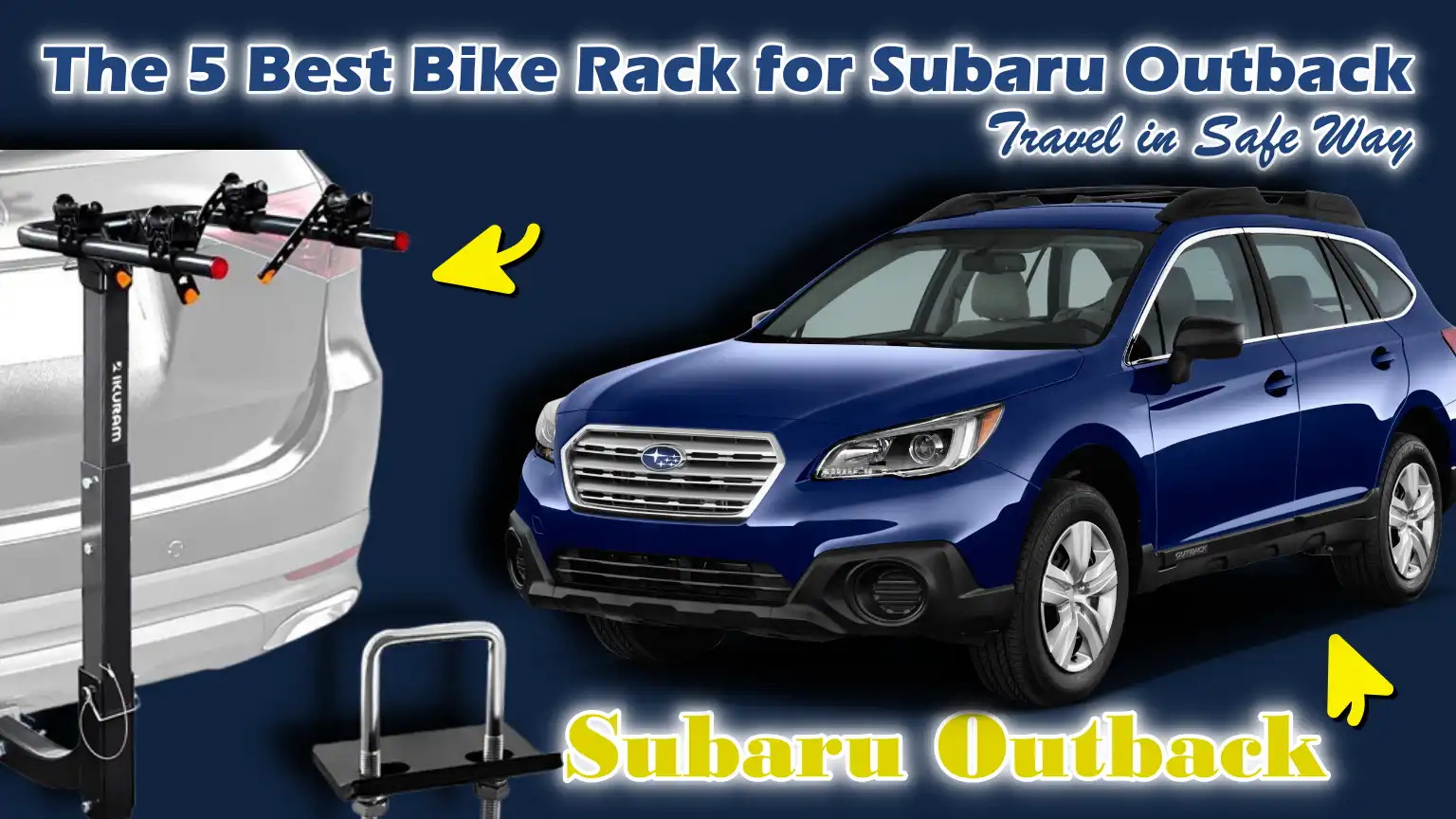
Yes, there’s not doubt about the adventurous nature of subaru outback, as it is built for it and then here comes the bike rack that makes the adventure easier and truly safe.
Even, Subaru Outback comes with the standarf roof rails, optional hitch receiver and it has really strong towing capability as well that can carry multiple bikes quiet efficiently.
So, if Subaru Outback owners wanted to enjoy with the bicycles then you just need a truly compatible and high quality bike rack and that’s why we have come up with these 5 Best Bike Rack for Subaru Outback that protects from scratches and has ultra-stability.
Not only this, these bike racks comes with lots of features that literally enhances your comfortability, convenience and prevent from any possible damage as well.
Why Subaru Outback Owners Need a Compatible Bike Rack
The Subaru Outback is considered one of the most practical and adventure-ready vehicles, making it popular among cyclists, families, and outdoor enthusiasts.
With features like robust roof rails, available hitch receiver options, and Subaru’s Symmetrical All-Wheel Drive system, the Outback is designed to support outdoor equipment and recreational activities, including bike transport.
Because most Outbacks come with factory roof rails and crossbar compatibility on most trims, many owners assume that any rack will fit.
However, choosing a rack specifically compatible with the Outback ensures proper weight support, better installation alignment, and secure travel at highway speeds or on rough roads.
A proper match also protects the vehicle’s body panels, paint, liftgate, and roof structure from damage that can occur when using a poorly fitting universal rack.
1. Advantages of the Subaru Outback Design
Subaru engineered the Outback with both robust capability and smart transport solutions in mind.
Most Outback models offer a roof load capacity of approximately 150 pounds, depending on the trim and year, allowing for the secure mounting of many roof-rack systems.
Additionally, many models come with a Class I or Class II hitch option, making hitch-mounted racks compatible for heavier bikes like electric bikes or mountain bikes.
The practical ground clearance and robust chassis design also make the vehicle reliable for transporting bikes on gravel roads, national parks, local trails, and long-distance trips.
This design allows users to safely transport bikes without blocking rear visibility or risking instability during sharp turns or long drives.
2. Outdoor and Travel Needs
Many Subaru Outback owners enjoy travel-related hobbies such as mountain biking, road cycling, daily commuting, racing, or riding with family.
Because the Outback is built for road trips, camping, trail access, and weekend outdoor adventures, a reliable way to transport bikes becomes a necessity, not an option.
A compatible rack helps ensure bikes remain secure throughout the journey, whether navigating city streets, climbing hills, or traveling on rough terrain.
For an active lifestyle, a rack designed for the Outback makes loading easy, protects the bike frame, and offers quick setup time, which is specially important for frequent riders.
3. Growing Demand for Better Transport Options
Participation in cycling has increased significantly in recent years, and more Subaru owners are now seeking better and safer bike transport systems.
With more riders using expensive carbon fiber bikes, electric bikes, and performance-built bikes, transport quality has become more important than ever.
The rise in biking tourism, weekend trail visits, and cycling events has also increased the need for reliable racks.
A compatible and well-designed rack allows Subaru Outback owners to travel long distances without worrying about straps coming loose, bikes shifting, or the rack failing due to weight or speed.
4. Protection for the Vehicle and Bikes
Choosing the right rack isn’t just about convenience; it’s also about safety.
A properly designed rack for the Subaru Outback reduces the risk of scratches, dents, paint damage, and abrasions to the rear hatch or roof.
It also prevents the bikes from shifting, falling, or rubbing against each other, which could lead to expensive repairs or damage to components such as derailleurs, hydraulic brakes, or carbon frames.
When the rack is properly fitted, it also reduces wind noise, increases stability, and ensures that the setup remains secure even during long-distance travel or in bad weather.
A compatible rack creates a safe transportation setup that protects both the vehicle and the bikes, providing comfort and confidence on every ride.
What are The Types of Bike Racks Suitable for the Subaru Outback
Several types of bike racks work with the Subaru Outback, and choosing the right rack depends on how many bikes you want to carry, the type of bikes, your vehicle’s setup, and how often you travel with your bikes.
Because the Subaru Outback already features amenities like roof rails and optional hitch compatibility, most rack systems can work, but each type has its own purpose, advantages, and considerations.
Understanding these options will help you choose a rack that is safe, easy to use, and suitable for long-term use without damaging your vehicle or bikes.
1. Hitch-Mounted Bike Racks
Hitch-mounted racks are one of the most popular options for Subaru Outback owners because they offer excellent stability, higher carrying capacity, and are generally easier to load than roof racks.
These racks attach directly to the hitch receiver and are ideal for heavier bikes such as electric bikes or full-suspension mountain bikes.
The Subaru Outback typically has a 1.
25-inch OEM hitch receiver, but many riders upgrade to a 2-inch aftermarket hitch as it offers more rack options, stronger support, and a higher weight rating.
A major advantage of hitch racks is that many designs feature tilt-down or swing-away capabilities, allowing access to the rear hatch even with bikes loaded.
However, hitch-mounted racks can be more expensive and heavier than other types of racks, and may require installation if your vehicle doesn’t already have a hitch.
For frequent travelers, hitch racks offer the best balance of safety, convenience, and durability.
2. Roof-Mounted Bike Racks
Roof-mounted racks are another great option for the Subaru Outback, specially as this model has built-in roof rails and mounting points that make installation easy.
These racks are often preferred by solo travelers, road cyclists, or those who want to keep the rear hatch and tow area clear.
Roof racks work well with lightweight bikes and aerodynamic frames, and they help keep the interior and exterior of the vehicle clean and organized.
They also allow for carrying additional equipment such as kayaks or cargo boxes when needed.
However, loading bikes onto the roof can be challenging due to the height, specially for shorter users or those with heavier bikes.
Some owners may require a step stool or assistance when loading bikes onto the roof.
Roof racks also increase wind resistance, which can slightly impact fuel efficiency.
Despite these challenges, roof-mounted racks are a reliable and clean solution that works well with the Subaru Outback’s roof design.
3. Trunk-Mounted Bike Racks
Trunk-mounted racks are often the most budget-friendly option and are useful for riders who travel occasionally rather than frequently.
These racks attach to the rear hatch using straps, and while they don’t require a hitch or roof setup, they do have some drawbacks.
Because they rely on straps and pads for support, trunk racks can leave marks on the paint or put pressure on the liftgate if not installed correctly.
They also typically have lower weight limits and may not work well with heavier bikes or larger frames.
Despite these limitations, trunk-mounted racks are useful for light use, short trips, or for riders who need a simple temporary solution without installing extra hardware.
For occasional riders, this rack type offers an easy and low-cost way to transport bikes.
4. Spare-Tire and Tailgate-Mounted Racks
Spare-tire and tailgate-style racks are less common for Subaru Outback models because most newer Outback models do not have an externally mounted spare tire.
These rack types were more compatible with older Outback models or similar SUVs that had a spare tire mounted on the rear.
These racks may be useful for users who already own an older model that supports this style, but they are considered a niche option rather than a primary choice.
Due to limited compatibility and lower demand, they are rarely the first recommendation for current Subaru Outback owners unless the vehicle’s design specifically supports them.
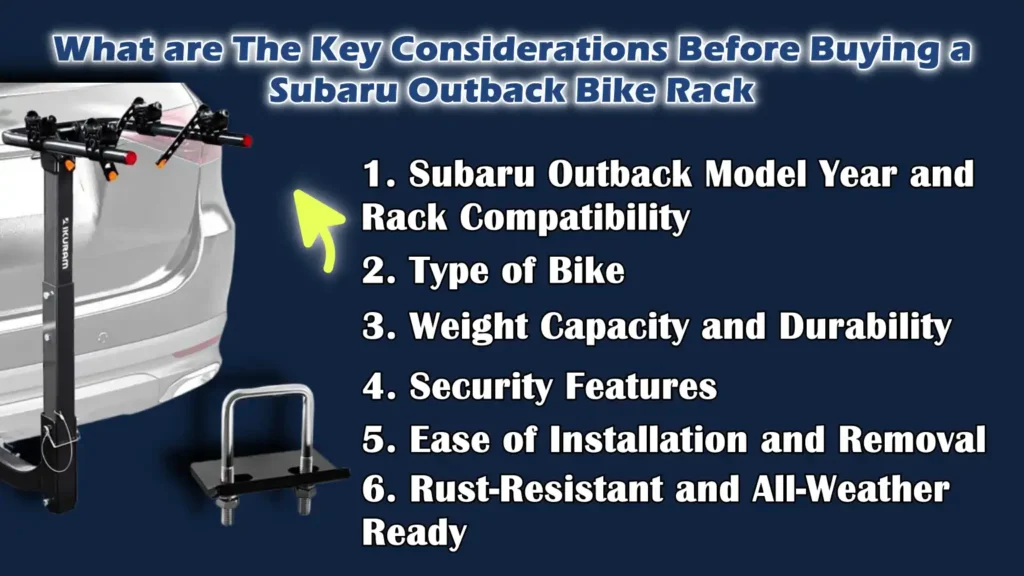
What are The Key Considerations Before Buying a Subaru Outback Bike Rack
Before choosing a bike rack for your Subaru Outback, it’s crucial to understand how different racks work with your vehicle and the type of bikes you’ll be carrying.
Not all racks are created equal, and factors like bike weight, frame type, installation method, and security features can make a significant difference in safety and convenience in the long run.
The right rack should fit the Outback properly, support the bikes without damaging them, and remain stable during long drives, bumpy roads, or highway speeds.
Considering these factors helps prevent issues like bikes shifting, rack failure, paint scratches, or overloading, ensuring a smooth and safe experience.
1. Subaru Outback Model Year and Rack Compatibility
The Subaru Outback’s design has changed across different model years, meaning rack compatibility may vary slightly depending on the vehicle’s year.
While most recent Outback models come with factory-installed roof rails and the option to add a hitch receiver, older models may require additional equipment or adapters.
Hitch size is particularly important as many Outback models come with a 1.
25-inch receiver, while many heavy-duty racks are designed for 2-inch receivers.
Understanding the exact model year and available mounting points ensures the rack fits securely and doesn’t interfere with the liftgate or rear bumper sensors.
2. Type of Bike
Different bikes have different transportation needs.
Mountain bikes, fat tire bikes, electric bikes, carbon fiber frames, and children’s bikes all require different support systems.
For example, electric bikes are heavier and often require hitch-mounted racks with a higher load capacity.
Carbon fiber frames should not be clamped directly to the frame, as the pressure can damage the material; therefore, wheel-mount racks are safer.
Fat tire bikes may require special trays or wider mounts, while smaller or irregularly shaped frames may require adapter bars.
Matching the rack to the type of bike ensures safe transport without the risk of damage.
3. Weight Capacity and Durability
Weight capacity is one of the most important considerations because overloading a rack can damage both the rack and the bikes, leading to instability or failure.
Most hitch racks can handle heavy loads, while trunk and some roof racks may have lower capacities.
Durability is also crucial, specially for riders who travel frequently or carry multiple bikes.
A sturdy rack made of steel or robust aluminum offers better long-term performance, particularly during long trips or off-road driving.
4. Security Features
A reliable bike rack should have robust security features, such as locking systems for both the rack and the bikes.
Anti-swing designs prevent bikes from swaying or colliding during turns or sudden stops.
The choice between frame or wheel-mount clamping depends on the type of bike and the required level of security.
These features help prevent theft and keep the bikes stable, specially during long-distance travel.
5. Ease of Installation and Removal
A rack that is difficult to install can be frustrating, specially for frequent riders.
Some racks require tools, while others utilize quick-mount systems.
A good rack should attach securely to the vehicle without excessive effort and be easily removable when not needed.
Quick installation saves time and reduces the likelihood of incorrect installation.
6. Rust-Resistant and All-Weather Ready
As many Subaru Outback owners drive in rain, snow, mountains, and coastal areas, the rack needs to be able to withstand varying weather conditions.
A rust-resistant coating, stainless steel hardware, and UV-resistant straps extend the life of the rack.
Built for all-weather performance, this rack remains stable, secure, and functional for years of cycling adventures.
The 5 Best Bike Racks for Subaru Outback – Truly Durable
So, these are the truly stable and protective bike rack for Subaru Outback that comes with lots of features that makes them really convenient to install and loading unloading the bicycles easy as well.
#1. IKURAM R

Now, IKURAM R is the designer of this high quality bike rack that can carry 2 bicycles easily.
Additionally, Alloy Steel and High Quality Rubber material is used to build this Subaru Outback bike rack and these materials actually provides durability and reliability that can carry your bikes safely during drive.
Moreover, you can easily tilt it down to access the bicycles, it is to give you convenient access to rear of vehicle with easy-to-use tilt-down feature.
As well as, you can fold it up quickly whenever the bike racks are not inuse that makes them compact transport and easy to store as well.
#2. Allen

Without a doubt, it is a heavy-duty trunk bike rack that is easy to use and very stable on the road.
Even it is made to carry 2-bike with each bike supported by its wheels, which literally lowers stress on fragile frames and makes loading much simpler.
Also, you can tie downs individual bikes and secure them to protect bicycles during the journey.
As well as, there are padded lower frame that actually keeps your bicycle away from the vehicle to prevent any kind of scratches and dents.
#3. STUDTREX

Now, STUDTREX is the manufacturer of this premium bike that that blends a sturdy design with smooth operation and there are lots of helpful features are available for reuglar riders as well.
As well as, you can carry 2-Ebikes with these racks of 170 lbs capacity that makes them truly useful and highly reliable.
Plus, you can easily fold them, tilt them according to your convenience, even it comes with the anti-theft hitch and wheel locks that makes them highly protective.
#4. Saris
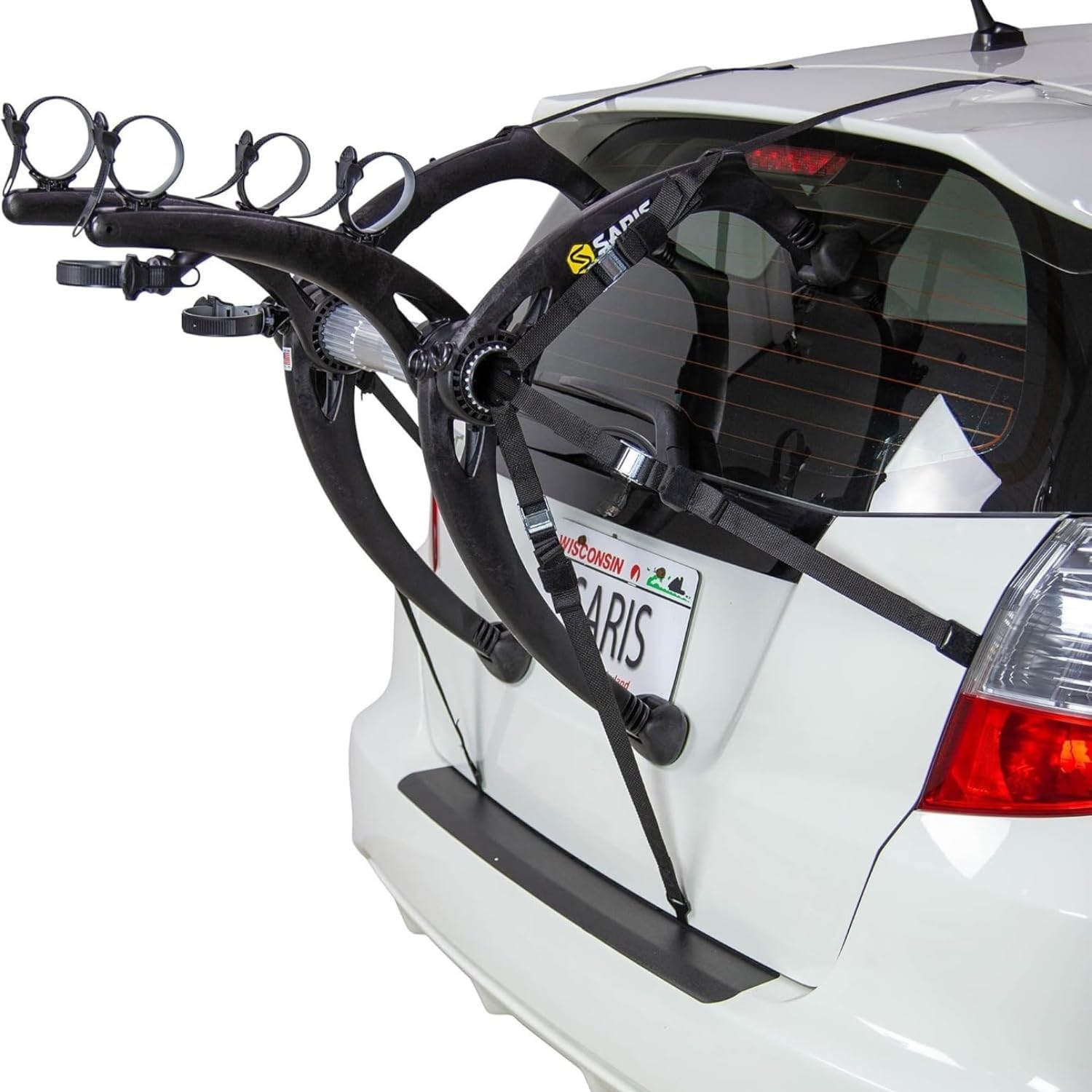
So, this is the Saris Bones EX which is well-known for trunk-mounted bike rack and it is light and easy to carry.
Even, you can install it with the straps and hooks and it is designed to reduce the contact points so it is less likely to rub paint when it properly fit and tightened in the correct way.
As well as, it comes with the injection-molded arms and legs that keeps the rack solid for years to come and there’s rubber feet that articulate to protect the paint as well.
#5. Allen
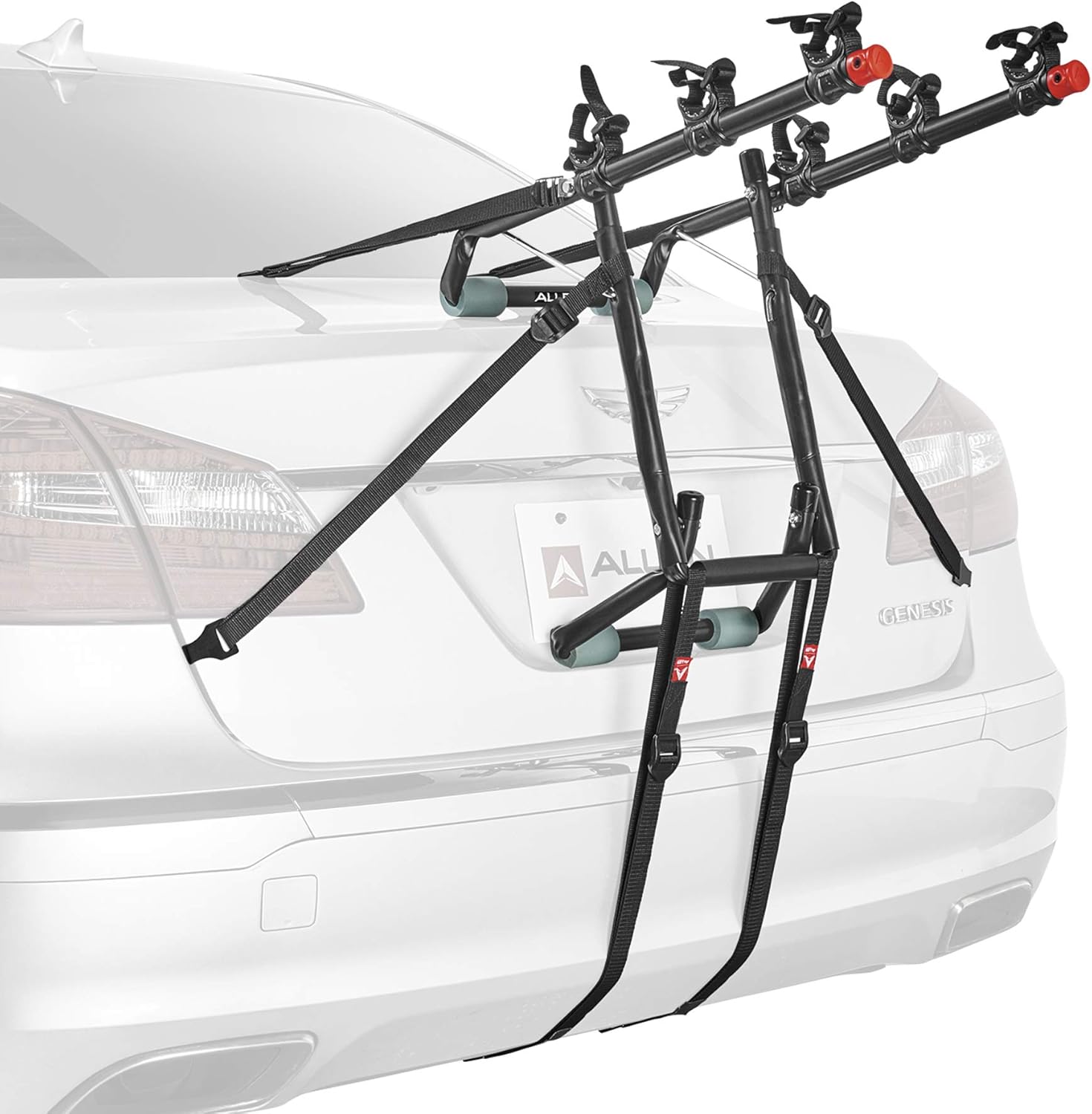
Now, with this Allen Sports trunk bike rack you can carry 3 bikes in one go, also alloy steel is used to give it durability.
Yes, you can also fold it fully flat for easy storage, even it has padded lower frame that literally protects vehicle, and left and right side straps are available to make it truly stable during drive.
Not only this, you can tie-down individual bicycles to protect them.
How to Install Bike Rack for Subaru Outback
Installing a bike rack on a Subaru Outback becomes easier when you understand the correct steps based on the type of rack being used and the vehicle’s features.
Subaru Outback models come with roof rails, an optional hitch receiver, and a solid tailgate design, which makes installation straightforward for most modern rack systems.
However, proper installation is crucial, as an incorrect setup can lead to the rack wobbling, damage to the bike frame, or instability while driving.
A carefully installed rack not only secures the bikes but also protects the Subaru Outback’s structure, paint, and components from stress or scratches during travel.
1. Installing a Hitch-Mounted Rack
A hitch-mounted rack attaches to the vehicle’s hitch receiver, so the first step is to confirm whether the Outback has the factory 1.
25-inch hitch or an upgraded 2-inch aftermarket receiver.
The rack is inserted into the hitch opening and secured using a locking pin or bolt system.
Some racks feature an anti-wobble mechanism that tightens the connection and prevents movement while driving.
After securing the rack, adjust the tilt or swing function (if available) to ensure the rear hatch can still be opened if the rack design supports it.
Once the rack is locked in place, load the bikes and use the wheel straps, clamps, or cradle system to secure them firmly.
2. Installing a Roof-Mounted Rack
Subaru Outback roof-mounted racks attach to either the crossbars or the built-in roof rails, depending on the rack model.
Before installation, confirm that the crossbars are locked in place and aligned for stable mounting.
The rack attaches to the rails using a clamp or bracket system, which should be tightened evenly to prevent movement.
Once the rack is mounted, test its stability by applying gentle force to see if the structure moves.
After loading the bikes, secure the wheels and frames using straps or wheel clamps, keeping in mind that heavier bikes may require assistance to lift safely.
3. Installing a Trunk-Mounted Rack
Trunk-mounted racks attach to the Outback’s liftgate using straps and padded contact points.
Before mounting, clean the surface of the hatch to prevent trapped dirt from scratching the paint.
Position the rack so that the arms are level and the pads rest firmly against the hatch.
Tighten the straps evenly from the top, sides, and bottom until the rack feels secure and does not move when pulled.
After installation, place the bikes on the support arms and secure them with stabilizing straps to prevent movement while driving.
4. Tools
Most modern racks come with the necessary tools, but in some cases, depending on the mounting system, you may need a wrench, hex key, torque wrench, or screwdriver.
For hitch racks, a torque wrench helps ensure that the bolts are tightened correctly without overtightening.
A small step stool can also be helpful when using roof-mounted racks, specially for shorter individuals.
5. Vehicle Inspection Before Installation
Before installing any rack, inspect the hitch receiver, roof rails, or latch points to ensure they are secure and clean.
Inspect the rubber seals, painted surfaces, and mounting surfaces to ensure they are not damaged, as weight during travel can put stress on weak points.
If you are installing a roof rack, consult your Subaru owner’s manual for the vehicle’s roof load capacity to ensure the weight of the rack and bikes does not exceed the limit.
6. Pre-Trip Safety Checklist
Before each trip, check that all bolts, straps, and locking mechanisms are tight and secure.
Ensure the bikes are not touching each other or the vehicle, as movement during travel can cause scratches or dents.
Check the tire straps and clamps to ensure nothing has come loose, specially after driving on rough or uneven roads.
Make sure the rack does not obstruct the license plate or taillights, and also ensure the bikes remain stable even when gently shaken.
A final quick check before driving ensures safety, stability, and peace of mind throughout your journey.
Read More:
How to Protect Your Subaru Outback and Your Bike As Well
Protecting both your Subaru Outback and your bike during transport is a crucial part of properly using a bike rack, specially during long-distance travel or frequent use.
A well-secured setup prevents scratches from movement during driving, damage from vibrations, paint rubbing, and mechanical wear and tear.
Because racks hold the bike close to the vehicle, damage can occur at any contact point if not properly secured.
Taking the time to apply proper padding, secure straps, check pressure points, and plan according to weather conditions will extend the lifespan of both the rack and the equipment.
This kind of care becomes even more important when transporting expensive bikes, such as carbon fiber or electric models, and when traveling on rough roads or in changing weather conditions.
1. Strap Security Points
Straps are an essential part of securing the bike, specially with trunk-mounted or hitch-mounted racks that utilize a tie-down system.
However, straps can cause chafing if not positioned correctly.
To avoid rubbing against your Subaru Outback’s paint or trim, it’s helpful to position the straps in areas where they won’t move during driving.
Adjusting the strap tension evenly minimizes movement, and checking them during long trips ensures they haven’t loosened.
Some riders use soft protective sleeves, rubber guards, or microfiber wraps under strap contact points to prevent scratches and pressure marks.
2. Anti-Scratch Padding
Anti-scratch padding plays a vital role in protecting both the Subaru Outback’s paint and the bike frame.
Many racks have rubber or foam padding at the contact points, and it’s crucial to ensure these pads are clean and properly positioned every time the rack is used.
Dirt or debris trapped between the pads and the surface can scratch the paint, specially on the liftgate or roof rails.
For high-end bikes, particularly those with delicate frame materials like carbon fiber, using racks with wheel-mount clamping rather than frame contact can prevent paint chipping or pressure damage.
Adding extra protective foam or silicone sleeves can further prevent metal-to-metal or metal-to-paint contact.
3. Weather Considerations
Different weather conditions affect how the rack system performs and how secure your equipment remains.
During rain or snowfall, moisture can cause metal parts to rust if the rack doesn’t have a rust-resistant coating.
Road salt used in winter can accelerate the rusting process on bolts, clamps, and exposed parts, so washing the rack after winter travel helps prevent damage.
Dusty environments, gravel roads, and strong winds can create abrasive particles that can leave scratches on both the bike and the vehicle.
Using covers, regular cleaning, and applying anti-rust materials will help maintain the rack’s performance and appearance in all weather conditions.
4. Protecting Tires, Frame, and Suspension
Securing the bike is just as important as securing the rack.
Bike tires should be tightly secured to prevent bouncing or shifting during driving.
For mountain bikes with suspension, avoid putting pressure on the fork or shock components, as improper support can stress moving parts.
Carbon fiber frames require careful handling when mounting, as clamping pressure can cause cracks over time.
Therefore, racks that secure the bike by its wheels are safer for this material.
Electric bikes with battery systems require robust weight support, and removing the battery before transport can reduce stress on the frame.
Checking the alignment, tightening the straps evenly, and avoiding abrasive surfaces will ensure the bike arrives in the same condition it was in before transport.
How to Ensure Longevity and Maintain Bike Rack for Subaru Outback
Caring for your bike rack is crucial, as regular maintenance ensures it lasts a long time, stays safe, and functions securely during every ride.
Over time, parts like bolts, straps, and clamps can deteriorate due to weather exposure, road vibrations, dust, and regular loading.
A well-maintained rack reduces the risk of rattling, rust, or damage during travel.
As many Subaru Outback owners use their racks for outdoor trips, road adventures, and driving in all weather conditions, proper maintenance ensures that both the rack and bikes remain safe.
Establishing a simple routine for cleaning, inspecting, and storing your rack will ensure you can use it reliably for many years.
1. Cleaning and Lubrication Schedule
Regular cleaning of the rack removes dirt, salt, and debris that accumulate during use.
Dust and dirt can accumulate on moving parts and cause friction, making adjustment points difficult to operate.
Cleaning is specially important after rain, snow, or traveling near coastal areas, where salt can accelerate the rusting process.
Lubricating hinges, locking mechanisms, and bolts with a weather-safe lubricant keeps parts moving smoothly and prevents rust.
For racks with built-in locks or movable arms, lubrication also helps prevent jamming and breakage over time.
2. Checking Bolts, Straps, and Clamps
Regularly checking all fastening components helps prevent loose parts and prevents the rack from rattling during driving.
Bolts should be checked to ensure they are tight and have not loosened due to vibration or weight stress.
Straps should be checked for wear, stretching, or tearing, specially if they have been used in inclement weather conditions.
Clamps holding the frame or wheels should be checked to ensure they are still securely locked and not worn out from repeated use.
A quick check before and after every long trip helps detect early damage and reduces the risk of further damage.
3. Tips for Storing When Not in Use
Proper storage extends the life of racks by protecting them from unnecessary exposure to the weather.
When not in use for extended periods, it is best to remove the rack and store it in a dry place away from direct sunlight.
This prevents discoloration, rust, and damage to rubber or plastic parts.
Roof racks and trunk racks should be stored with the straps loose so they are not permanently stretched.
Hitch racks can be stored hanging or upright in the garage to prevent bending or straining the adjustable arms.
Storing them in a covered area prevents insects, moisture, or dirt from accumulating.
4. Seasonal Maintenance
Seasonal use determines how much maintenance a rack requires.
In winter, road salt, snow, and freezing temperatures can accelerate the rusting process, so it’s beneficial to wash your rack after driving in winter conditions.
Lubrication should be applied more frequently during colder months to prevent locks and hinges from freezing.
In summer, heat and UV rays can weaken plastic and rubber straps, making it even more important to check padding and seals.
Riders who travel year-round benefit from scheduling seasonal checkups to keep their racks reliable even when the weather changes.
What are The Helpful Tips for Transporting Bicycles on Subaru Outback
When transporting bikes on your Subaru Outback, proper installation and precautions are crucial for the safety of both your bikes and your vehicle.
Good preparation helps prevent damage, reduces risks at higher speeds, and ensures everything remains stable during the journey.
Before starting any drive, make sure the rack is properly attached to the vehicle, the straps are tightened, and the locking system is fully engaged.
Several studies have shown that proper installation can minimize rack movement and prevent damage to both the rack and the vehicle during transport.
This includes securely attaching the bikes to the rack, ensuring the rack is securely mounted to the vehicle, and understanding how road regulations apply when transporting bikes.
1. Highway Speed Recommendations
Speed significantly impacts the stability of your bike rack.
Driving at speeds of 60 to 70 miles per hour places considerable stress on the bike rack and its mounting points.
This is because air pressure increases rapidly with speed, which can cause swaying, rattling, or strain on the rack and mounting points.
Reducing speed in windy conditions or on rough roads improves stability and keeps both the rack and the bicycles safe.
It’s also advisable to check your rack after driving 10-15 miles, as road vibrations can loosen fasteners.
2. Weight Distribution
Proper weight distribution plays a vital role in safe bike installation.
Heavier bikes should always be placed closer to the vehicle, while lighter bikes should be positioned further away.
This minimizes swaying and reduces stress on the mounting points.
Exceeding the weight capacity of the hitch mount, frame, or rack arms can lead to damage.
Manufacturers specify the maximum supported weight capacity, and staying within that limit prolongs the lifespan of both the rack and the vehicle’s connection points.
3. Safety Checks During Long Trips
Even if the drive starts safely, it’s crucial to check everything for long journeys.
Industry travel studies show that changes in weather and vibrations can gradually loosen straps or bolts.
A good practice is to check the rack at rest stops, during fuel breaks, or every few hours of driving.
Ensure the straps are tight, the rack isn’t wobbling, and no parts are damaged or under stress.
A quick check takes only a minute and can prevent major problems later in the trip.
4. Legal Visibility Requirements – License Plate and Taillights
Maintaining visibility is also essential.
In many places, if the bike rack or bikes block the license plate, taillights, or reflectors, you may need to install additional equipment.
This could include license plate relocation kits, auxiliary light bars, or extra reflectors.
These devices help other drivers clearly see your vehicle and prevent legal issues.
Ensuring full visibility is not only a legal requirement but also a crucial safety measure to avoid rear-end collisions or other road hazards.
As well as, even if the rack is well made, durable and truly safe, but the bike rack must ensure that the lights and the plate should be visible, or you can perform quick checks during the long drives, so that you can maintain the rules and regulations about treating the rack as the part of the vehicle’s safe equipment.[¹]
Conclusion – Best Bike Rack for Subaru Outback
Now-a-days, transporting a bicycle is really convenient as you can easily keep your bicycle and your Subaru Outback safe, stable and in the best possible conditions.
A properly installed rack keeps both your bike and vehicle safe, allowing you to travel comfortably on highways, rough roads, or long-distance routes.
Over time, regular maintenance, such as checking bolts, cleaning the rack, and adhering to weight limits, extends its lifespan and ensures consistent, optimal performance.
Many modern racks are designed with advanced locking systems, superior materials like powder-coated steel, and weather-resistant straps to withstand regular travel and varying riding seasons.
By understanding how the rack works, paying attention to safety guidelines, and keeping both the rack and bike in good condition, you can prevent damage, avoid accidents, and enjoy worry-free transportation.
As cycling grows as a lifestyle, sport, and environmentally friendly option, racks have become an essential tool for riders seeking flexibility and mobility.
Whether the goal is weekend mountain biking, daily commuting, or long-distance road cycling, a reliable rack helps you easily access trails, cities, or remote areas.
With proper use, correct loading, and regular checks, you can travel without worrying about stability or security.
Ultimately, the right bike rack setup becomes more than just a cargo-carrying tool—it becomes an integral part of your outdoor routine, giving you the confidence that your equipment is safe, no matter where the road takes you.
So, that’s it from this guide and you can ask more related queries in the comment box below.
Frequently Asked Questions
Q1. What type of bike rack works best for a Subaru Outback?
Answer: The best bike rack for a Subaru Outback typically depends on how often you plan to use it and the type of bikes you have. Many Subaru Outback owners prefer hitch-mounted racks because they offer robust stability, higher weight capacity, and easier loading, specially for heavier bikes like mountain bikes or e-bikes. If the vehicle has a roof rail system, roof-mounted racks can also work well, particularly for road bikes or lighter bikes. Trunk-mounted racks are fine for occasional use, but they may not be the best option for frequent use as they can put pressure on the paint and may not securely hold heavier bikes. Overall, hitch racks are considered the most practical for frequent users as they offer convenience, security, and better balance while driving.
Q2. Will I need a hitch to use a bike rack on my Subaru Outback?
Answer: You will only need a hitch if you plan to use a hitch-mounted bike rack. Subaru Outback models already come with factory-installed roof rails, so roof-mounted racks can be used without a hitch. Trunk-mounted racks also don’t require a hitch, but they may not be as stable or secure for longer trips. If you plan to carry heavier bikes, such as e-bikes or large mountain bikes, installing a hitch is recommended as hitch racks support higher weight limits and reduce the strain of lifting bikes during loading. Many Outback drivers upgrade to a 2-inch hitch receiver for greater compatibility and better rack performance.
Q3. Is a roof rack or a hitch rack safer for long-distance travel?
Answer: If installed correctly, both types of racks can be safe for long-distance travel, but hitch racks generally offer better security, balance, and fuel efficiency on longer trips. Because the bikes are behind the car rather than on top, they face less wind resistance and are easier to secure. Roof racks are also safe, but they require lifting the bikes higher, which can be difficult and increases wind resistance. This can slightly impact fuel efficiency, specially at highway speeds. If you take many long-distance road trips or carry multiple bikes, a hitch rack is often considered the safer and more convenient option.
Q4. Can I carry an e-bike on a Subaru Outback bike rack?
Answer: Yes, you can carry an e-bike on a Subaru Outback, provided the rack can support the weight of the e-bike. Most e-bikes are heavier than traditional bikes, so a sturdy hitch-mounted rack is usually the best option. Many racks designed for e-bikes have wheel-mounted securing arms to prevent pressure on the frame, which is specially important if the bike’s body is made of carbon fiber. Before loading an e-bike, it’s best to remove the battery to reduce weight and protect the electronics from vibration or weather exposure.
Q5. Will using a bike rack damage my Subaru Outback?
Answer: A properly installed and well-maintained bike rack will not damage your Subaru Outback. However, improper installation, loose straps, or racks without protective padding can cause scratches or pressure marks over time. Hitch racks pose the least risk of damage to the vehicle because they do not come into direct contact with the paint. Roof racks and trunk racks may require extra precautions, such as using protective foam or rubber padding, cleaning mounting surfaces, and checking for debris buildup before installing the rack. Regular inspections and proper securing help prevent damage and ensure safe use.
Q6. Is it safe to drive at highway speeds with a bike attached?
Answer: Yes, if the rack is designed for highway travel and the bikes are properly secured, it is safe to drive at highway speeds with a bike attached. Before driving, it’s essential to check the straps, locks, clamps, tire mounts, and any moving parts to ensure everything is tight and secure. During long trips, it’s also a good idea to periodically check the rack, specially after driving on rough roads or after sudden stops. Maintaining clear visibility and ensuring that brake lights and license plates are not obstructed also enhances safety.
References:
[1] National Highway Traffic Safety Administration. (2023). Vehicle Equipment Safety and Visibility Guidelines. U.S. Department of Transportation.
https://www.nhtsa.gov/interpretations/07-004114as

Jonathan, the passionate owner of Bicycle Time, brings a lifelong love for bikes and automotive craftsmanship, that reflects into every corner of the shop. With deep passion in both cycling and automotive accessories, Jonathan is more than just an expert.
