 Skip to content

Written By: Jonathan
Fact Checked By: Caroline Dezendorf
Reviewed By: Matt Tanner
When you pare the ideal bike rack to your Subaru Forester then it becomes complete adventure vehicle which is ready for the trails, mountains and travel.
Without a doubt, the Subaru Forest has practical design, standard roof rails and really strong towing ability, that makes it one of the most bike-friendly compact SUVs available in the United States of America.
As well as, there are more than 30% of the Forester buyers who are actually identify as outdoor adventure users, which itself says a lot about its growing demand for compatible bike racks.
Even, the these are the high quality bike rack for Subaru Forester, as it comes with Class I or Class II hitch receivers that makes it suitable for many hitch-mounted and trunk mounted bike rack options.
Also, you can even carry heavier models such as: electric bikes, as these bike racks comes with secure load capacity, proper stability and fully compatibility that makes them really secure.
Not only this, we have listed 5 Best Bike Rack for Subaru Forester that are very well-built racks that protects the bike during travel and also prevent scratches, pressure damage or misalignment of components as well.
What are The Important Considerations Before Buying a Bike Rack for Your Subaru Forester
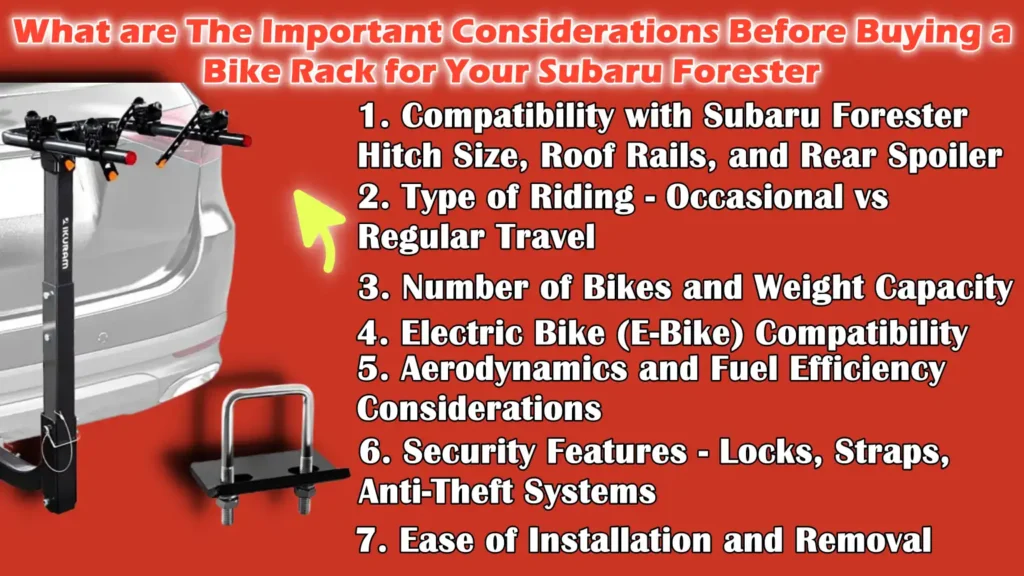
When choosing a bike rack for your Subaru Forester, it’s crucial to understand several key factors that impact safety, convenience, and longevity.
Because the Forester has specific vehicle dimensions, roof load limits, and available hitch options, it’s essential to ensure the rack you choose fits correctly and supports your cycling habits.
Every rider has different needs, whether it’s occasional weekend use or frequent mountain biking trips, and the right bike rack should match both the type of bike and how you use your Forester.
The points below clearly outline the important considerations to help you make an informed decision before purchasing.
1. Compatibility with Subaru Forester Hitch Size, Roof Rails, and Rear Spoiler
Compatibility is the first and most important factor when choosing a rack for your Subaru Forester.
The Forester typically supports either a 1.25-inch or 2-inch hitch receiver, depending on the trim level or aftermarket installation, and the rack must match the correct hitch opening for secure transport.
The Forester comes with factory roof rails, but most roof-mounted bike racks require crossbars, and the rack’s weight should not exceed the roof load limit of approximately 176 pounds.
If you’re considering a trunk-mounted rack, it’s important to know that the Forester has a built-in spoiler above the rear window, and many strap-on racks can put pressure on it, potentially causing cracks, bending, or paint damage.
Ensuring the rack is designed for the dimensions and components of the Forester helps prevent costly damage and improves overall safety.
2. Type of Riding – Occasional vs Regular Travel
How often you plan to travel with your bike plays a crucial role in choosing the right rack.
If you only take short or occasional trips, a simple rack such as a basic hanging-style hitch rack or a lightweight roof rack might suffice.
However, if you ride frequently or take longer trips, a platform-style hitch rack offers better support, less sway, and easier loading.
Frequent riders typically benefit from racks with tilt features, quick-release clamps, and built-in stabilizing systems, as these save time and reduce wear and tear on the bike frame.
Matching the rack to your riding habits ensures comfort, convenience, and durability in everyday use.
3. Number of Bikes and Weight Capacity
Different racks are designed to hold a specific number of bikes, typically ranging from one to four.
Before purchasing, it’s essential to consider whether you ride alone or travel with family or friends.
Subaru Forester hitch and roof systems can safely carry multiple bikes, but the weight of each bike is just as important as the number.
Most standard racks can support 30 to 40 pounds per bike, while premium or heavy-duty racks can handle up to 60 pounds per bike.
Ensuring the rack supports both the number of bikes and their total weight helps prevent swaying, bending, or unsafe travel.
4. Electric Bike (E-Bike) Compatibility
Electric bikes are heavier than traditional bicycles, often weighing between 50 and 70 pounds.
Because of this, not all bike racks can transport them safely.
If you plan to use an e-bike, you’ll need to choose a rack specifically rated for a higher weight capacity and featuring a robust frame or wheel support.
Roof racks are not recommended for e-bikes as lifting them onto the roof can be difficult and risky.
A platform-style hitch rack with a sturdy tray and secure wheel mounts is typically the best option for e-bike owners.
Choosing the right rack reduces stress on the vehicle and ensures safe and stable transport.
5. Aerodynamics and Fuel Efficiency Considerations
Bike racks can impact a vehicle’s fuel efficiency and driving experience, specially at highway speeds.
Roof-mounted racks position bikes higher, increasing wind resistance and potentially reducing fuel efficiency by 10 to 20 percent, depending on speed and weather conditions.
Hitch-mounted racks generally have less impact on aerodynamics because they are mounted at the rear of the vehicle and are out of the direct airflow.
Considering where the bikes are positioned on the Subaru Forester helps minimize wind drag, improve handling, and reduce extra fuel costs during long trips.
6. Security Features – Locks, Straps, Anti-Theft Systems
A secure locking system is crucial when traveling or leaving bikes unattended.
Many high-quality racks include locking frames, wheel straps, and built-in keys to deter theft, protecting both the rack and the bikes.
Some models also offer anti-wobble bolts or internal cable locks for added stability and security.
Investing in robust security features keeps valuable bikes safe and provides peace of mind, specially in crowded parking areas.
7. Ease of Installation and Removal
Finally, consider how easy the rack is to install, remove, and store.
Some racks install in just minutes with simple tightening systems, while others may require tools or adjustments.
If you plan to remove the rack frequently or store it when not in use, a foldable or lightweight design will be much easier to manage.
Racks with tilt or swing-away features allow you to easily access your Subaru Forester’s rear cargo area without having to remove the rack or the bikes.
Choosing a rack that fits seamlessly into your routine saves time and makes every trip more enjoyable.
What are The Types of Bike Racks That Fit the Subaru Forester
There are several different types of bike racks that work well with the Subaru Forester, and each type of rack offers different advantages depending on your riding frequency, the type of bike you own, and how much convenience you need during loading and unloading.
Because the Forester features factory roof rails, available tow hitch compatibility, and a rear spoiler design, choosing the right style of rack ensures safety and durability.
Understanding each category will help you select a rack that suits both your lifestyle and the structure of your Subaru Forester.
1. Hitch-Mounted Bike Racks
Hitch-mounted racks are one of the best options for the Subaru Forester because they offer robust support, easy loading, and excellent stability during travel.
These racks attach directly to the rear tow hitch, meaning the bikes are positioned behind the vehicle where there is less wind resistance and a lower lifting height.
Hitch racks are particularly useful for heavier bikes or frequent use, and often include locking systems and tilt features for easy cargo access.
Platform-style racks are the most secure version of hitch racks.
They hold the bikes by the wheels or frame and keep them separated to prevent scratches or contact damage.
They also work well with electric bikes, mountain bikes, and fat-tire bikes because they offer higher weight capacity and better balance on rough roads.
Hanging-style racks hold the bikes by the top frame tube and are lighter and more economical, but they may not work with step-through frames, carbon frames, or full-suspension designs without an adapter.
The main advantages of hitch racks are their strength, convenience, and stability, while disadvantages may include higher cost and the need for a tow hitch if one isn’t already installed on the vehicle.
2. Roof-Mounted Bike Racks
Roof-mounted racks attach to the Subaru Forester’s factory roof rails, but most versions require crossbars for proper installation.
These racks are popular among cyclists who prefer unobstructed access to the rear cargo area, and they allow the vehicle to carry multiple bikes while still allowing for towing or the use of a cargo carrier.
However, loading bikes onto the roof requires lifting them overhead, which can be difficult for shorter individuals or with heavier bikes.
There are three main roof rack styles for the Forester.
Fork-mount systems secure the bike by removing the front wheel and locking the fork to the rack, providing excellent stability but adding an extra step during loading.
Frame-mount systems clamp directly onto the bike frame, which is easier and quicker, but may not be ideal for carbon frames due to pressure concerns.
Wheel-mount racks hold the bike by its wheels, offering excellent security without touching the frame, making them ideal for modern carbon, road, and mountain bikes.
Roof racks are best suited for lighter road bikes and situations where the owner wants easy access to the rear hatch or wants to avoid installing a hitch.
Because the Forester has an average roof height of approximately 68 inches, it’s important to check garage clearance when loading bikes on top to avoid accidental damage.
3. Trunk (Strap-On) Bike Racks
Trunk racks attach to the rear of the vehicle with tension straps and hooks and are often chosen because they are inexpensive and do not require roof rails or a hitch.
However, the Subaru Forester has a prominent rear spoiler that can be damaged by the pressure or weight distribution of a strap-on rack if the rack is not specifically designed for spoiler-safe mounting.
Some trunk racks claim “full compatibility,” but many still put pressure on the spoiler, specially when carrying heavier mountain bikes.
For this reason, trunk racks are only suitable if used carefully and with lightweight bikes, and many Forester owners avoid them altogether because the risk of damage outweighs the convenience.
They may be suitable for temporary or occasional use but are generally not recommended for prolonged or heavy use.
4. Spare Tire and Specialty Racks
Spare tire racks are typically designed for vehicles with an externally mounted spare tire on the rear, which the Subaru Forester does not have.
Because of this, spare tire racks or specialty racks like those that mount to a ladder are rarely used and have very limited compatibility.
The 5 Best Bike Racks for Subaru Forester – Great Build Quality
Because of the compatibility and specific kind of design these bike racks becomes fully stable and truly useful during the drive to carry bikes comfortably.
#1. STUDTREX

Now, STUDTREX is the manufacturer of this premium bike that that blends a sturdy design with smooth operation and there are lots of helpful features are available for reuglar riders as well.
As well as, you can carry 2-Ebikes with these racks of 170 lbs capacity that makes them truly useful and highly reliable.
Plus, you can easily fold them, tilt them according to your convenience, even it comes with the anti-theft hitch and wheel locks that makes them highly protective.
#2. IKURAM R

Now, IKURAM R is the designer of this high quality bike rack that can carry 2 bicycles easily.
Additionally, Alloy Steel and High Quality Rubber material is used to build this Subaru Forester bike rack and these materials actually provides durability and reliability that can carry your bikes safely during drive.
Moreover, you can easily tilt it down to access the bicycles, it is to give you convenient access to rear of vehicle with easy-to-use tilt-down feature.
As well as, you can fold it up quickly whenever the bike racks are not inuse that makes them compact transport and easy to store as well.
#3. Allen

Without a doubt, it is a heavy-duty trunk bike rack that is easy to use and very stable on the road.
Even it is made to carry 2-bike with each bike supported by its wheels, which literally lowers stress on fragile frames and makes loading much simpler.
Also, you can tie downs individual bikes and secure them to protect bicycles during the journey.
As well as, there are padded lower frame that actually keeps your bicycle away from the vehicle to prevent any kind of scratches and dents.
#4. Saris
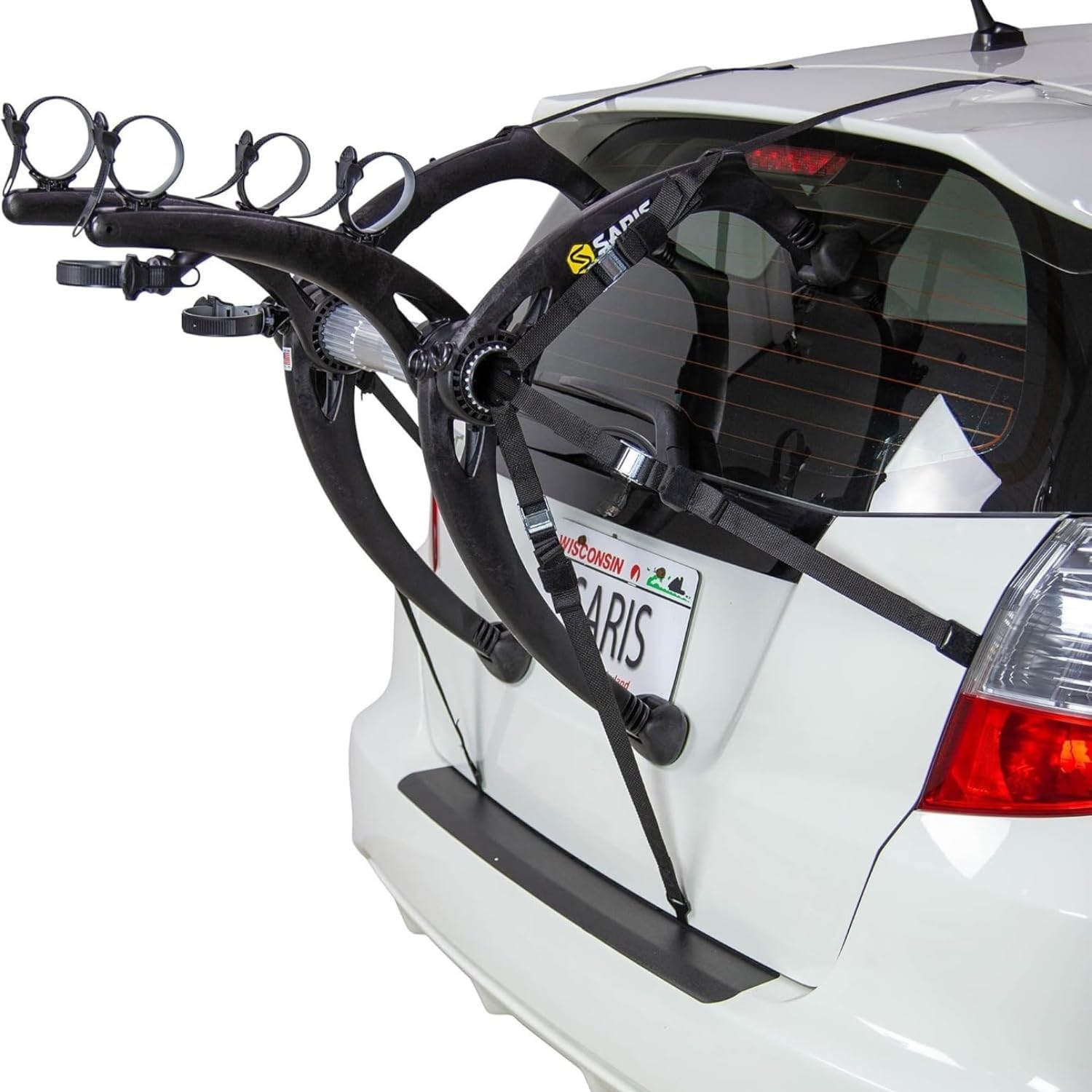
So, this is the Saris Bones EX which is well-known for trunk-mounted bike rack and it is light and easy to carry.
Even, you can install it with the straps and hooks and it is designed to reduce the contact points so it is less likely to rub paint when it properly fit and tightened in the correct way.
As well as, it comes with the injection-molded arms and legs that keeps the rack solid for years to come and there’s rubber feet that articulate to protect the paint as well.
#5. Allen
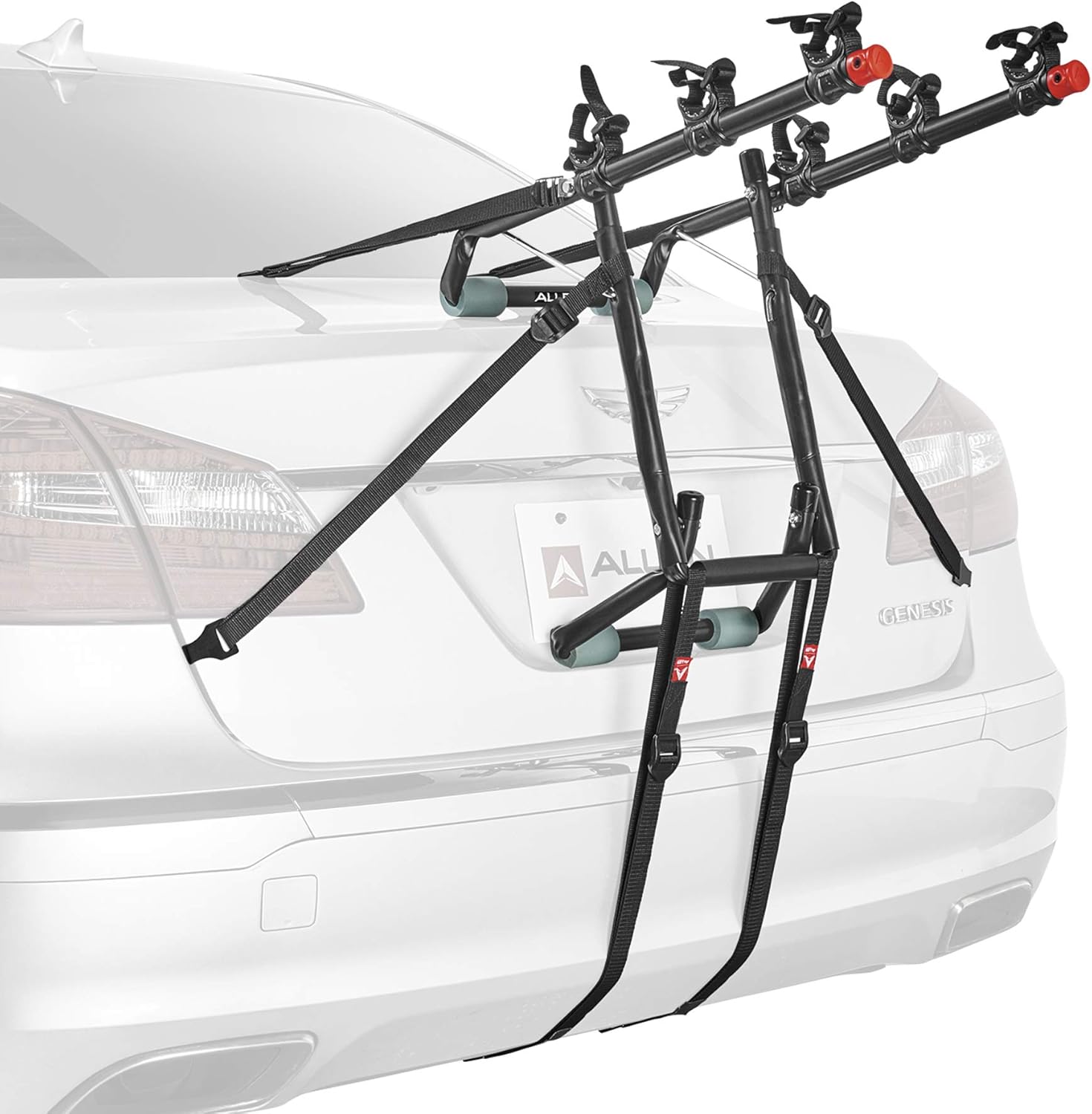
Now, with this Allen Sports trunk bike rack you can carry 3 bikes in one go, also alloy steel is used to give it durability.
Yes, you can also fold it fully flat for easy storage, even it has padded lower frame that literally protects vehicle, and left and right side straps are available to make it truly stable during drive.
Not only this, you can tie-down individual bicycles to protect them.
How to Choose Perfectly Fit and Compatibility Bike Rack for Subaru Forester
Understanding proper fitment and compatibility is crucial before choosing a bike rack for your Subaru Forester, as the vehicle’s structure, weight limits, roof rail design, and hitch size can all affect how securely the rack will function.
When the rack is properly matched to the vehicle, it prevents wobbling, damage to the car, and stress on the bike frame.
As the Subaru Forester is commonly used for outdoor trips and long-distance travel, choosing a rack that matches the vehicle’s specifications ensures better stability, safety, and longevity.
Below are the most important factors that determine whether a bike rack will fit securely and correctly on a Forester.
1. Hitch Size: 1.25″ vs 2″ Receiver Options for the Forester
The Subaru Forester can be equipped with either a 1.25-inch or 2-inch hitch receiver, depending on whether a factory or aftermarket hitch is used.
Most factory-installed hitches on Forester models are typically the smaller 1.25-inch size, which works fine for lighter and smaller racks, but may not support heavy-duty racks designed for e-bikes or multiple mountain bikes.
Many aftermarket hitches offer a 2-inch receiver option, providing stronger support, higher weight capacity, and better compatibility with premium platform-style racks.
Before purchasing a hitch rack, it’s essential to match the size of the rack shank to the size of the hitch receiver to avoid unsafe installation or a loose fit.
2. Types of Roof Rails on Forester Trim Levels
All modern Subaru Forester trims come with factory-installed raised roof rails, making it easy to attach roof-mounted bike racks without any permanent modifications.
However, most roof-mounted bike racks also require crossbars, and many owners will need to purchase these separately if their model doesn’t include them.
The crossbars must be compatible with the Forester’s rail design and installed at the locations specified by Subaru to ensure proper load distribution.
The roof rack system must remain within the vehicle’s roof load limit, and using factory-approved or high-quality aftermarket crossbars increases stability and keeps bikes secure during travel.
3. Spoiler Clearance Issues with Trunk Racks
Because the Subaru Forester features a rear roof spoiler for aerodynamics and styling, many trunk-mounted or strap-on racks do not fit properly on the vehicle.
The spoiler is not designed to handle pressure, and straps resting on or pulling against it can cause cracks, bending, or paint damage.
Even racks advertised as “universal fit” can put stress on the spoiler when bikes are loaded, specially during acceleration or braking.
This is why trunk racks are often not recommended for this vehicle unless they are specifically designed to avoid any contact with the spoiler.
For long-term use or heavier bikes, hitch racks and roof racks are safer options for Forester owners.
4. Understanding the Forester’s Load and Towing Limits
The Subaru Forester has specific load and towing limits that must be considered when installing and using bike racks.
The Forester’s typical roof load capacity is approximately 176 pounds, which includes the weight of the rack, bikes, and any extra accessories.
Hitch racks are affected by the vehicle’s tongue weight rating, which depends on whether the hitch is factory-installed or aftermarket.
Electric bikes, fat-tire models, or full-suspension mountain bikes can quickly increase the total load, so checking the total weight ensures the rack stays within safe limits.
Following these guidelines maintains the vehicle’s balance, protects the suspension components, and keeps both the rack and bikes secure during travel.
How to Install Bike Rack for Subaru Forester – Complete & Easy Guide
Installing a bike rack on a Subaru Forester becomes much easier when you understand how each type of rack attaches to the vehicle and what checks are necessary before loading bikes.
While most modern bike racks are designed to be user-friendly, following the correct installation steps is crucial to prevent vibrations, improper weight distribution, or damage to the rack, vehicle, or bikes.
The Subaru Forester features structure-friendly mounting points such as roof rails and a hitch receiver, meaning most racks don’t require permanent modifications.
Proper installation ensures driving stability, minimizes unnecessary movement, and maintains safety during short trips or long-distance travel.
1. Hitch Rack Installation
Installing a hitch-mounted rack is typically the easiest method as it connects directly to the Subaru Forester’s hitch receiver.
The rack arm should slide completely into the receiver until the pinhole aligns with the hitch locking pin slot.
After inserting the locking pin and tightening any anti-wobble mechanisms, the rack should feel secure and not move when pulled or pushed.
Once the rack is installed, adjusting the wheel trays or arms to the size of your bike provides proper support.
Before loading bikes, it’s essential to check that the rack is level, the locking system is engaged, and any tilt mechanism (if the model has one) is functioning correctly.
After loading the bikes, securing them with straps, wheel holders, or frame arms prevents movement during acceleration or on bumpy roads.
Finally, performing a shake test before driving confirms stability and ensures nothing is loose.
Pre-Loading Bike Safety Check
Before placing any bikes on the hitch rack, it’s crucial to verify hitch compatibility, weight limits, and locking engagement.
The bike rack should not wobble excessively when pulled from the side or bottom.
After loading the bikes, checking that the straps are tight and that no moving parts, such as pedals or handlebars, are touching the rear of the Subaru Forester is essential to prevent scratches or paint damage.
If traveling long distances, it’s advisable to check the rack and straps after the first few miles to ensure everything remains secure.
2. Roof Rack Installation
Installing a roof-mounted rack on the Subaru Forester begins with securing the crossbars to the raised roof rails, if they aren’t already installed.
The crossbars should be spaced according to the rack manufacturer’s specifications to ensure proper balance and tire or frame support.
Once the crossbars are in place, the rack attaches to them using mounting clamps or a locking system, which should be tightened evenly to prevent the rack from shifting or tilting.
After installation, testing the rack by applying manual pressure before loading bikes confirms stability.
Adjusting the rack to the size of the bike is important, specially if using a fork-mount or wheel-mount design.
If a fork-mount system is used, the front wheel must be removed before attaching the fork to the mount, while wheel-mount systems keep both bike wheels attached.
Due to the Forester’s height, shorter individuals may require a step stool to lift the bike onto the roof.
Once on the rack, securing the locking arms and wheel straps ensures the bike remains stable even at high speeds or under wind pressure.
How to Load a Bike
When loading a bike onto a roof rack, lifting it in a controlled manner and keeping the wheels straight prevents strain or accidental drops.
Once the bike is in place, tightening the clamp or locking arm first ensures the frame remains stable while securing the wheels.
If the rack has a locking mechanism, using it provides extra security when leaving the vehicle unattended.
Checking clearance before entering garages or low-clearance parking areas is a crucial final step when using a roof-mounted bike rack.
3. Trunk Rack Setup Notes
Installing a trunk-mounted rack on a Subaru Forester requires special attention because the rear spoiler can be damaged if pressure is applied to the straps.
The rack should be positioned so that the straps only attach to the solid metal sections of the tailgate, not the plastic spoiler area.
Adding padding between the rack and the vehicle helps prevent scratches and paint damage from road vibrations.
The arms should be level or slightly angled upward to prevent the bikes from shifting during travel.
Once the rack is secure and tightened, the bikes should be strapped down tightly so they do not move or come into contact with the rear window or spoiler.
Padding, Strap Alignment, and Spoiler Risk Precautions
Padding is essential because the tension from the straps during travel can cause chafing.
Ensuring the straps are evenly positioned on both sides and checking the tension before each use helps maintain safety.
If any strap goes over the spoiler or exerts downward pressure on it, the rack should not be used, as excessive pressure can crack or damage the structural support.
For this reason, trunk racks are generally only recommended for occasional use or for carrying lightweight bicycles.
Read More:
How to Ensure Safety, Maintenance and Have Long-Term Good Condition of Subaru Forester Bike RAck
Keeping your bike rack in good condition ensures long-term safety, performance, and protection for both your Subaru Forester and the bicycles being transported.
Over time, road vibrations, changing weather conditions, and repeated loading and unloading can cause parts to loosen, wear down, or compromise stability if the rack is not properly maintained.
Because the Forester can be used in a variety of environments, including highways, gravel roads, mountain trails, and rainy weather, proper care ensures the rack remains secure and prevents damage to the vehicle or bikes.
Good maintenance also extends the lifespan of the rack and ensures safe use for regular travel for years to come.
Yes, there’s a guidance on stainless steel and corrosion prevention that shows that how material choice, surface finish and cleaning schedules actually reduces pitting and corrosion in outdoor equipment, also recommends to clean them according to the different environments and explain why lubrication of fasteners and protecting the threaded parts literally extends service life of the equipment, which is why it is really important to maintain at the regular time intervals and materials also have lot of influence in durability.[¹]
1. Weather Protection and Rust Prevention
Weather exposure is one of the most common causes of wear and tear on bike racks.
Rain, road salt from winter driving, and humidity can cause rust on metal components if they are not protected.
Many racks are made of powder-coated steel or aluminum, which helps prevent rust, but smaller components like bolts, screws, and hinge points can still be vulnerable.
Applying a protective lubricant or anti-rust spray to exposed hardware helps prevent moisture buildup and rust formation.
Keeping the rack clean also helps prevent long-term damage from rust, specially after winter driving or off-road trips where salt, mud, or sand may accumulate around mounting points.
Regular washing and drying will keep the rack protected from weather damage for longer.
2. Checking Bolts, Straps, and Locking Systems Before Travel
Before each trip, checking the tightness of bolts, straps, pins, and locking systems ensures the rack remains secure even on rough roads or at highway speeds.
With repeated use, driving vibrations can loosen mounting hardware or reduce strap tension.
A quick check before each trip can identify minor issues before they become safety hazards.
If the rack has a tilt or folding feature, ensuring it locks securely in place prevents sudden movement while driving.
Locks on hitch racks and roof systems should be checked periodically to ensure they are still functioning correctly, specially in cold weather where metal can contract or freeze.
3. Protecting Vehicle Paint and Bike Frames
Protecting both the bicycles and the exterior of the Subaru Forester prevents scratches, dents, or abrasion damage over time.
Using frame protectors, foam padding, or soft rubber straps helps prevent bikes from rubbing against each other or the rack during transport.
Those using trunk racks can reduce friction and prevent paint damage by placing soft protective pads between the rack and the tailgate.
Those using hitch and roof racks should ensure that brake rotors, handlebars, pedals, or wheels do not come into contact with the vehicle to prevent accidental damage.
Keeping mounting points clean also prevents dirt or debris from scratching the paint when attaching or removing the rack.
4. Storage Tips When the Rack is Not in Use
Properly storing the rack when not in use helps maintain its condition and prevents unnecessary wear and tear.
Hitch racks should be stored in a dry place and not left attached unnecessarily, specially in areas with road salt or humid weather.
You can leave the roof rack installed for extended periods if you wish, but removing it when not needed improves fuel efficiency and reduces wind noise.
If you’re storing the rack in a garage or shed, covering it or placing it on a clean surface will protect its mechanical parts and rubber components from dust, moisture, and UV rays.
To prevent stiffness when reinstalling the rack, the folding hinges and locking mechanisms should be lubricated occasionally during storage.
How to Choose Bike Rack for Subaru Forester – Ideal Buying Guide
This section helps you quickly check the most important things before buying a bike rack for your Subaru Forester.
Having a checklist ensures you don’t miss crucial details like size, safety features, compatibility, or weight support.
It also helps avoid returns, extra costs, or installation problems later on.
1. Rack Type
Before purchasing, confirm the type of rack that best suits your needs.
Hitch racks are often the easiest and safest option for most riders as they offer stable mounting and quick loading.
Roof racks are useful for keeping the rear hatch clear but can be difficult to access for some users.
Trunk racks are more economical but may require more adjustments than hitch systems and offer less stability over time.
Choosing the right style depends on your travel frequency, the number of bikes you carry, and how much convenience you want during loading and unloading.
2. Weight Capacity
Every bike rack has a maximum weight rating, and exceeding it can cause damage or create unsafe driving conditions.
This is specially important if you’re carrying electric bikes or heavy mountain bikes, as they weigh more than regular road bikes.
Always compare your bike’s weight to the rack’s stated capacity, and check whether the rating is per bike or for the total load.
3. Bike Compatibility
Not all racks fit all bike frame types.
Some require adapters or special mounts for step-through, carbon fiber, or fat-tire bikes.
Checking compatibility ensures your bikes fit securely without rubbing, slipping, or putting excessive stress on the frame.
If you own multiple types of bikes, choose a rack designed for universal fit to avoid needing extra accessories.
4. Locking System
A secure locking system helps protect both your bikes and the rack itself.
Some racks include built-in cable locks or hitch locks, while others require separate accessories.
A secure locking system is crucial if you’ll be leaving your bikes mounted during road trips, overnight parking, or urban stops.
5. Hitch or Roof Fitment
Always verify that the rack matches your Subaru Forester’s hitch size or roof rail design.
Most Forester models use a 1.25-inch hitch receiver, so choosing the correct size prevents wobbling or incompatibility issues.
If opting for a roof rack, confirm that the rack fits on the factory crossbars or determine if aftermarket bars are needed.
6. Ease of Use Rating
A rack that’s easy to install, remove, and use saves time and reduces stress.
Features like tilt-away access, tool-free installation, folding arms, and quick-release levers make the rack more user-friendly.
The easier the rack is to use, the more you’ll enjoy traveling with your bikes regularly.
Conclusion – Best Bike Rack for Subaru Forester
When you care and maintain the bike rack at the regular time interval, then you’ll have long-term top-notch condition of bike rack of Subaru Forester, as these are truly durable and made to fit for Forester in a comfortable way.
With features like different mounting styles, weight capacities, locking systems, and vehicle compatibility, the best option depends on how often you ride, how many bikes you carry, and the type of terrain or trips you plan.
A properly fitted rack protects the Subaru Forester’s structure, prevents damage to the bike frames, and ensures stable handling even at highway speeds.
Many modern racks are made of corrosion-resistant steel or aluminum, featuring UV-protected straps and weather-resistant components that, with proper maintenance, will last for many years.
By understanding the installation steps, safety checks, rack types, and the Forester’s weight limits, riders can make confident and informed choices.
With careful research and the right setup, a bike rack becomes more than just an accessory—it becomes a reliable tool that enhances outdoor adventures, road trips, and cycling opportunities without hassle or risk.
Now, you can ask the questions and unsolved queries then you can comment down below.
Frequently Asked Questions
Q1. What type of bike rack works best for a Subaru Forester?
Answer: The best bike rack for a Subaru Forester typically depends on how often you travel and how many bikes you need to carry. Many Subaru Forester owners prefer hitch-mounted racks because they offer sturdy support, easy loading, and better stability at higher speeds. The Forester is compatible with both 1.25-inch and 2-inch hitch receivers, depending on which hitch is installed. If you already have factory roof rails or crossbars, a roof-mounted rack can also work well, specially for carrying a single bike. Trunk-mounted racks are sometimes used, but they are not recommended for long-term use as they can put stress on the rear spoiler and risk scratching or damaging the paint.
Q2. Do I need to have a hitch installed before using a hitch-mounted bike rack?
Answer: Yes, if your Subaru Forester doesn’t already have a hitch installed, you will need to have one installed before using a hitch-mounted rack. Subaru offers official OEM hitches, but many owners opt for aftermarket options as they often offer higher weight capacities and sometimes at a lower price. Once the hitch is installed, you can choose a bike rack that suits your needs, matching the hitch size, weight limits, and the number of bikes you wish to carry.
Q3. Can a Subaru Forester carry electric bikes on a bike rack?
Answer: Yes, a Subaru Forester can carry electric bikes, but only with the right type of rack. Most electric bikes are heavier than regular bicycles, so you will need a rack with a higher weight capacity and robust clamping and support arms. Hitch-mounted platform racks are the safest and most stable option for e-bikes because they hold the bike by its wheels and distribute the weight more effectively. Due to the heavier weight of e-bikes and the difficulty in lifting them, roof racks and hanging racks are not recommended.
Q4. Will a roof-mounted bike rack affect the fuel efficiency of a Subaru Forester?
Answer: Yes, a roof-mounted rack will affect fuel efficiency because anything mounted on the roof increases wind resistance. The Subaru Forester already has a high roofline, so adding bikes and a rack can increase wind resistance at highway speeds. Some drivers may experience increased wind noise and a slight decrease in fuel economy. Hitch-mounted racks typically have less impact on fuel efficiency because they are mounted at the rear of the vehicle rather than on top.
Q5. Is it safe to leave a bike rack on all the time?
Answer: It is safe to leave a bike rack on all the time, but there are some considerations. Leaving the rack on for extended periods exposes it to the elements such as rain, snow, and sun, which can cause rust or fading if the rack is not made of durable materials and protective coatings. Some people remove their racks when not in use to prevent theft and unnecessary wear and tear. A roof rack without bikes can also create wind noise. Hitch racks can sometimes affect the length of parking spaces or trigger backup sensors.
Q6. Will a bike rack damage my Subaru Forester’s paint or spoiler?
Answer: A properly installed hitch or roof rack will typically not damage the vehicle. However, if a trunk-mounted rack is not properly aligned, it can put pressure on the rear spoiler and paint. If you choose a trunk rack, the padding and strap tension should be checked frequently. To protect the paint and the bikes, many people use rubberized straps, soft contact pads, or protective film where the rack touches the vehicle.
Q7. How many bikes can a Subaru Forester rack safely carry?
Answer: Most Subaru Forester racks can safely carry two to four bikes, depending on the type of rack and the weight of the bikes. Hitch racks typically have a higher weight capacity than roof racks. If you are carrying heavy mountain bikes, fat-tire models, or e-bikes, you should always check the rack’s maximum weight capacity per bike and the total supported load. The Forester’s hitch and roof limits should never be exceeded, specially on long trips.
Q8. How do I ensure the bike rack remains secure while driving?
Answer: To ensure the rack remains secure, always follow the installation instructions and thoroughly tighten all bolts, locking pins, straps, and clamps before driving. Many racks have anti-wobble features that help keep the rack stable, specially when traveling at higher speeds or on uneven surfaces. Locks and straps should be checked regularly, specially after long drives or driving on rough roads.
References:
[1] Stainless Steel Guidelines For Corrosion Prevention
https://www.researchgate.net/publication/275353736_Stainless_Steel_Guidelines_For_Corrosion_Prevention

Jonathan, the passionate owner of Bicycle Time, brings a lifelong love for bikes and automotive craftsmanship, that reflects into every corner of the shop. With deep passion in both cycling and automotive accessories, Jonathan is more than just an expert.
