 Skip to content
Written By: Jonathan
Fact Checked By: Caroline Dezendorf
Reviewed By: Matt Tanner
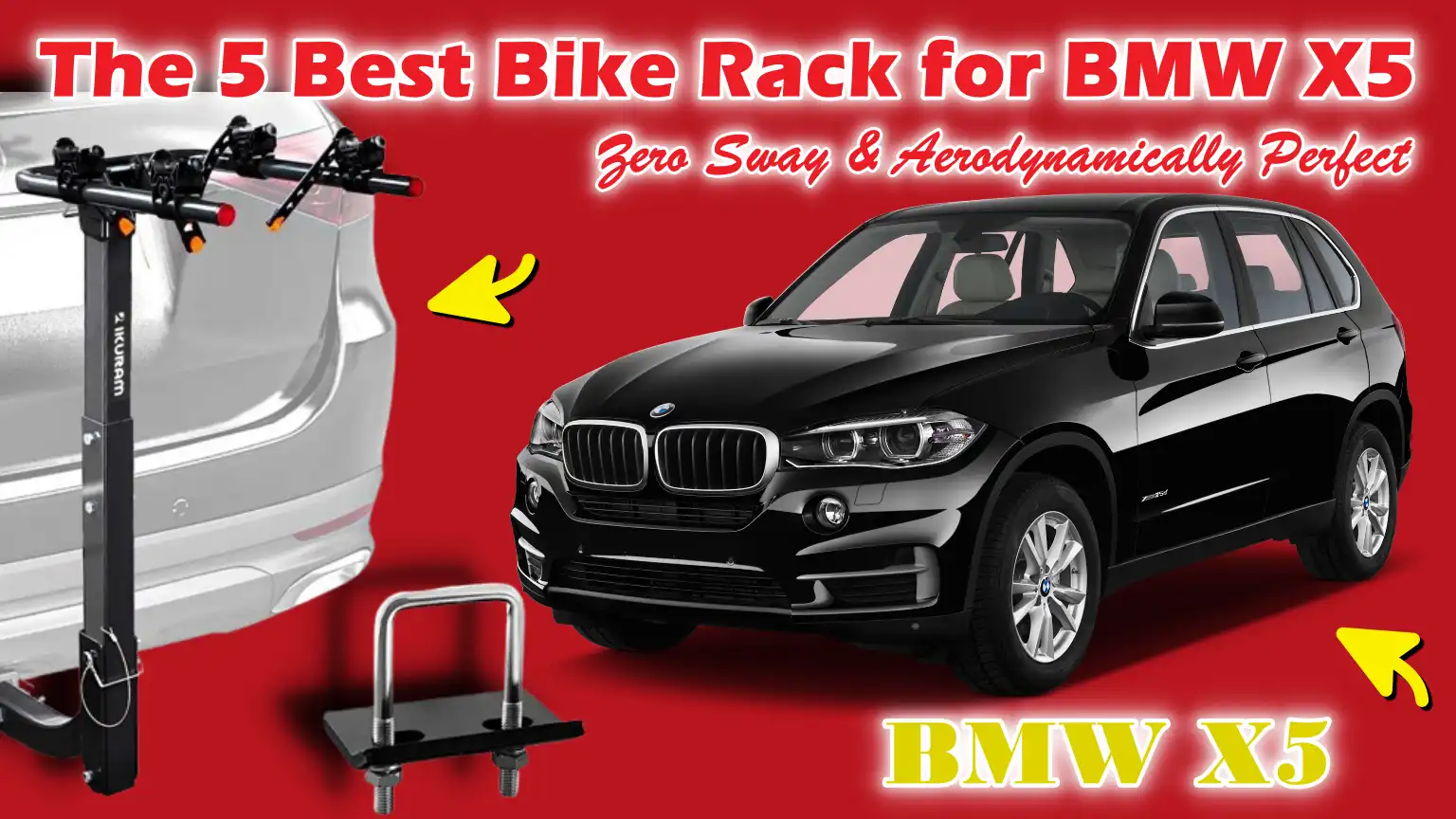
You’d be surprise to hear that: BMW X5 is one of the few luxury SUVs, which is actually designed in a way that can safely and easily carry bikes, as you just need to pair it with right rack built for its sensors and tailgate design and that’s all.
Because, the BMW X5 is engineered with advanced technology, sensitive sensors and a high-strength body design, that’s why you need a bike rack that can align with its structure and compliment the features as well.
And, these are the 5 Best Bike Rack for BMW X5, that comes can carry everything from lightweight carbon bikes to heavy electric bikes, as these racks can handle higher weight loads, strong road vibrations and long-distance stress as well and doesn’t damage or the vehicle as well.
Even, many X5 comes with a factory installed 2-inch hitch receiver and roof rails, that makes the installation process much simpler.
These are the very well-build bike racks with secure locking systems, anti-wobble engineering, rust-resistant materials used and there’s easy-tilt access so that you can carry those bikes safe and smooth way during travel.
Let’s First, Understand About BMW X5 Compatibility Requirements
1. Overview of X5 Generations and Differences in Compatibility
The BMW X5 has gone through several generations, including the F15 (2014–2018) and the new G05 (2019–present), and each generation has slight differences that impact bike rack compatibility.
G05 models use more advanced rear cameras and ultrasonic parking sensors, which can be activated more easily from racks mounted near the bumper.
The overall body style, rear design, and roof rail spacing have also changed over the years, meaning some racks that fit the F15 may require updated adapters or different mounting positions on the G05.
It’s important to understand which X5 generation you have as it helps you choose a rack that matches the vehicle’s sensor layout, tailgate mechanics, and roof rail structure.
2. Hitch Receiver Specifications
Most BMW X5 models come factory fitted with a 2-inch Class III or Class IV hitch receiver, which is strong enough to hold even heavy bike racks and electric bikes.
The 2-inch size is important because it provides better stability and reduces movement while driving, specially on rough roads or when carrying two or more bikes.
Class III and IV hitches are designed to handle higher tongue weights, making them safer for platform-style racks that distribute more load.
Choosing a rack specifically designed for a 2-inch hitch ensures a tight and secure fit without any adapters that can loosen over time.
3. Roof Load Limits and Crossbar Requirements
The roof load capacity of the BMW X5 typically ranges between 75 kg and 100 kg, depending on the model year and roof design.
This total weight includes the roof rack, bike rack attachments, and the bikes themselves.
Because the X5 is a tall SUV, manufacturers often recommend using BMW-approved crossbars or heavy-duty aftermarket bars that match the vehicle’s spacing and weight rating.
Knowing the correct load limit helps prevent roof damage, reduce wind pressure, and ensure the roof rack remains stable at highway speeds.
4. Consider Tailgate Clearance and Vertical Liftgate
The BMW X5 comes with a powered split tailgate or a full vertical liftgate, depending on the model year.
This is important because many bike racks can block or limit the ability to open the tailgate when a bike is mounted.
Safely lifting the tailgate without hitting the bike or rack frame often requires a rack with a tilt or swing mechanism.
The liftgate lifts vertically and requires more clearance space, so choosing a bike rack designed for an SUV like the X5 ensures you can access the cargo area without removing your bike.
5. Parking Sensor and Camera Interference Issues
The BMW X5 is equipped with advanced parking sensors, a rear radar system, and a high-definition backup camera that can easily detect the presence of a bike rack.
Hitch-mounted racks can trigger continuous parking alerts if they are too close to the sensors.
Some racks are designed with improved spacing and angles to minimize interference.
Roof-mounted racks do not affect the cameras, but depending on the attachment style, they may block parts of the roof sensor zone.
Understanding how sensors react to different racks helps avoid unnecessary alerts when parking or reversing.
6. The Importance of Weight Distribution for Luxury SUVs
Proper weight distribution is specially important for performance-oriented luxury SUVs like the BMW X5.
Carrying a heavy bike in the rear can disrupt the vehicle’s balance, impacting handling, braking, and fuel efficiency.
Using a rack that distributes weight evenly, provides anti-sway support, and maintains a stable center of gravity helps the X5 operate smoothly even with multiple bikes attached.
Choosing a well-built rack with strong support arms or a balanced platform helps protect both vehicle and bike during long journeys or rough road conditions.
Common Types of Bike Racks That Are Right for the BMW X5
1. Hitch Bike Racks
Hitch racks are the most popular choice for the BMW X5 because the vehicle features a sturdy 2-inch hitch receiver that can handle heavy loads.
Hitch racks provide better stability, easier loading, and safer transport for heavier bikes, such as electric bikes.
They keep weight down and off the roof, improving driving comfort and fuel efficiency.
They are also easier to remove and store than roof systems.
Because the X5 is a long-body luxury SUV, using a hitch rack is often the easiest and safest way to transport multiple bikes without compromising roof clearance or visibility.
1. Platform-Style Racks
Platform-style racks hold bikes by their wheels or frames and provide a very sturdy base, making them ideal for heavier bikes, carbon frame bikes, and long-distance trips.
These racks sit on a flat platform that balances the bike and reduces tilt caused by wind or rough roads.
They typically have built-in locks, wheel trays, and adjustable arms, making loading easier, specially on tall SUVs like the X5.
Many platform racks also have a tilt feature, allowing you to open the X5’s tailgate even with a bike attached.
2. Hanging-Style Racks
Hanging-style racks are lighter and often more affordable, using support arms to hang the bike from its frame.
These work well for standard bicycles, but may not be suitable for heavier electric bikes or delicate carbon frames.
Because they elevate the bike, they can sometimes obstruct the X5’s rear sensors or tailgate access.
They are a good option for light bikes and occasional use, but require careful adjustment of the straps to prevent the bikes from swinging and hitting each other while driving.
3. Swing-Away Racks
Swing-away racks are designed with a pivoting mechanism that allows the entire rack to open to the side.
This is specially helpful for BMW X5 owners as it provides full access to the large, vertical tailgate.
This design eliminates the need to dismount the bike just to access the cargo area.
Swing-away racks are generally heavier and more expensive because they require additional mechanisms, but they offer the greatest convenience when frequent cargo access is required.
2. Roof Bike Racks
Roof bike racks are another option for the BMW X5 and attach directly to the vehicle’s roof crossbars.
They work well to prevent obstruction of rear sensors and cameras.
Roof racks help keep bikes upright and away from the vehicle’s tailgate, making them ideal for drivers who require full rear access at all times.
However, the BMW X5’s tall height makes it more difficult to load the bike onto the roof, and increased wind drag can impact fuel efficiency.
Roof racks work best for lightweight bikes and drivers who are comfortable lifting the bike onto the roof.
1. Fork-Mount Roof Racks
Fork-mount racks require the front wheel to be removed and the bike secured to the front fork.
This creates a very stable connection and reduces wind movement as the bike is lower and more aerodynamic.
These are specially useful for road bikes or mountain bikes with quick-release or thru-axle systems.
The disadvantage is that the wheel must be removed each time, adding a few minutes to the loading process.
2. Wheel-Mount Roof Racks
Wheel-mount racks hold the bike by its front wheel using an arm that clamps onto the tire.
This avoids frame contact and works well for carbon frames.
This keeps the bike fully assembled and is generally faster to load than fork-mount racks.
These racks must be attached to a sturdy crossbar and securely fastened to prevent swaying at high speeds or in windy conditions.
3. Frame-Mount Roof Racks
Frame-mount roof racks attach to the bike frame and hold the bike upright on the roof.
They work with many bike sizes but may not be suitable for carbon frames due to the pressure on the frame tubes.
They are easy to install and use, but because the BMW X5 is tall, drivers should be careful in parking garages, low-rise bridges, and rooftop spaces.
3. Trunk or Strap Bike Racks
Trunk or strap-style racks attach to the rear hatch using tension straps and padded hooks.
While these are lightweight and budget-friendly, they aren’t always the best match for the BMW X5 due to the vehicle’s curved rear design, paint sensitivity, and robust parking sensors.
Strap racks can trigger alerts, reduce tailgate function, and prevent securely storing heavy bikes.
For these reasons, most BMW owners prefer a hitch or roof rack for long-term use.
1. Compatibility Limitations
The shape of the X5’s rear hatch and the presence of sensors make it difficult to securely fit a strap rack.
The weight of the bike can also put pressure on the tailgate, which is not designed to bear a direct load.
For these reasons, many strap rack manufacturers state limited compatibility with large SUVs like the X5.
2. Paint Protection Concerns
Trunk racks come into direct contact with the paint, which can cause scratches or dents if the pads slip or dirt accumulates under the straps.
The BMW X5’s soft clear coat and curved rear design make the trunk rack more susceptible to wear and tear during frequent or long trips.
3. When can the trunk rack be used?
The trunk rack on the BMW X5 can be used for short trips, light bikes, or occasional use if the rack is specifically marked as compatible with large SUVs and if it has additional paint protection, such as a protective film or pad.
It should not be used for heavy bikes or long highway drives.
What are Key Points to Consider – Specially for the BMW X5 Bike Rack
1. Robust Build and High Weight Capacity
A sturdy bike rack with a high weight capacity is essential for the BMW X5, specially as many X5 owners carry electric bikes or heavy mountain bikes.
The rack should be made of sturdy materials like steel or reinforced aluminum to support heavy loads and withstand the stresses of long drives, high highway winds, and rough roads.
Most e-bikes weigh between 50 and 70 pounds, so a rack with a higher load limit ensures safe transportation and prevents bending or structural damage.
A rack with a higher overall capacity matches the towing and stability strength of the X5’s 2-inch hitch receiver, ensuring balanced performance.
2. Anti-Wobble and Stability Mechanisms
The BMW X5 is a powerful, heavy SUV, and even small vibrations on the hitch or roof can be felt at high speeds.
Anti-wobble systems help lock the rack firmly in place, preventing side-to-side movement that could damage the bike or cause noise.
These mechanisms typically involve tightly tightened bolts, internal stabilizers, or special clamps that eliminate slack.
In a vehicle as smooth and refined as the X5, stability features help maintain safe handling and keep both the bike rack and bike secure during long journeys.
3. Tilt and Swing-Away Systems for Full Tailgate Access
The BMW X5 features a large vertical tailgate or a split tailgate, depending on the model year, and this design requires extra clearance when opening.
Bike racks with a tilt feature allow the rack to angle downward so the tailgate can be opened even when the bikes are loaded.
Swing-away racks take this even further, sliding completely to one side, providing full access to the cargo area.
These systems are specially helpful for families or commuters who frequently load luggage, sports gear, or groceries from the rear of the vehicle without removing the bike.
4. Compatibility with Parking Sensors and Rear Camera
The BMW X5 uses sensitive parking sensors and a high-resolution rear camera, which some bike racks can easily block or activate.
A rack designed with proper spacing and clearance can help reduce false alarms and maintain better visibility.
Hitch racks that are slightly away from the rear bumper are less likely to obstruct the sensors.
Roof racks keep the sensors free, but may sometimes be visible at the top edge of some camera angles depending on the bike’s height.
Choosing a rack that aligns well with the X5’s sensor placement makes parking and reversing easier.
5. Rust-Resistant and Weatherproof Materials
Because bike racks are exposed to rain, dust, sunlight, and road salt, choosing a model made from rust-resistant and weatherproof materials is essential for longevity.
Coated steel, powder-finished metal, and corrosion-resistant aluminum help prevent rust, keeping the rack strong and secure.
Weatherproof racks also maintain the smooth operation of moving parts like hinges, straps, and locks.
For an SUV like the X5, which is often used for road trips or outdoor activities, robust weather protection increases both safety and longevity.
6. Secure Locking System for Bike and Vehicle Security
A secure locking system is a must-have feature for BMW X5 owners as it keeps both the bike and the rack secure.
A good rack has two levels of security: one that locks the bike to the rack and the other that locks the rack to the hitch or roof bar.
This reduces theft and provides peace of mind when parking in public places.
Many premium racks have integrated cables, locking knobs, or key systems to ensure bikes remain secure during long stops or overnight stays.
7. Soft Cradle and Strap Materials for Carbon Frames
Many BMW X5 owners ride carbon fiber bikes, which require gentle handling as hard contact points on carbon frames can scratch or crush them.
Racks with soft cradles, padded straps, and non-abrasive clamps protect the frame and prevent dents or damage.
These materials help keep the bike stable without applying harmful pressure.
This is specially important during long drives, where constant movement and vibration can damage sensitive bike frames.
8. Aerodynamic Design for Roof Racks
Roof racks should be designed with an aerodynamic profile to reduce wind resistance, noise, and fuel efficiency.
Because the X5 is already a tall SUV, an aerodynamic rack helps maintain smooth airflow and reduces the extra drag caused by a bike mounted on the roof.
A properly sized roof rack also provides greater stability at highway speeds and reduces the humming or whistling noise that flat or bulky designs can cause.
9. Foldability and Ease of Storage
Folding bike racks are helpful for X5 owners who want a rack that can be easily stored when not in use.
A rack that folds flat or collapses to a smaller size takes up less space in a garage or storage area.
Folding arms and trays also make it easy to mount the rack on the vehicle without blocking a parking space or accidentally scratching it while moving around in the SUV.
This feature provides convenience for drivers who frequently alternate between daily driving and bike-carrying trips.
The 5 Best Bike Racks for BMW X5 – Truly Stable & Durable
These bike rack for BMW X5 are designed in a way that suits the X5 models correctly and provides really stable and efficient driving experience.
#1. Saris
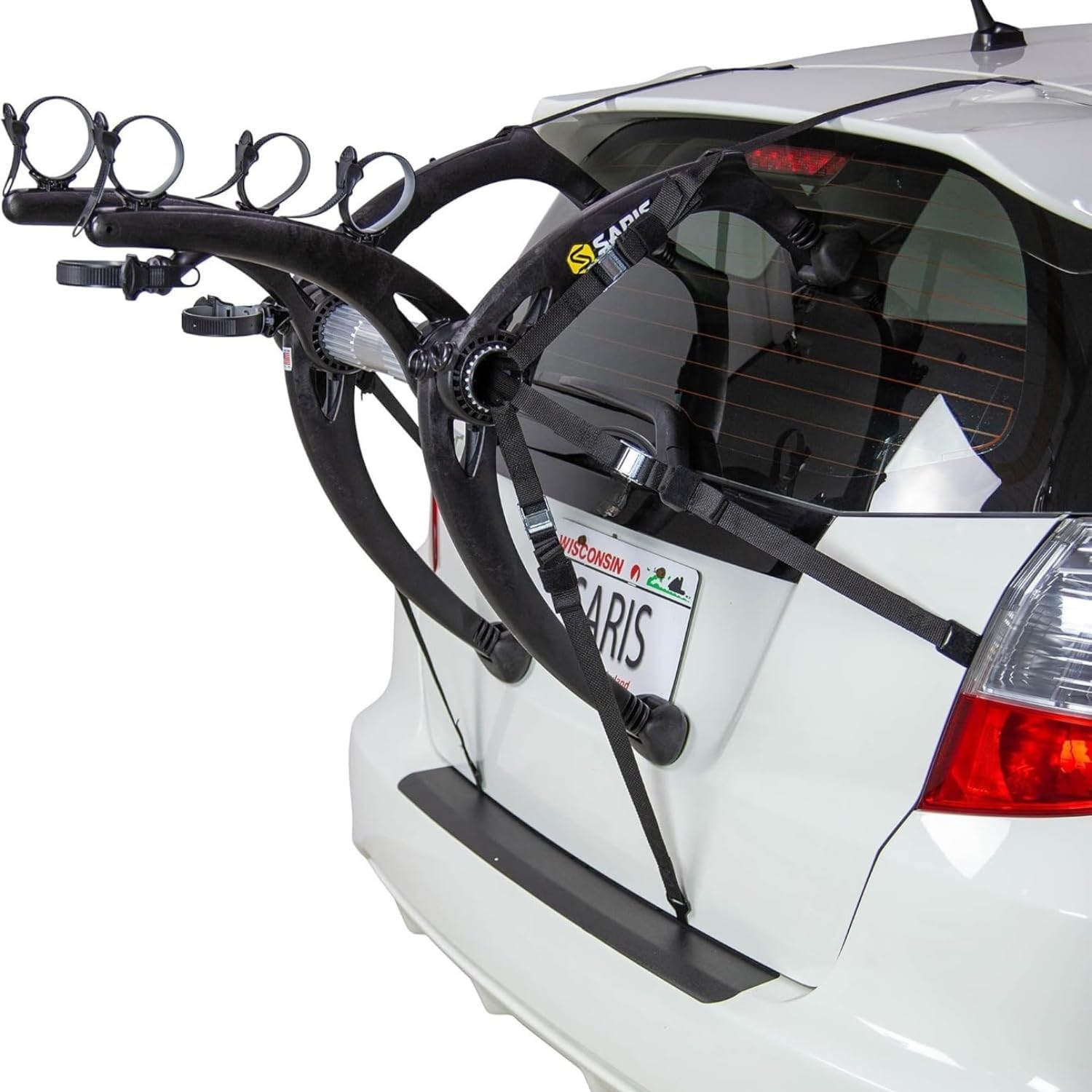
So, this is the Saris Bones EX which is well-known for trunk-mounted bike rack and it is light and easy to carry.
Even, you can install it with the straps and hooks and it is designed to reduce the contact points so it is less likely to rub paint when it properly fit and tightened in the correct way.
As well as, it comes with the injection-molded arms and legs that keeps the rack solid for years to come and there’s rubber feet that articulate to protect the paint as well.
#2. STUDTREX

Now, STUDTREX is the manufacturer of this premium bike that that blends a sturdy design with smooth operation and there are lots of helpful features are available for regular riders as well.
As well as, you can carry 2-Ebikes with these racks of 170 lbs capacity that makes them truly useful and highly reliable.
Plus, you can easily fold them, tilt them according to your convenience, even it comes with the anti-theft hitch and wheel locks that makes them highly protective.
#3. IKURAM R

Now, IKURAM R is the designer of this high quality bike rack that can carry 2 bicycles easily.
Additionally, Alloy Steel and High Quality Rubber material is used to build this BMW X5 bike rack and these materials actually provides durability and reliability that can carry your bikes safely during drive.
Moreover, you can easily tilt it down to access the bicycles, it is to give you convenient access to rear of vehicle with easy-to-use tilt-down feature.
As well as, you can fold it up quickly whenever the bike racks are not in-use that makes them compact transport and easy to store as well.
#4. Allen

Without a doubt, it is a heavy-duty trunk bike rack that is easy to use and very stable on the road.
Even it is made to carry 2-bike with each bike supported by its wheels, which literally lowers stress on fragile frames and makes loading much simpler.
Also, you can tie downs individual bikes and secure them to protect bicycles during the journey.
As well as, there are padded lower frame that actually keeps your bicycle away from the vehicle to prevent any kind of scratches and dents.
#5. Allen
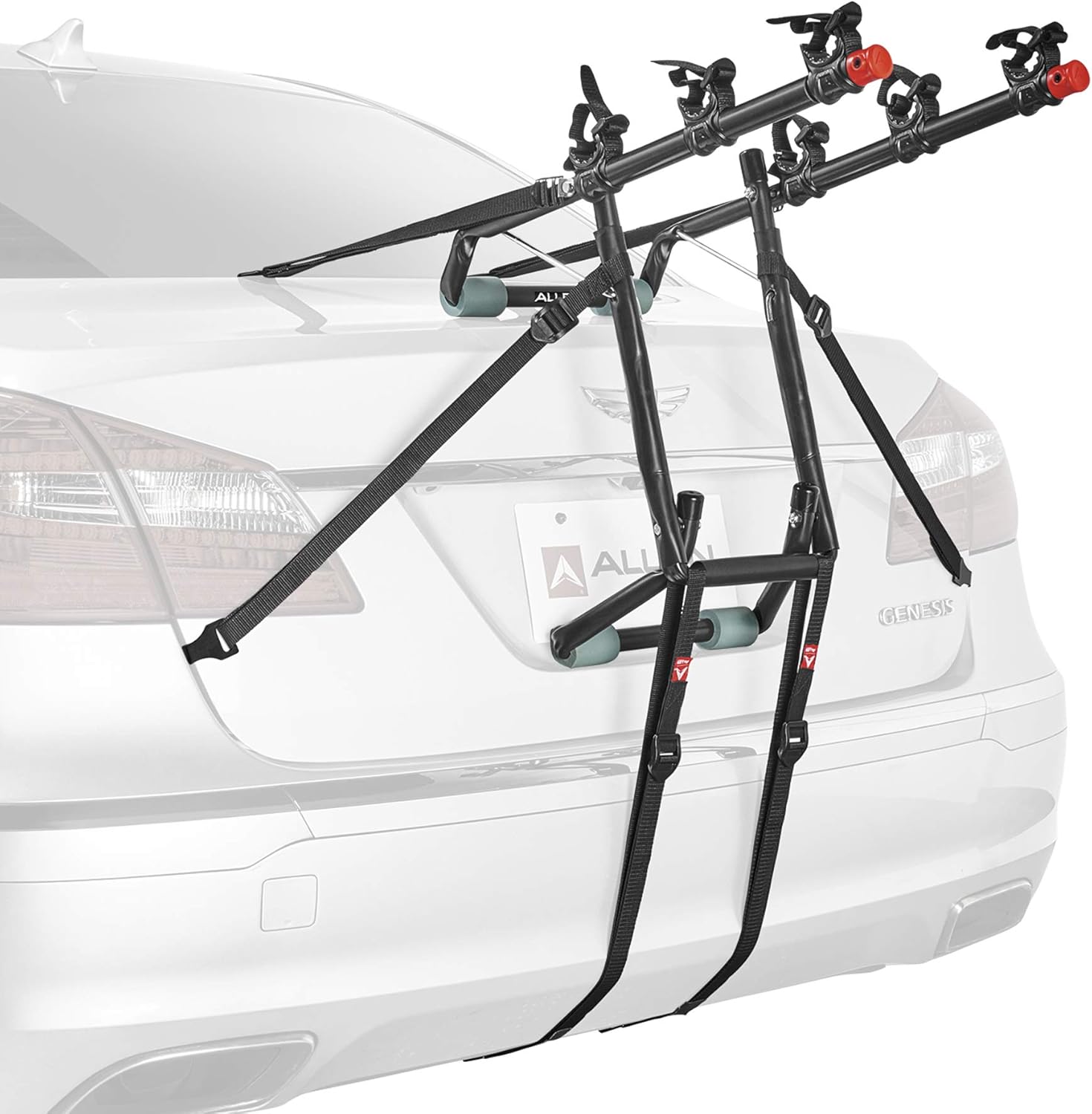
Now, with this Allen Sports trunk bike rack you can carry 3 bikes in one go, also alloy steel is used to give it durability.
Yes, you can also fold it fully flat for easy storage, even it has padded lower frame that literally protects vehicle, and left and right side straps are available to make it truly stable during drive.
Not only this, you can tie-down individual bicycles to protect them.
How to Ensure Safety of Bike Rack for BMW X5
1. Maximum Bike and Rack Weight Limits
When using a bike rack, one of the most important safety steps is to understand how much weight you can load on your BMW X5.
The combined weight of the rack and all bikes should remain within the X5’s tongue weight limit for a hitch rack or the roof load limit for a roof rack.
Many electric bikes weigh between 50 and 70 pounds, and platform racks alone can weigh 40 to 60 pounds, so exceeding the limit is easier than most people think.
Staying within these weight guidelines keeps the vehicle’s suspension safe, handling stable, and prevents damage to the hitch or roof structure on long drives or rough roads.
2. Ensuring there are no obstructions to the taillights
A safe setup should always keep the BMW X5’s taillights fully visible, specially as modern X5 models use LED lights, which are crucial for communicating with drivers behind you.
Blocking any part of the bike rack or bike brake lights, indicators, or reverse lights increases the risk of accidents.
Proper rack design, proper bike placement, and careful adjustment ensure clear visibility of the lights in all driving conditions, including night and rain.
3. Rear Visibility and Camera Interference Solutions
The BMW X5 relies heavily on its high-definition rear camera and parking sensors, and these can be slightly blocked or constantly triggered by some bike racks.
A carefully selected rack with greater spacing or better alignment minimizes interference and keeps the camera view usable.
Some owners use a tilt or swing-away mechanism to adjust the rack when reversing.
Roof racks completely prevent interference with the rear camera, but may impact overhead visibility depending on the bike’s height.
Understanding how the rack affects the camera and sensors helps ensure safe reversing and parking.
4. Clearance When Opening or Closing the Tailgate
The BMW X5 has a large vertical or split tailgate that requires considerable rear clearance.
If space is limited, opening the tailgate with a bike rack or loaded bikes may cause dents, scratches, or mechanical strain.
Therefore, tilt and swing-away racks are recommended for the X5.
These features allow the tailgate to open without forcing the rack or bikes into the vehicle’s body.
Having sufficient space prevents costly damage and makes loading everyday items easier.
5. Checking Torque and Tightening Points
Bike racks have bolts, clamps, straps, and locking points that must be properly tightened for safe travel.
Regularly checking the torque level on bolts, specially after long rides or on roads with high vibration, prevents them from loosening, which can cause instability or malfunction.
A secure rack maintains even pressure on all mounting points, keeping the bike stable and reducing unnecessary movement that can cause wear and noise.
6. Avoiding Frame Damage with Carbon Bikes
Carbon fiber bikes require careful handling as their frames can be damaged by pressure, tightening, or scraping.
Using a rack with a wheel-hold design, soft cradle, padded straps, or non-compression arms helps protect carbon frames during transport.
Applying direct pressure to the thin tubing or tightening the straps too much can damage the bike.
For BMW X5 owners who frequently ride expensive carbon bikes, choosing the right rack design is crucial for long-term bike safety.
7. Precautions When Driving on the Highway
High speeds on the highway increase wind force and vibration on both the rack and bike.
To ensure a safe ride, the rack should be secured tightly, the bike locked in place, and the straps should be checked for tension.
Aerodynamic design is specially important for roof racks because the BMW X5 is already tall, and the increased height increases wind resistance.
Drivers should maintain a longer braking distance, avoid sudden lane changes, and check the bike and rack after a long distance to ensure everything is stable.
Paying attention to these precautions helps prevent accidents and keeps the bike safe during long trips.
Read More:
How to Install Bike Rack for BMW X5 – Installation Guidelines
1. Hitch Rack – Installation Guide
To install a hitch rack on a BMW X5, first ensure the 2-inch hitch receiver is clean and free of debris to ensure easy rack insertion.
The rack should be fully inserted into the receiver until the pinholes align, and then the hitch pins or locking bolts should be tightened.
Many modern racks have a tightening knob or internal stabilizer that extends inside the hitch to prevent movement, which is specially important for the X5, which has sensitive sensors and a smooth suspension.
After locking the rack in place, the arms, tray, or wheel cradles should be adjusted to suit the number of bikes being transported.
Proper installation helps keep the rack stable on the highway and prevents unwanted vibrations.
2. Roof Rack – Torque Specs
Mounting a roof rack on a BMW X5 requires fitting crossbars that match the roof rail spacing and weight capacity specified in the owner’s manual.
Each crossbar must be set to the correct width and tightened to the specified torque specifications for a secure hold, as roof racks are exposed to strong winds at high speeds.
Bike trays or fork-mount holders are then attached to the crossbars and tightened evenly to prevent twisting or shifting.
Because the X5 is a tall SUV, a strong, balanced roof mounting is essential for safety and ease of loading.
Following torque guidelines can also prevent damage to the crossbars or roof structure.
3. Trunk Rack – Tension Setup and Paint Protection Pads
Installing a trunk or strap rack on a BMW X5 requires attention to tension and surface protection.
The curved rear hatch and sensitive paint finish mean contact points must be clean and have protective pads to prevent scratches.
The upper, lower, and side straps must be evenly tightened to center the rack and prevent it from sliding under the bike’s weight.
The straps should be checked for wear and pulled firmly without overstretching, as uneven pressure can cause dents or slippage during driving.
Because the X5’s tailgate is large and electronically controlled, choosing a properly fitted trunk rack and using extra protective film can help prevent long-term damage.
4. Pre-Ride – Inspection Checklist
Before driving, conduct a thorough inspection to ensure the rack and bike are secure.
This includes verifying that all bolts and straps are tight, checking that the bike doesn’t move when gently shaken, ensuring that the wheels are locked, and confirming that the hitch pin or locking bolt is fully engaged.
Tires, pedals, and handlebars should not touch each other or the vehicle, and loose accessories like water bottles or bags should be removed to prevent them from falling while driving.
For roof racks, a quick height awareness check helps prevent collisions with low-rise areas like parking garages.
A thorough inspection helps prevent accidents and protects both vehicle and bike.
5. Best Ways to Avoid Sensor Activation Mistakes
The BMW X5 is equipped with advanced parking sensors and cameras that can be activated by bike racks if they are too close to the rear bumper.
To reduce false alarms, choosing a rack that protrudes slightly from the sensors or adjusting the bike’s position can help keep sensor readings clear.
Many hitch racks designed for luxury SUVs are designed to minimize contact with the detection zone.
When reversing, drivers can temporarily disable the rear sensors using the X5’s onboard settings if needed, specially when the rack is loaded.
Roof racks avoid these issues, but may impact the camera view depending on the height of the bike.
Understanding these best practices makes parking easier and driving safer.
How to Maintain Bike Rack for BMW X5
1. Regular Cleaning After Rain, Dirt and Highway Travel
Keeping your bike rack clean is one of the easiest ways to extend its life and maintain safe performance.
After riding on rain, mud, or dusty roads, wash the rack with mild soap and water to remove dirt from the hinges, wheel trays, or straps.
Dirt buildup can harden moving parts, weaken locking mechanisms, or scratch the bike frame during transport.
Cleaning also prevents road salt or moisture from accumulating on metal surfaces, which is specially important for BMW X5 owners who frequently travel on highways where dirt and moisture are more likely to get on the rear of the vehicle.
2. Rust Prevention and Lubrication Points
Even racks made of steel or aluminum with protective coatings need to be checked occasionally for rust, specially around bolts, joints, and mounting arms.
Applying a light protective spray or lubricant to the hinge points, tilt mechanism, and locking system helps prevent rust and ensures smooth operation.
Areas subject to frequent movement or weight should be inspected more frequently, as friction can wear down the coating over time.
Rust prevention is essential for long-term safety, as weakened metal can cause sudden failure or instability during transport.
3. Check Straps, Bolts and Locking Mechanisms
Regularly checking all straps, bolts, clamps, and locks ensures the rack remains secure on every trip.
Sunlight, temperature changes, or constant pressure can stretch or weaken straps.
Road vibrations can loosen bolts, specially on long trips or over rough terrain.
The locking mechanism should also be checked for smooth turning, proper engagement, and signs of wear.
A well-maintained rack keeps bikes tightly secured and prevents excessive pressure on the BMW X5’s hitch, roof bars, or tailgate.
4. Seasonal Storage
When a bike rack is not in use for extended periods, storing it properly helps protect it from weather damage and dust.
The rack should be stored in a dry, indoor location, preferably suspended or upright to prevent warping or stressing vital parts.
Before storing, all parts should be cleaned, dried, and lightly lubricated to prevent corrosion from off-season moisture.
Removing batteries or loose accessories from electrical or mechanical rack parts can prevent corrosion in sensitive areas.
5. Extend the Life of Moving Parts
Moving parts such as till joints, swing arms, folding trays, and locking levers require regular attention to keep them functioning properly.
Keeping them clean, properly lubricated, and avoiding excessive stress during use can significantly extend the life of a rack.
It’s also important to avoid lifting heavier loads than the rack’s rated capacity, as this reduces stress on the pivots and hinges.
Taking care of the rack during installation and folding ensures even wear and tear on the mechanical parts, ensuring smooth operation for many years.
BMW X5 Bike Rack – Special Tips for Use
1. Best Loading Pattern for Two or More Bikes
When loading multiple bikes on the racks installed on the BMW X5, the safest and most stable method is to place the heaviest bike closest to the vehicle.
This concentrates the weight near the hitch or roof rails and prevents the vehicle from swaying when accelerating, braking, or turning.
The X5 has a robust suspension system, but balancing the weight is still important to reduce stress on the rack mounts and ensure a smooth ride at highway speeds.
Placing lighter bikes on the outside also helps prevent the support arms from twisting, and positioning the handlebars so they don’t collide with each other can prevent rubbing or scratching during vibrations.
This loading pattern improves stability, protects the frame, and ensures better control while driving.
2. Preventing Tilting on Steep or Uneven Ground
On steep roads or uneven terrain, preventing tilting is crucial as the BMW X5’s independent suspension actively moves to maintain traction, which can cause excessive movement on the bike rack.
Using a rack with anti-wobble technology, properly securing all frame or wheel straps, and ensuring the main locking arm is tightened to the recommended pressure helps keep the bike stable even during rapid body movements of the SUV.
The X5’s torque-rich engine can accelerate rapidly on slopes, so minimizing any slack in the bike connection is crucial to prevent accidental movement.
These measures help keep both the rack and bike safe in off-road or hilly driving conditions.
3. Managing Rear Camera Alerts
The BMW X5 is equipped with advanced driver-assistance sensors and a wide rear camera system that can detect the presence of a hitch rack or bike and trigger a continuous proximity alert.
Clearing the sensors before driving reduces false signals, and using the vehicle’s settings, switching to towing or accessory mode when available, helps the car recognize when something is intentionally placed behind.
Because bikes can block parts of the camera’s view, adjusting the camera angle or relying more on the side mirrors when reversing provides safer visibility.
Understanding how the X5 senses obstacles behind makes it easier to manage alerts and maintain confidence when parking or maneuvering.
4. Avoiding Roof Rack Problems in Low-Clearance Areas
The BMW X5 is a tall SUV, and adding a bicycle or two to the roof rack significantly increases the overall height, often making the vehicle too tall for low-rise parking garages, fast-food drive-thrus, home carports, or tree-covered driveways.
Measuring the total height of the SUV and bike and memorizing this number helps prevent roof-impact accidents, which can damage both the bike and the rack system.
Driving slowly and keeping an eye out for overhead hazards when approaching any low-clearance area reduces the chance of a collision.
Because the X5 is taller than many sedans and crossovers, a roof-mounted bike requires more space to maneuver in tight spaces.
5. Improving Fuel Efficiency with a Roof Rack
Using a roof rack on the BMW X5 impacts fuel efficiency because upright bikes increase aerodynamic drag and obstruct airflow over the roofline.
Choosing an aerodynamic bike tray, removing the front wheels when possible, or switching to a hitch rack for long highway trips can significantly reduce air resistance and ease engine workload.
The X5’s robust power output allows it to easily manage the extra drag, but fuel consumption can still increase significantly at higher speeds, specially when carrying multiple bikes.
Understanding how airflow interacts with roof-mounted equipment helps drivers make better choices that ensure easy bike transport while maintaining efficiency.
What are the Common Mistakes That You Should Always Take Care Of
Even, on the front-mounted bicycle racks and according to the UK Department for Transport study: the presence of the bicycles on the rack dramatically changes how the force is actually distributed in an impact, as it increases the risk in some of the collision scenarios, as this research shows that if there’s unstable or improperly secured rack then it can literally create the unpredictable dynamics, which is why it is really important to have secure and stable rack design that ensures safety in everyday driving conditions as well.[¹]
1. Choosing a Rack That Blocks the Tailgate
A common mistake many BMW X5 owners make is choosing a bike rack that blocks the tailgate from opening.
This can be a hassle during trips when quick access to luggage or gear is needed.
The X5 has a large split tailgate design that requires significant space in the rear of the vehicle, and racks without a tilt or swing mechanism can completely block this movement.
Choosing a rack specifically designed with a tilt-down or swing-away feature allows easy access even when the bikes are loaded, reducing the need to remove the bikes every time you want to access the cargo area.
Understanding how the X5 tailgate works is crucial to avoiding unnecessary hassle and preventing accidental damage to both the rack and the vehicle.
2. Overloading Weight Ratings
Another avoidable mistake is placing more weight on the rack than it’s designed to support, specially when transporting heavy e-bikes, which often exceed standard bike weights.
The BMW X5 has a robust hitch and roof structure, but the rack itself sets a maximum load limit, and exceeding this number can put stress on the arms, tray, or mounting points.
Overloading also impacts driving stability because the vehicle’s excess weight alters the way the SUV responds to turns, braking, and bumps.
Following the manufacturer’s recommended weight limit prevents long-term damage, improves safety, and helps maintain an even distribution of weight on the rack.
3. Poor Strap Tension for Trunk Racks
When using a trunk or strap-style rack, low strap tension is a major mistake that can lead to movement, scratches, or complete detachaltion, specially at high speeds or on uneven terrain.
The BMW X5’s large rear surface requires the straps to be precisely tightened to match its shape, and loose straps can cause the rack to slip or slide on the paint.
Rechecking the tension after the first few miles of driving helps catch any initial slack caused by vibration.
Proper strap management not only ensures security but also protects the rear panel from scratches and pressure dents caused by improper installation.
4. Incorrect Positioning of a Carbon Frame
Placing a carbon-frame bike incorrectly on a rack can cause serious structural damage.
Carbon fiber is strong, but it can weaken under crushing forces applied in the wrong places.
When mounting the BMW X5 on a rack, these frames should never be clamped onto the tubing, where pressure can cause small cracks.
Instead, use wheel mounts or frame-friendly cradles to distribute the weight more evenly.
Understanding the sensitivity of carbon bikes helps avoid costly repairs and ensures the bike remains safe and reliable on the road.
5. Not Installing Security Locks
Many riders forget to use bike-to-rack and rack-to-vehicle locks, leaving both the bike and rack open to theft, specially when the BMW X5 is parked in a public area.
Thieves often target quick-release parts, making unsecured racks an easy opportunity.
Installing and consistently using supplied or aftermarket locks is a strong deterrent, keeping your equipment secure even during short stops.
Taking this simple precaution can protect valuable bikes and prevent major damage.
6. Neglecting Height Clearance with a Roof System
Roof-mounted bikes on the BMW X5 significantly increase the vehicle’s height, and ignoring this increased height could result in collisions with parking garages, drive-throughs, or low-hanging branches.
The X5 is already tall, and adding a bike can increase many standard clearances.
It’s important to measure the total height and be aware of overhead obstructions to prevent serious damage to the bike, rack, and roof structure.
Being aware of your surroundings while using a roof rack ensures a safe ride and can prevent accidental accidents.
Conclusion – Best Bike Rack for BMW X5
Now, you have properly understood about how the bike rack actually interacts with BMW X5, now you can easily equip your vehicle with the durable bike rack for BMW X5 and make them truly stable for convenience and safety purpose.
The combination of the X5’s robust towing structure, powerful engine, and sensitive parking sensors means the rack will not only keep the bikes secure, but also work seamlessly with the SUV’s built-in systems.
Whether you prefer a hitch, roof, or trunk-style rack, the most important considerations remain the same: proper weight handling, sturdy mounting, clear rear visibility, ample clearance for the liftgate, and a reliable locking system.
When these essentials are carefully considered, the bike rack becomes a natural part of the vehicle, allowing you to travel confidently on highways, rough roads, or long family trips without worrying about tilting, noise, or sudden damage.
Regular cleaning, proper installation techniques, and careful loading patterns extend the rack’s lifespan and ensure your bikes are protected from sudden stress or impact.
With the right know-how, the BMW X5 transforms into a highly capable adventure vehicle, allowing you to comfortably and safely transport a standard bike, e-bike, carbon frame, or multiple bikes.
By avoiding common mistakes and following these essential vehicle tips, you can enjoy a smooth, efficient, and safe transportation experience that keeps both your bike and your luxury SUV safe.
So, that’s all from this guide, now if you still confused about anything: just let us know by commenting below.
Frequently Asked Questions
Q1. What type of bike rack is best for the BMW X5?
Answer: The best bike rack for the BMW X5 is usually a hitch-mounted rack, as the X5 has a sturdy rear hitch design that handles weight well and keeps the bike stable even at high speeds. Hitch racks also make loading much easier, specially if you’re carrying a heavy e-bike or mountain bike. Roof racks are still a good option if you want to keep the rear camera clear, but they increase height and wind resistance. Trunk racks can work in some situations, but the X5’s size and sensors make them less convenient and often limit tailgate access.
Q2. Can the BMW X5’s liftgate open with a bike rack?
Answer: The BMW X5’s liftgate can only open fully if the bike rack has a tilt-down or swing-away feature. Without this design, the tailgate will be blocked because the X5 requires a lot of vertical and backward clearance when opening. Choose a rack specifically designed for SUVs with a tall liftgate so you can access your cargo area without having to remove your bike each time.
Q3. Is it safe to transport an e-bike on an X5 bike rack?
Answer: E-bikes can be transported safely provided the rack is built to handle heavy loads and designed for heavy bikes. E-bikes often weigh between fifty and seventy pounds, so you should choose a rack with a sturdy tray, strong arms, and the correct weight rating for the load. Hitch racks are the safest option for e-bikes because they keep the weight low and centered, reducing stress on both the bike rack and the SUV.
Q4. Will bike racks affect the parking sensors and rear camera?
Answer: Most hitch racks will activate the BMW X5’s parking sensors and block some or all of the rear camera’s view. This is normal because the sensors detect the rack as an obstruction. Some newer X5 models offer special driving modes that reduce alert sensitivity when towing or using rear-mounted equipment. Cleaning the sensors, adjusting the camera angle if possible, and choosing racks designed for a slightly lower mount can help reduce the frequency of repeated warnings.
Q5. How much weight can a BMW X5 hitch hold?
Answer: Most BMW X5 models come with two-inch Class III or Class IV receivers that support robust tongue weight ratings, often around five hundred pounds or more. The hitch itself is rarely the limiting factor; you should carefully consider the bike rack’s own weight rating. This means choosing a rack that can support the bike’s full weight without bending, shifting, or putting pressure on the connection points.
Q6. Is a roof bike rack safe for a BMW X5?
Answer: Roof bike racks are safe as long as the vehicle has approved crossbars that match BMW’s recommended load capacity. The X5’s roof is sturdy, but adding bikes significantly increases the overall height, which can cause problems in garages, parking structures, and drive-throughs. Roof racks also create more wind noise and reduce fuel efficiency, so they’re generally better suited for lighter bikes or occasional use.
Q7. Can trunk or strap racks be used on the BMW X5?
Answer: Trunk or strap-style racks are available, but they’re less effective because the X5 has a wide rear panel and sensitive paint, requiring careful strap placement. The straps and frame can trigger sensors. Trunk racks also completely block the tailgate, so you should remove them whenever you need to access the cargo area. They’re best used only when a hitch rack or roof rack is not available.
Q8. How can I prevent my carbon-frame bike from damaging the rack?
Answer: Carbon-frame bikes should never be clamped onto the frame tubes, as this can crack or weaken them. The safest method is to use a wheel-mount rack that secures the bike to the tires rather than the frame. If the rack must touch the frame, it should use a wide, soft cradle material that gently distributes pressure. Proper placement ensures that the carbon bike remains sturdy and secure during transport.
Q9. How can I reduce bike tilt when driving on rough roads?
Answer: Bike tilt on the X5 is often caused by improper loading or a lack of anti-wobble support. Placing the heaviest bike closest to the vehicle helps stabilize the center of gravity. Using a rack with an integrated stabilizing bar or locking arm also reduces movement. Installing the wheels securely and tightening all bolts and straps before every ride prevents the rack from sliding on uneven surfaces.
Q10. How often should I maintain my bike rack?
Answer: Bike racks should be cleaned and inspected regularly, specially after driving in rain, snow, on dusty roads, or on long highway trips. Metal parts should be dried to prevent rust, and pivot points should be lubricated to keep moving parts smooth. Straps, bolts, locking pins, and clamps should be checked for wear at least once a month. Good maintenance significantly extends the life of the rack and keeps you safe.
References:
[1] A study of front-mounted bicycle racks on buses
https://www.trl.co.uk/uploads/trl/documents/TRL592.pdf

Jonathan, the passionate owner of Bicycle Time, brings a lifelong love for bikes and automotive craftsmanship, that reflects into every corner of the shop. With deep passion in both cycling and automotive accessories, Jonathan is more than just an expert.
