 Skip to content
Written By: Jonathan
Fact Checked By: Caroline Dezendorf
Reviewed By: Matt Tanner
Modern bike racks are literally designed to handle everything from lightweight carbon road bikes to 70-lb electric bikes, that make them truly suitable for any rider.
Subaru Crosstrek that are known for their adventurous nature like: you can perform outdoor activities as you can do biking, camping or hiking as it comes with standard symmetrical all-wheel drive, 8.7 inches of ground clearance with strong roof and hitch support, so that you can easily attach the bike rack on Subaru Crosstrek to have the adventure.
And now you need a truly stable and highly protective bike rack that can be attached to the Subaru Crosstrek so that you can easily carry multiple bikes with your vehicle.
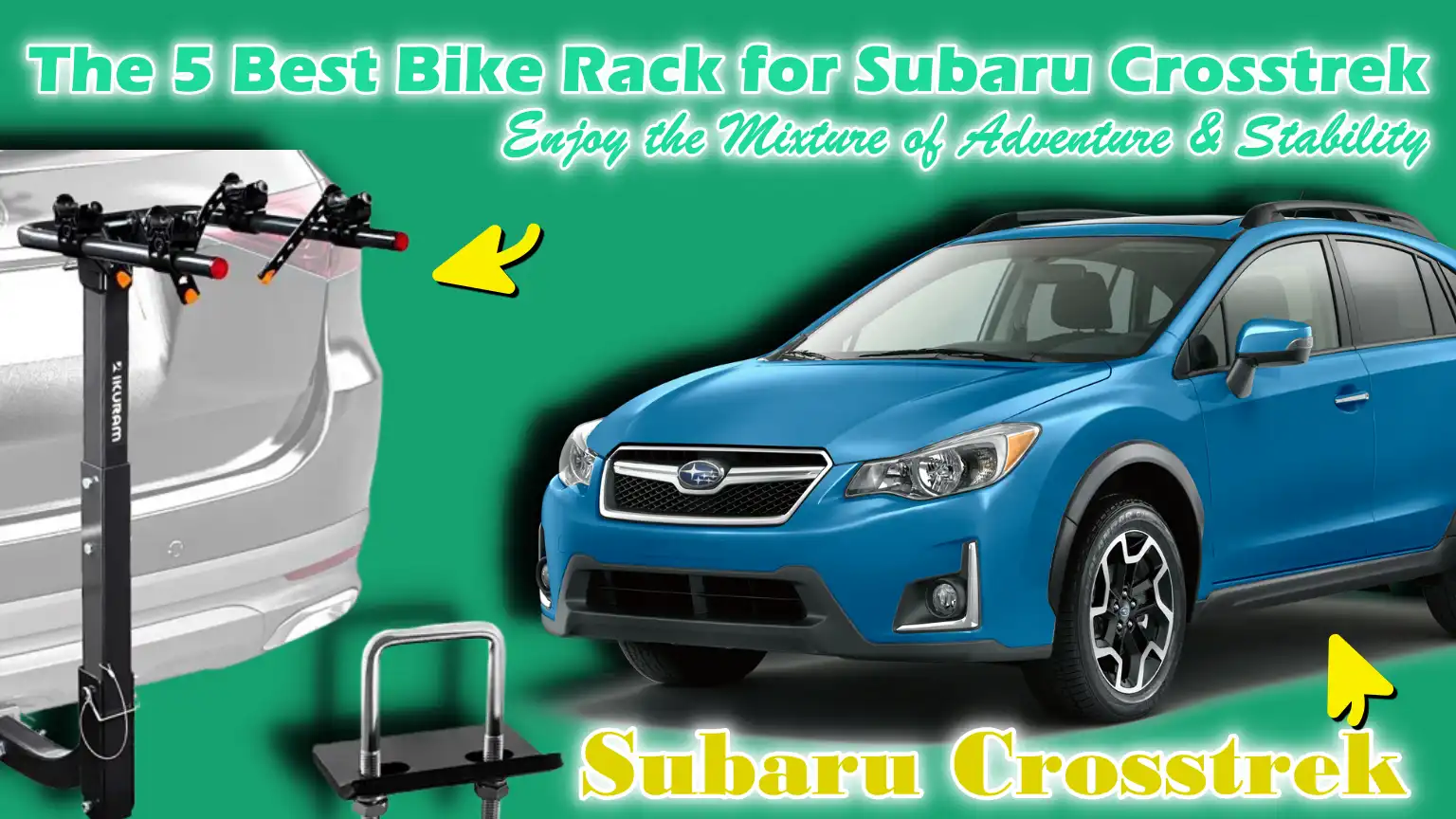
That’s why, we have come up with these 5 Best Bike Rack for Subaru Crosstrek that comes with anti-sway cradles, rust-resistant coatings and it has built-in locking system to keep your bicycles secure during the long drives or off-road trips as well.
What are The Important Considerations Before Choosing a Bike Rack for Your Subaru Crosstrek
Choosing a bike rack for your Subaru Crosstrek involves understanding the vehicle’s design, weight limits, and compatibility with different rack types.
The Crosstrek features a compact rear hatch, factory-installed roof rails, and often a 1.25-inch hitch receiver, meaning not every rack will be a perfect fit.
Before purchasing, it’s crucial to consider how often you’ll use the rack, the types of bikes you own, and whether you need a rack that allows easy access to the hatch or one that supports heavier e-bikes.
Thinking about durability, ease of installation, vehicle protection, and your riding lifestyle can help you choose a rack that functions safely and conveniently.
1. Hitch Type and Compatibility
The Subaru Crosstrek typically uses a 1.25-inch Class I or Class II hitch, specially with factory installations.
Some riders upgrade to a 2-inch aftermarket hitch when they need a more robust connection for e-bikes or heavier mountain bikes, as a 2-inch hitch can handle more weight and offers a wider range of rack options.
If your vehicle doesn’t already have a hitch, installing an aftermarket option may be necessary, and installation costs can vary depending on the brand and labor requirements.
Knowing your hitch size is critical because a rack designed for a 2-inch receiver will not fit a 1.
25-inch hitch without an adapter, and using an adapter can sometimes affect stability and weight ratings.
2. Comparison of Rack Types
Several types of bike racks are available for the Subaru Crosstrek, each with its own advantages.
Hitch racks are one of the most popular options because they keep the loading height low and don’t interfere with the roof or trunk, making it easier to load heavier bikes.
Trunk racks are generally less expensive and don’t require a hitch, but they can block the rear hatch and put stress on the paint and trim.
Roof racks take advantage of the Crosstrek’s sturdy roof rails and keep the rear clear, but they require lifting the bikes onto the roof and can affect fuel efficiency due to increased wind resistance.
Spare tire racks are not typically used on Crosstrek models because the spare tire is stored under the vehicle, not mounted externally.
3. Weight Capacity and Bike Type
A bike rack’s weight capacity determines which bikes it can safely carry, and this is specially important for electric bikes, as many e-bikes weigh between 50 and 70 pounds.
Standard road bikes, gravel bikes, and mountain bikes are much lighter and will fit on most racks without issue.
Riders with fat-tire bikes or bikes with wide handlebars should confirm fitment, as some racks require additional adapters to secure bikes of specific sizes.
Matching the rack to your bike type ensures safe transport and prevents damage to both the rack and the bicycles.
4. Number of Bikes
Some people only need to carry one bike, while others may need space for two, three, or four bikes.
Hitch racks typically have the highest capacity and can support multiple bikes without stacking them on top of each other or blocking visibility.
Roof systems can also carry multiple bikes, but each bike typically requires its own roof attachment, which can increase costs.
Choosing the right capacity ensures you have enough space now and flexibility for future riding partners, family members, or new equipment.
5. Safety Features
Security is important when transporting bikes, as bicycles can be expensive and are often targets for theft while traveling or parked at trailheads.
Many modern racks include locking systems for both the bikes and the rack itself, preventing removal without a key.
Anti-sway systems help prevent movement during transport, protecting the frames from scratches and reducing noise and vibration.
Additional hardware such as straps and bolts can also help keep everything securely in place on longer trips or rough roads.
6. Ease of Use and Installation
A good rack should be easy to install, remove, and operate, specially if you plan to use it frequently.
Some racks feature quick-release levers, tilt-back designs, or fold-down features that allow access to the Crosstrek’s rear hatch without removing the bikes.
Racks that require tools for every installation step can be time-consuming, while tool-free designs offer convenience for frequent riders.
Considering user-friendly features ensures the rack supports your routine, rather than adding hassle.
A Complete Buying Guide for Subaru Crosstrek Owners
Choosing a bike rack becomes easier when you understand how the Subaru Crosstrek is built and how different rack systems interact with the vehicle’s size, design, and structural limitations.
Because the Crosstrek is a compact SUV with a rear liftgate and higher ground clearance than a sedan, it requires a rack that offers easy loading, secure mounting, and stable performance while driving.
The right bike rack should not only fit properly but also remain secure at highway speeds, on rough roads, or during sudden braking.
Considering factors like clearance, fitment, build quality, and safety features helps avoid problems such as obstructed rear access, loose connections, weight imbalance, or premature corrosion.
A thoughtful purchase ensures long-lasting performance and keeps both your bike and vehicle safe.
1. Clearance Specifications
Clearance is one of the most crucial considerations because the Subaru Crosstrek has a rear hatch that opens upward and requires sufficient space to open fully without hitting the rack or bicycles.
Some racks are specifically designed to tilt or fold to prevent interference with the hatch design.
Ground clearance also matters because a loaded rack can sag, specially with heavier bikes, increasing the risk of scraping on steep inclines, speed bumps, or off-road terrain.
Ensuring proper clearance prevents accidental damage to the rack, bicycles, and rear bumper.
2. Fitment Requirements
Understanding fitment requirements helps avoid purchasing racks that won’t securely attach to the Crosstrek.
The vehicle comes with factory roof rails that can support crossbars, but some riders prefer aftermarket systems that are more robust or offer more mounting options.
For hitch-mounted racks, most Crosstrek models have a Class I or Class II 1.
25-inch receiver, which works for regular bikes, but may not support the weight of very heavy bikes unless upgraded to a Class III 2-inch hitch.
Choosing the correct fitment ensures the rack is stable, supports the correct weight limit, and avoids unsafe adapters or forced installations.
3. Material Quality and Durability
A good bike rack should withstand weather, vibrations, and regular use.
Aluminum racks are typically lighter, easier to lift and remove, and corrosion-resistant, making them a good option for riders who frequently load and unload.
Steel racks are stronger and better suited for heavier bikes or extended highway use, but may require a protective coating or rust-inhibiting paint to prevent corrosion.
Weather resistance is specially important for Crosstrek owners who drive in snow, salt, mud, or rain, as these conditions can accelerate wear and tear if the rack is not properly coated or sealed.
4. Safety Features
Safety features determine how stable and secure the rack is while driving.
Many high-quality racks are designed to meet or exceed DOT safety requirements for road use and bike transport.
Features like anti-rattle mechanisms help prevent the rack from shifting within the hitch receiver, reducing noise and preventing stress on components.
Stability systems help prevent swaying and vibrations, specially when driving on uneven roads or at highway speeds.
The more secure the rack, the safer the bikes will be during transit, and the less wear and tear there will be on the vehicle over time.
The 5 Best Bike Racks for Subaru Crosstrek – Truly Durable
These are highly durable and made of premium quality materials that provides them much needed reliability for the long term use, also these are truly compatible bike rack for Subaru Crosstrek so that you can easily install them without any hassle.
#1. Saris
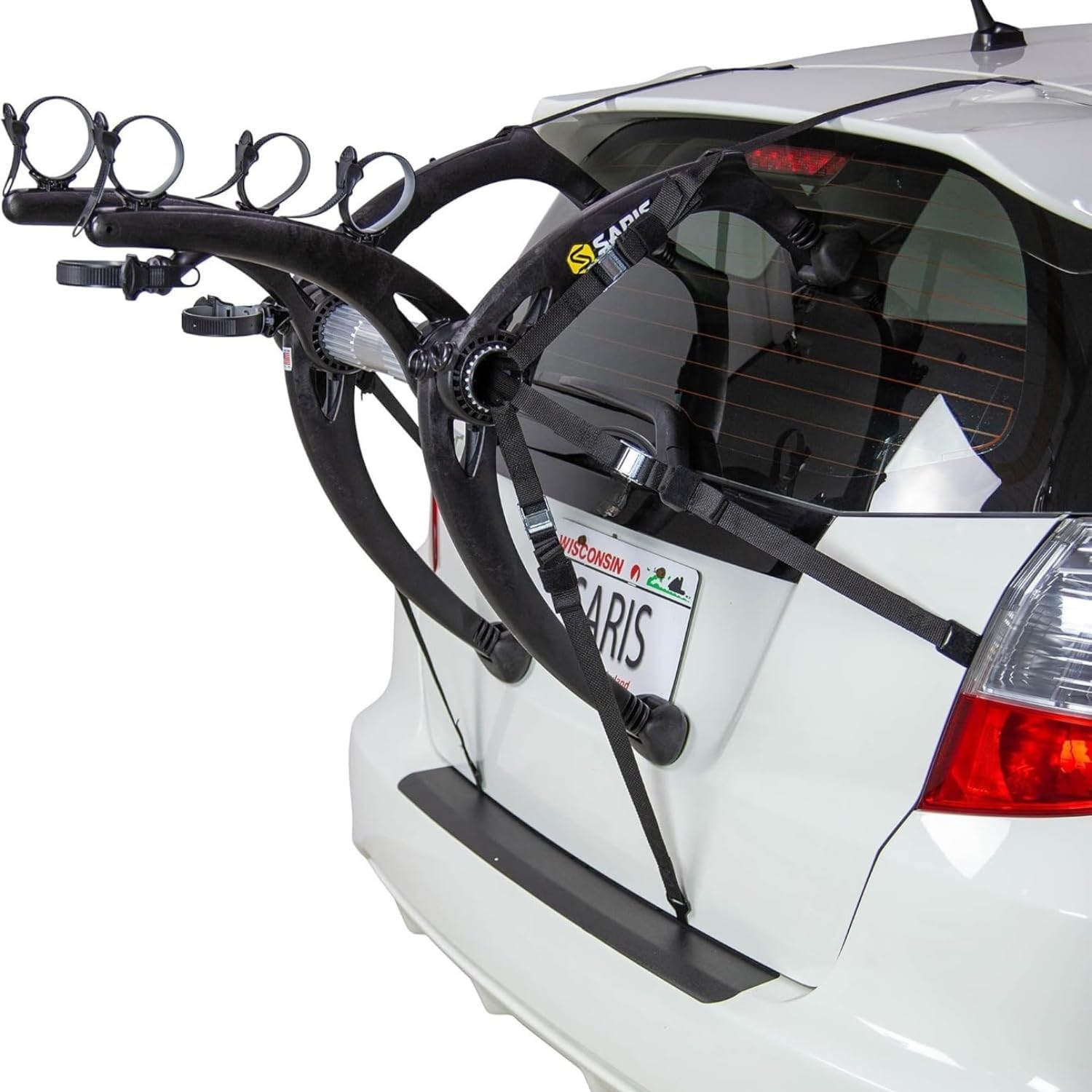
So, this is the Saris Bones EX which is well-known for trunk-mounted bike rack and it is light and easy to carry.
Even, you can install it with the straps and hooks and it is designed to reduce the contact points so it is less likely to rub paint when it properly fit and tightened in the correct way.
As well as, it comes with the injection-molded arms and legs that keeps the rack solid for years to come and there’s rubber feet that articulate to protect the paint as well.
#2. Allen

Without a doubt, it is a heavy-duty trunk bike rack that is easy to use and very stable on the road.
Even it is made to carry 2-bike with each bike supported by its wheels, which literally lowers stress on fragile frames and makes loading much simpler.
Also, you can tie downs individual bikes and secure them to protect bicycles during the journey.
As well as, there are padded lower frame that actually keeps your bicycle away from the vehicle to prevent any kind of scratches and dents.
#3. STUDTREX

Now, STUDTREX is the manufacturer of this premium bike that that blends a sturdy design with smooth operation and there are lots of helpful features are available for reuglar riders as well.
As well as, you can carry 2-Ebikes with these racks of 170 lbs capacity that makes them truly useful and highly reliable.
Plus, you can easily fold them, tilt them according to your convenience, even it comes with the anti-theft hitch and wheel locks that makes them highly protective.
#4. IKURAM R

Now, IKURAM R is the designer of this high quality bike rack that can carry 2 bicycles easily.
Additionally, Alloy Steel and High Quality Rubber material is used to build this Subaru Crosstrek bike rack and these materials actually provides durability and reliability that can carry your bikes safely during drive.
Moreover, you can easily tilt it down to access the bicycles, it is to give you convenient access to rear of vehicle with easy-to-use tilt-down feature.
As well as, you can fold it up quickly whenever the bike racks are not inuse that makes them compact transport and easy to store as well.
#5. Allen
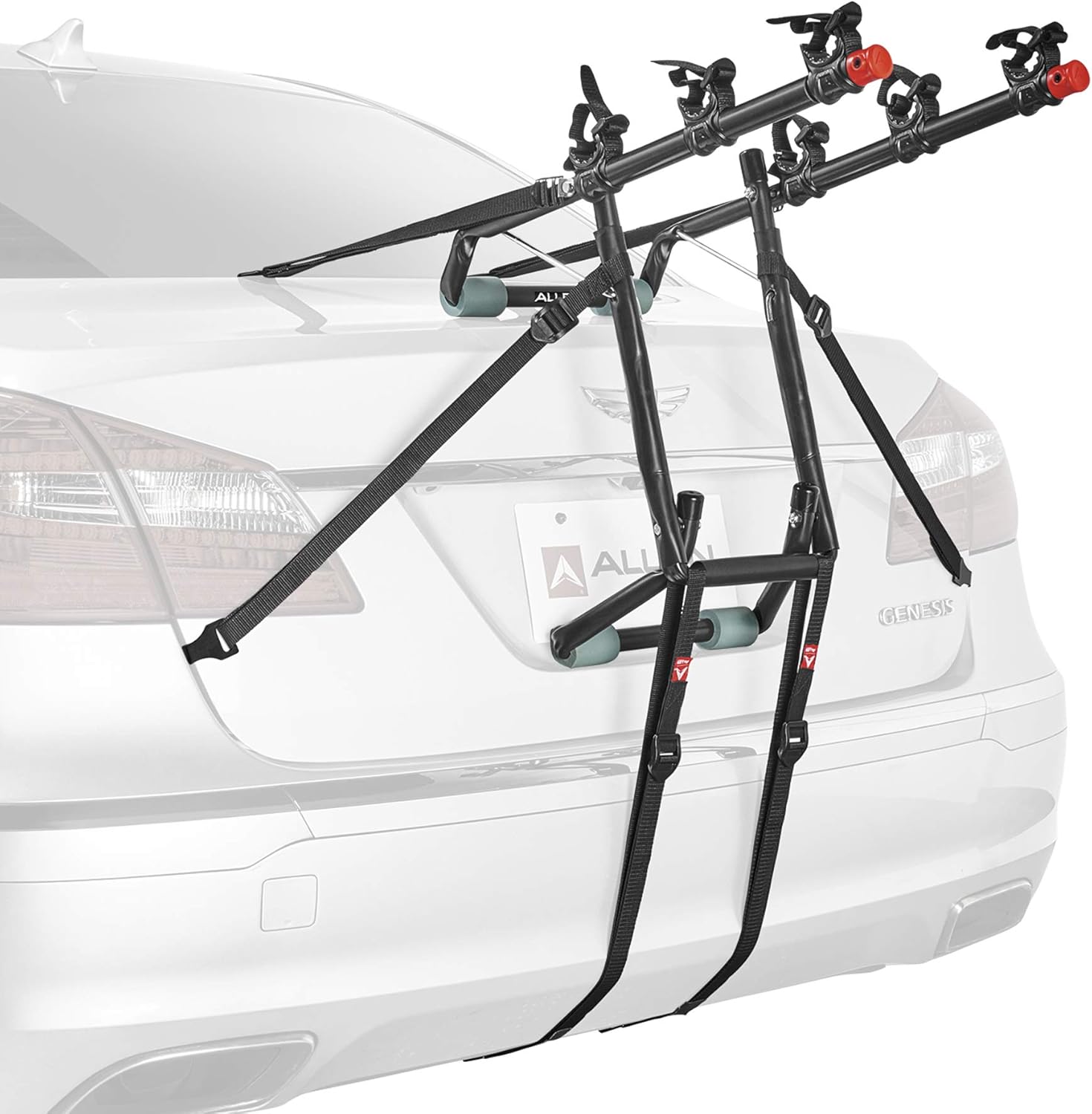
Now, with this Allen Sports trunk bike rack you can carry 3 bikes in one go, also alloy steel is used to give it durability.
Yes, you can also fold it fully flat for easy storage, even it has padded lower frame that literally protects vehicle, and left and right side straps are available to make it truly stable during drive.
Not only this, you can tie-down individual bicycles to protect them.
Best Use Cases of Different Kind of Subaru Crosstrek Bike Rack
Different riders use their Subaru Crosstrek for different purposes, and the best bike rack depends on how often you ride, the type of bike you use, and where you plan to travel.
Because the Crosstrek is popular among outdoor and adventure-loving riders, many riders need a rack that can handle long distances, rough terrain, or heavy bike frames.
Choosing the right rack for your lifestyle helps avoid unnecessary wear and tear, poor stability, or difficulties loading your bike.
Considering your use case makes the selection process much easier and ensures you get a rack that’s right not only for your vehicle but also for your riding style.
1. Best Rack for Long Road Trips
For long-distance travel, a hitch-mounted platform rack is usually the most practical option because it provides sturdy support, lowers for easy bike loading, and minimizes movement while driving on the highway.
Platform racks hold bikes by the wheels rather than the frame, which helps protect carbon fiber or painted frames from pressure points.
Many platform racks also feature a tilt function that allows access to the rear hatch without removing the bikes, which is convenient for stops during travel.
A stable hitch rack with a secure locking system and anti-rattle technology provides smooth performance and helps prevent fatigue from vibrations during long journeys.
2. Best Rack for Mountain Biking and Off-Road Use
Mountain biking often involves riding on dirt roads, gravel paths, or rough terrain, so stability and durability are crucial.
A hitch-mounted rack with strong connection points and heavy-duty frame construction is often the best option for off-road riders.
This type of rack is more stable at the rear of the vehicle and minimizes side-to-side movement caused by bumps or uneven road surfaces.
Roof racks can also work, but loading heavy mountain bikes onto them after a long ride can be difficult.
A sturdy, vibration-resistant hitch rack helps protect shocks, suspension systems, and components when traveling to remote trailheads.
3. Best Racks for Occasional vs Frequent Cyclists
For occasional cyclists who only transport their bikes a few times a year, a lightweight and simple rack such as a trunk rack or a basic hitch rack may suffice, as it’s easy to store and doesn’t require a significant investment.
However, those who cycle frequently will likely want a more advanced rack that is easy to install and remove, offers more robust security features, and allows for quick loading.
Frequent cyclists often look for racks with folding designs, tool-free installation systems, and long-term weather protection, as convenience and durability become more important when the rack is used regularly.
4. Best Racks for E-Bikes
E-bikes are heavier than standard bicycles, with many weighing between 50 and 70 pounds, which means not every rack is suitable for them.
Platform hitch racks are generally the best option for e-bikes because they offer higher weight capacity, stable wheel support, and a lower lifting height.
Some racks are specifically designed for e-bike transportation and include ramps that allow the bike to be rolled into place rather than lifted entirely.
Choosing a rack designed for heavy frames ensures the safety of both the bike and the vehicle, while also reducing physical strain during loading and unloading.
Read More:
How to Maintain Bike Rack for Subaru Crosstrek and Some Care Tips
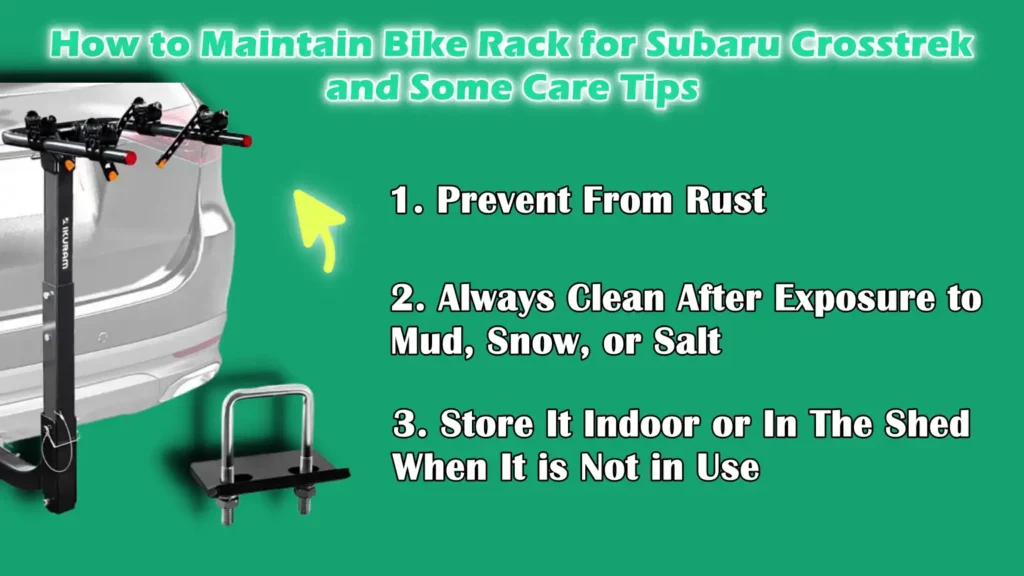
Taking care of your bike rack is just as important as choosing the right one, as proper maintenance can extend its lifespan, improve safety, and keep it looking and functioning like new.
Because many Subaru Crosstrek owners use their vehicles for outdoor activities, the bike rack is often exposed to harsh weather conditions such as rain, snow, mud, and road salt.
These elements can gradually damage metal components, weaken protective coatings, and affect locking or moving mechanisms over time.
Regular cleaning, lubrication, bolt checks, and proper storage habits help prevent wear and tear in the long run.
A well-maintained rack remains safer, more durable, and easier to use, specially if it’s frequently used for travel or off-road biking.
Without a doubt, road salt speeds up the rusting process, so if you actually lives where roads are salted in winter, then you just have to choose the bike rack which are made of stainless bolts, galvanized or aluminum parts and you should also follow the clear maintenance steps from the maker, even you should regularly washout the salt off the rack and lubricate the threaded parts after having a salty drives that literally slows the corrosion.[¹]
1. Prevent From Rust
Rust can occur when metal parts are exposed to moisture, salt, or scratches that remove the protective paint or coating.
Applying anti-rust spray or protective lubricant to bolts, hinges, and exposed metal surfaces helps prevent rust formation.
Regularly inspecting the rack for chipped paint or exposed metal and applying anti-rust paint to these areas can prevent rust from spreading.
Racks with stainless steel hardware and powder-coated finishes also offer better long-term protection against rust, specially for riders who frequently drive in wet or cold environments.
2. Always Clean After Exposure to Mud, Snow, or Salt
After driving on snowy, rainy, or muddy roads, it’s essential to clean the bike rack as road salt and grime can accumulate and damage moving parts or cause corrosion.
Washing the rack with mild soap and water and then drying it thoroughly removes dirt without damaging the metal surfaces or rubber straps.
Cleaning the locking mechanisms and pivot points ensures that the rack continues to open, fold, or tilt smoothly.
Regular cleaning prevents dried mud or salt from affecting the stability and grip of the clamps, straps, or wheel trays.
3. Store It Indoor or In The Shed When It is Not in Use
When the bike rack is not in use, storing it properly protects it from unnecessary weather exposure and physical damage.
Storing the rack in a dry indoor location, such as a garage or shed, prevents rust and fading from sun or moisture.
If indoor storage is not possible, using a storage cover helps protect the rack from UV rays and rain.
Before storing, ensuring that the rack is clean, dry, and free of dirt or moisture prevents mold, rust, and mechanical problems over time.
Proper storage keeps the rack in good working condition and ensures it’s ready for your next trip.
How to Install Bike Rack for Subaru Crosstrek & Tips
Proper installation of a bike rack is crucial as it impacts safety, stability, and long-term performance.
The Subaru Crosstrek has some unique design features, such as the rear liftgate, roof rails, and often a smaller 1.25-inch hitch, meaning the installation process may vary depending on your chosen rack style.
Correct installation helps prevent wobbling, movement, or misalignment while driving, specially at higher speeds or on rough roads.
Taking the time to read the manufacturer’s instructions, checking compatibility with your vehicle, and confirming that all parts are securely tightened can prevent issues such as loose bolts, scratches, or the rack unexpectedly shifting during travel.
1. Common Guidance of Installation of Bike Rack: Full Step
The installation process typically begins with identifying whether the rack attaches to the hitch, roof rails, or trunk.
For hitch racks, the first step is to slide the rack into the receiver and secure it with the provided locking pin or bolt, followed by tightening the anti-rattle mechanism to prevent movement.
Roof rack installation usually involves attaching the mounts to the crossbars and tightening the brackets evenly to ensure the bikes are aligned and stable.
For trunk racks, it’s essential to adjust the straps to fit securely over the hatch and ensure the arms remain level and don’t put excessive pressure on the spoiler.
After installation, gently shaking the rack before loading bikes helps verify its stability.
2. Tools Checklist
Most modern racks are designed to be user-friendly and don’t require many tools, but having basic supplies on hand can simplify the process.
Common tools may include an adjustable wrench, torque wrench, Allen keys, and hardware supplied by the manufacturer.
Some racks come with built-in tightening systems or tool-free mechanisms, which are specially convenient for frequent use.
Using the correct tools ensures that parts are tightened to the recommended levels, preventing overtightening, damage, or loose attachments.
3. Precautions for Protecting Paint and Trim
Because the Subaru Crosstrek has painted panels, plastic trim, and a rear spoiler, it’s important to take steps to avoid scratches or dents during installation.
Before installing the rack, cleaning the contact areas removes dirt or trapped debris that could scratch the surface when the rack is tightened.
Using protective pads or foam at metal contact points helps prevent pressure marks or damage to the paint.
For trunk racks, it’s crucial to avoid applying direct pressure to the rear spoiler, as it is not designed to bear weight.
Taking these precautions ensures that both the rack and the vehicle remain in good condition, specially if the rack is used frequently or installed and removed often.
What are The Common Mistakes to Avoid After Installation of Subaru Crosstrek Bike Rack
When choosing and using a bike rack for a Subaru Crosstrek, understanding common mistakes can help prevent damage, safety hazards, and unexpected problems.
The Crosstrek is designed with features like a rear hatch, roof rails, and smaller hitch sizes, meaning not every rack or weight load will be suitable.
Some riders overlook crucial details such as weight capacity or rack compatibility, leading to unstable mounting, difficulties loading bikes, or long-term damage to the vehicle or rack.
Taking the time to verify size, installation requirements, and safety features can streamline the experience and ensure the rack performs well during travel, whether for short trips or long distances.
1. Overloading the Weight Limit
One of the most common mistakes is exceeding the stated weight limit of the bike rack or hitch, specially for riders with heavier e-bikes.
Many standard racks are designed for bikes weighing less than a certain amount, and exceeding that capacity can stress the rack’s structure, weaken the mounting system, and increase swaying during transport.
The Subaru Crosstrek’s Class I or Class II hitch also has its own limitations, so it’s crucial to consider both the vehicle and the rack.
Staying within the correct weight rating ensures the safety of the rack, hitch system, and bicycles.
2. Choosing the Wrong Compatible Rack Type
Another common mistake is selecting a rack type that doesn’t match the vehicle’s design or hitch size.
A rack designed for a 2-inch hitch will not securely fit into a 1.25-inch receiver without an adapter, and using the wrong adapter can compromise stability and safety.
Some trunk racks can put excessive pressure on the Crosstrek’s spoiler or trim, potentially causing stress or damage over time.
Ensuring the rack is designed for the vehicle and its mounting system helps prevent fitment challenges and mechanical problems.
3. Neglecting Locks and Security Systems
Failing to properly secure the rack and bikes can lead to theft or the risk of them coming loose during travel.
Many modern racks have built-in locking mechanisms, but some riders forget to use them or rely solely on straps.
Locking the bikes to the rack and the rack to the vehicle ensures everything stays secure while parked or driving.
Using locks also provides peace of mind, specially at trailheads, parking lots, or during roadside stops.
4. Overlooking Roof Height
When using a roof rack, it’s easy to forget how much the bikes add to the vehicle’s overall height.
A Subaru Crosstrek is already taller than a standard sedan, and adding bikes on top can create clearance issues in parking garages, drive-thru areas, or low-clearance carports.
Accidentally hitting a low-hanging object can damage the bikes, the rack, and the roof system.
Being mindful of the height and paying attention to where you’re driving can prevent costly accidents.
Conclusion – Best Bike Rack for Subaru Crosstrek
The bike rack is really the simple upgrade that have the capability to transform your trip 360 degrees, as it is actually most practical and durable accessories for outdoor travel lovers.
Because the Crosstrek is designed for outdoor activities and adventure travel, the right rack must be compatible with the vehicle’s design, weight limits, and intended use.
Understanding details such as hitch class, rack type, ground clearance, roof height, and bike weight capacity helps avoid common problems like unstable mounting, frame damage, or difficulties with loading and unloading.
A well-chosen rack can make every trip easier by providing secure mounting, weather resistance, smooth on-road performance, and long-lasting durability, specially when facing rough terrain, highway speeds, or changing weather conditions.
With proper maintenance, installation, and thoughtful use, a high-quality bike rack can last for years and support road bikes, mountain bikes, gravel bikes, and even electric bikes without compromising performance or vehicle safety.
For Subaru Crosstrek owners who embrace adventure, the right bike rack is more than just a tool—it becomes an essential part of the journey, providing freedom, reliability, and confidence, no matter where the road leads.
So, that’s all from this one and if you still have confusion related to this guide: just let us known by commenting below this guide.
Frequently Asked Questions
Q1. What type of bike rack works best on a Subaru Crosstrek?
Answer: Three main types of bike racks can be used on a Subaru Crosstrek, but hitch-mounted racks are the most highly recommended because they offer strategic support, easy loading, and good stability while driving. Since many Crosstrek models come with a 1.25-inch hitch receiver, it’s important to choose a rack specifically designed for that size, unless you have installed a 2-inch hitch. Roof racks also work well if you want to keep the rear area clear, but loading bikes onto them can be more difficult. Trunk-mounted racks are sometimes used, but they can put stress on the rear spoiler, so they are not recommended.
Q2. Can a Subaru Crosstrek carry electric bikes?
Answer: Yes, a Subaru Crosstrek can carry electric bikes, but you will need a rack designed to support the extra weight. Electric bikes typically weigh between 50 and 70 pounds, meaning a standard bike rack may not be strong enough. Hitch-mounted racks provide the most even support and are generally the safest option compared to hanging racks. Some racks even include loading ramps so you don’t have to lift the bike completely off the ground. Always check the rack’s weight limit and the Crosstrek’s hitch rating before mounting e-bikes.
Q3. Do I need a hitch on my Subaru Crosstrek?
Answer: A hitch isn’t always necessary, but many people choose to have one installed, specially if they plan on carrying heavier bikes or multiple bikes. Factory hitches are typically 1.25-inch Class I or Class II, which are fine for standard bike racks and standard bikes, but may not support very heavy loads. If you plan to carry e-bikes or heavy-duty platform-style racks, an aftermarket 2-inch hitch offers greater capacity and improved stability. This helps prevent swaying or overloading during travel and makes longer trips safer and more comfortable.
Q4. Will a bike rack block the rear hatch of my Subaru Crosstrek?
Answer: Some racks will block the hatch, while others are designed to allow access. A tilt-back or swing-away hitch rack allows access to the hatch without removing the bikes, which is convenient during road trips or camping. Roof racks don’t interfere with the hatch at all, as the bikes are mounted on the vehicle’s roof. Platform racks are often mounted on the hitch and require removal whenever you need to access the hatch, which can be inconvenient.
Q5. How many bikes can a Subaru Crosstrek safely carry?
Answer: The number of bikes depends on the type of rack and the total weight. Standard hitch racks can comfortably carry two bikes, while some models can accommodate three or even four bikes, provided the weight limit is not exceeded. Roof racks can also carry multiple bikes, but each bike needs its own mounting point. Before carrying multiple bikes, it’s essential to check the rack’s capacity, the hitch’s capacity, and the total weight of all the bicycles to ensure everything stays within safe limits.
Q6. What mistakes should I avoid when carrying bikes on my Crosstrek?
Answer: The most important things to avoid are overtightening nuts or bolts, carrying racks on the spoiler, and using an adapter that compromises stability. Painted or plastic-coated racks are more susceptible to damage, specially to surrounding parts. Using a hitch-mounted rack can cause stress or damage because the spoiler is not designed to bear weight. If you are using a hitch rack, ensure the suspension is properly adjusted and the connection is secure, as movement during travel can cause damage.
Q7. How do I protect my Subaru Crosstrek from scratches when using a bike rack?
Answer: Keeping the mounting points clean before installing the rack helps prevent trapped dirt from scratching the paint. Many racks have rubber pads or protective coatings, and regularly checking these areas helps maintain the finish. Using frame protectors, padded straps, or protective film at contact points can also be helpful. For roof racks, properly securing the bikes and ensuring they don’t rub against the roof or each other can prevent scratches.
Q8. How do I protect my bike from theft when using a rack?
Answer: Many modern racks have built-in locking systems, but an additional cable or frame lock provides extra security. Locking the rack to the vehicle and the bikes to the rack helps prevent theft when parked at trailheads or rest stops. A rack with an integrated lock is specially useful during travel or overnight storage.
Q9. Can weather damage my bike rack over time?
Answer: Yes, weather can damage a bike rack, specially if it’s exposed to rain, snow, road salt, or intense sunlight. Salt and moisture can cause corrosion on metal parts, while UV rays can degrade plastic components.
References:
[1] Identification and Laboratory Assessment of Best Practices to Protect DOT Equipment from the Corrosive Effect of Chemical Deicers
https://www.wsdot.wa.gov/research/reports/fullreports/796.1.pdf

Jonathan, the passionate owner of Bicycle Time, brings a lifelong love for bikes and automotive craftsmanship, that reflects into every corner of the shop. With deep passion in both cycling and automotive accessories, Jonathan is more than just an expert.
