
Written By: Jonathan
Fact Checked By: Caroline Dezendorf
Reviewed By: Matt Tanner
If the bike rack is reliable and really strong then it can easily provide protection to your bike and your Civic as well, because of the compatibility it becomes really helpful to prevent scratches, dents and shifting during the travel as well.
As well as, Honda Civic owners can safely install the bike racks for traveling with mountain bikes, road bikes, hybrids or e-bikes as well, now it is much easier in compared to storing abike inside the car.
Not only this, according to the industry reports, there are more than 68% of cyclists that actually prefers using an exterior bike rack instead of interior storage as it literally prevents interior damage, frees up passenger and luggage space as well and also it keeps the bike more secure during the long travel day.
Plus, it is true that Honda Civic has been popular amongs daily commuters, students and outdoor riders as well, which is why the right bike rack actually makes a noticeable difference during the road trips, weekend trails and cyclings events as well.
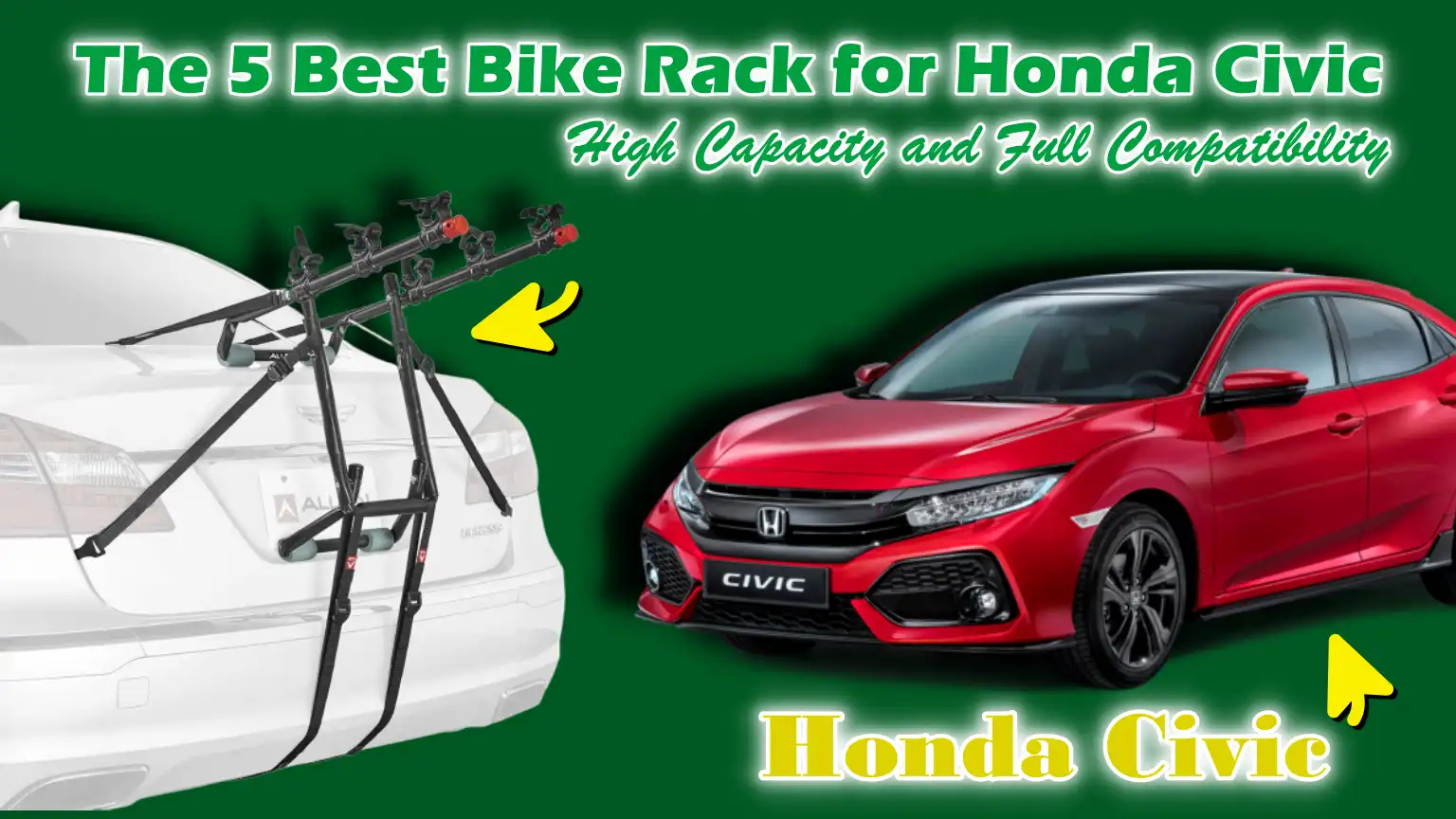
So, these are the The 5 Best Bike Rack for Honda Civic that comes in the custom shape and size that ensures that the rack will not damage the trunk, bumper or roof as well.
Can a Bike Rack Be Installed On a Honda Civic?
A bike rack can be installed on a Honda Civic, but compatibility depends on the model type, installation system, and rack design.
Honda Civics are compact cars, yet they are quite compatible with trunk-mounted racks, hitch-mounted racks, and roof-mounted racks.
Many rack manufacturers specifically list the Honda Civic as a supported vehicle due to its sturdy body frame and reliable mounting points.
Over time, compatibility has improved, specially with newer Civic generations that more efficiently support modern bike rack systems.
1. Compatibility with Different Honda Civic Models
Most Honda Civic sedans and coupes can support trunk-mounted racks as the rear trunk area provides secure strap anchor points without blocking essential components like lights or license plates when properly installed.
Honda Civic hatchbacks often offer even better compatibility due to their wider rear design, making it easier to install trunk racks or roof rack systems.
Recent Civic generations, specially models from 2016 onwards, are highly compatible with hitch-mounted and roof-mounted racks due to updated design elements and the increased availability of aftermarket hitch receivers.
While every body style can support a bike rack, choosing the right type ensures better stability and a secure fit.
2. Typical Weight Capacity Expectations
Weight capacity can vary depending on the type of rack used with the Honda Civic.
Trunk-mounted racks typically support approximately 60 to 100 pounds, depending on the brand and design, which is suitable for standard bicycles.
Hitch-mounted racks offer greater capacity and stability, and some models can carry 120 pounds or more, making them suitable for heavier bikes like electric bikes.
Roof-mounted racks are also compatible, but they require properly rated crossbars and may be the least convenient to use due to the lifting height.
It’s crucial to check the specifications of both the rack and the vehicle’s weight limits to avoid putting excessive stress on the trunk, roof, or hitch area.
3. Impact of Model Year Differences
Model year differences can affect how well a rack fits a Honda Civic because the shape of the trunk, roofline, and bumper varies across different generations.
Older Civics, specially those made before 2012, sometimes require strap adjustments or adapter clips to securely install a trunk rack.
Newer Civic models, particularly those from 2016 onward, have a sleeker and more aerodynamic body shape, meaning some racks need to be specifically designed to be compatible with the curved trunk surface.
The availability of aftermarket hitches for newer models has also increased significantly, making hitch racks a more common choice today.
Regardless of the model year, choosing a rack that is compatible with your Honda Civic ensures a proper fit, stability, and long-term safety.
Basic Types of Bike Racks Compatible with the Honda Civic
There are several types of bike racks that work well with the Honda Civic, and each style has its own advantages, installation method, and compatibility requirements.
The right choice depends on how often the rack will be used, the type of bicycles to be transported, and whether the Civic has a hitch or roof crossbars installed.
As the Honda Civic is a smaller vehicle with a compact structure, it’s crucial to choose a rack that fits securely and facilitates safe loading.
Modern rack systems are designed to protect the vehicle’s exterior, accommodate various bike frame styles, and ensure stable transportation during short or long-distance travel.
Understanding how each type of rack fits and functions helps Civic owners make an informed and practical decision.
1. Hitch-Mounted Racks
Hitch-mounted racks are often considered one of the best options for the Honda Civic because they offer robust stability and easy loading and unloading.
Most Honda Civics are compatible with a 1.25-inch hitch receiver, also known as a Class I hitch.
This style of rack mounts to the rear of the car and, depending on the rack’s design, can carry even heavier bikes, including some electric bikes.
Hitch racks also minimize the risk of scratching the trunk or putting stress on the roof compared to other mounting styles.
While the Civic doesn’t come with a factory-installed hitch, aftermarket hitches are readily available and can be professionally installed or fitted at home with basic tools.
Hitch racks typically support two to four bikes and offer sturdy locking systems and support arms that securely hold the bicycles during transit.
2. Trunk-Mounted Racks
Trunk-mounted racks are a popular option for Honda Civic owners because they don’t require additional hardware like a hitch or roof bars.
These racks use adjustable straps and hooks that securely attach to the edges of the trunk, and padded contact points protect the paint and body surface.
A trunk rack is often lightweight, easy to remove, and easy to store when not in use.
They are good for carrying one or two bikes, and many rack brands list the Honda Civic as a compatible model.
However, users should ensure the straps are properly tightened, as a loose installation can cause movement while driving.
Trunk racks are best suited for standard bikes rather than heavy e-bikes and require regular safety checks as the weight rests directly on the trunk surface.
3. Roof-Mounted Racks
Roof-mounted racks are another compatible option for the Honda Civic, specially for drivers who already have factory or aftermarket roof crossbars installed.
These racks hold the bicycles on the roof, leaving the rear trunk area free.
Roof racks are great for mountain bikes, road bikes, and specialized frames because many designs secure the bike by the wheels or fork rather than clamping the frame.
This reduces stress on sensitive bike materials like carbon fiber.
Roof racks can carry one or more bikes depending on the available space and the strength of the crossbars.
One important consideration is height, as lifting bikes onto the car roof requires more effort, and drivers should be mindful of clearance when entering garages or low-height parking structures.
4. Spare Tire or Specialty Rack Options
Standard Honda Civic models typically don’t require a spare tire or specialty rack because they don’t have an exposed spare tire mounted on the rear like an SUV.
However, modified Civics with custom rear-mounted spare tire setups or unique external storage systems may require a specialized rack.
There are also universal racks available for unusual setups, such as suction-based vacuum mounts used on glass or metal surfaces, which some cyclists choose for temporary use or aerodynamic setups.
These specialty racks are generally not necessary for most Civic owners, but they can be useful for unique vehicle configurations or advanced cycling needs.
Basic Hitch Receiver Requirements for the Honda Civic
Understanding the hitch receiver requirements is crucial before choosing a bike rack for a Honda Civic, as Civics typically don’t have the same towing or hitch setup as larger SUVs or trucks.
The hitch receiver is the necessary foundation for mounting a hitch-mounted bike rack, and choosing the correct size and class ensures the rack is securely supported.
Because the Honda Civic is a compact car, it typically uses a lighter hitch system, but when properly installed, it can safely carry bicycles without putting excessive strain on the vehicle’s frame.
Knowing what type of hitch is compatible helps prevent damage, enhances rack stability, and ensures the bike rack performs as expected during daily driving or long highway trips.
1. Does the Civic Come with a Factory Hitch?
Honda Civic models do not come with a factory-installed hitch from Honda, not even in the newer generations.
This applies to all common body styles, including sedans, coupes, and hatchbacks.
The main reason for the lack of a factory hitch is that the Civic is designed for commuting and fuel efficiency rather than towing or hauling cargo.
Therefore, anyone wishing to use a hitch-mounted rack will need to install an aftermarket hitch system.
Although Honda doesn’t offer a built-in hitch, the Civic’s rear underbody structure is compatible with aftermarket hitches that attach to robust mounting points designed for stability and load support.
2. Aftermarket Hitch Options and Required Receiver Size
For Honda Civic owners, the most suitable hitch option is typically a Class I hitch with a 1.25-inch receiver size.
This size is widely supported by bike rack manufacturers and fits securely onto the vehicle’s exterior without any modifications.
Class I hitches are designed for light loads, perfect for bicycles and other small accessories.
Major brands like Curt, Draw-Tite, and etrailer specifically manufacture hitches for various Civic generations, including older models and newer versions from 2016 onwards.
The 1.25-inch receiver size ensures a stable connection and prevents excessive movement when one or more bikes are loaded onto the rack.
3. Installation Difficulty, Cost, and What to Expect
Installing a hitch on a Honda Civic is generally a moderately difficult task.
Many owners opt for professional installation, specially if they lack prior mechanical experience.
The process typically involves attaching the hitch to the factory mounting points under the rear bumper using bolts and brackets designed for the Civic’s frame.
Most installations take between thirty minutes and two hours, depending on skill level and available tools.
Professional installation can cost anywhere from eighty to one hundred and eighty dollars, while the hitch itself can range from one hundred to three hundred dollars depending on the brand and model year.
Once installed, the hitch typically requires no maintenance other than occasional inspection for tightness or rust.
4. Towing Capacity and Load Safety Limits for Hitch Racks
While the Honda Civic is not designed for heavy towing, the hitch receiver can safely support the needs of a bike rack when used correctly.
The typical Class I hitch used on a Civic has a tongue weight capacity of approximately one hundred to two hundred pounds.
Tongue weight refers to the downward force exerted on the hitch by the rack and bikes.
For example, two standard adult bicycles and a hitch rack typically fall within this limit.
For heavier electric bikes, you may need to check the manufacturer’s instructions to ensure the total weight remains within the safe limit.
Staying within the recommended weight rating ensures the hitch is secure, doesn’t put excessive stress on the vehicle’s rear structure, and that the bike rack remains stable during transport.
How Many Bikes Can a Honda Civic Safely Carry?
It’s important to know how many bikes a Honda Civic can safely carry, as the Civic is a compact car with specific weight limits and mounting structure requirements.
The number of bikes a Civic can carry depends on the type of rack used, the total weight of the bicycles, and whether the rack is properly matched to the vehicle.
Most bike racks designed for the Civic are engineered to safely distribute the weight so as not to affect the car’s handling, braking, or structural balance.
The Honda Civic’s smaller size means that carrying fewer bikes is generally more stable, specially when driving on highways, taking turns, or driving on uneven roads.
1. Standard Capacity Range
The typical capacity of bike racks used on a Honda Civic usually ranges from one to three bikes, depending on the rack style and weight limit.
Most trunk-mounted racks are designed to hold one or two standard bicycles due to the weight placed on the rear trunk and glass area.
Hitch-mounted racks have a higher capacity, often supporting two and sometimes up to four bikes, provided the weight remains within the hitch’s tongue capacity.
Roof-mounted racks typically hold one or two bikes due to space and lift-height limitations.
For safety and long-term reliability, it’s always recommended to compare the total weight of the bikes to the rack’s rated capacity and the vehicle’s maximum supported load.
2. Hitch vs Trunk vs Roof Capacity
Hitch racks are generally the most capable option for a Honda Civic, specially when carrying multiple bikes.
A Class I hitch with a 1.25-inch receiver is common for the Civic and can typically accommodate two bikes comfortably, and sometimes more if the total weight remains under two hundred pounds.
Trunk racks, while economical and easy to install, place weight directly on the trunk lid and can usually only safely carry one or two bikes, as excessive weight can strain the hinges or cause instability during travel.
Roof racks offer the flexibility to load one or two bikes and keep the rear area clear, but they require physical effort to lift and secure the bikes.
The right option depends on convenience, the number of bicycles, and how often the rack will be used.
3. Safety Considerations When Carrying 2-4 Bikes
Safety becomes even more crucial when carrying two or more bikes on a Honda Civic, as the added weight can affect handling, rear visibility, and vehicle balance.
When using a hitch-mounted rack, it’s essential to ensure the bikes are spaced correctly to prevent them from colliding, specially on rough roads or during vibrations.
For trunk racks, the straps should be checked and tightened regularly, as tension can loosen over long journeys.
When using a roof rack, caution should be exercised when entering parking garages or areas with low overhead clearance, as the increased height increases the risk of collisions.
Regardless of the rack type, securing the bikes with anti-sway straps or locking mechanisms prevents movement and ensures the safety of both the vehicle and the bicycles during transit.
The 5 Best Bike Rack for Honda Civic – Custom-Fit & Durable
These are the truly reliable and made of premium quality materials that gives them ultra-protectiveness and durability, also these are the perfectly compatible bike rack for Honda Civic.
#1. Allen
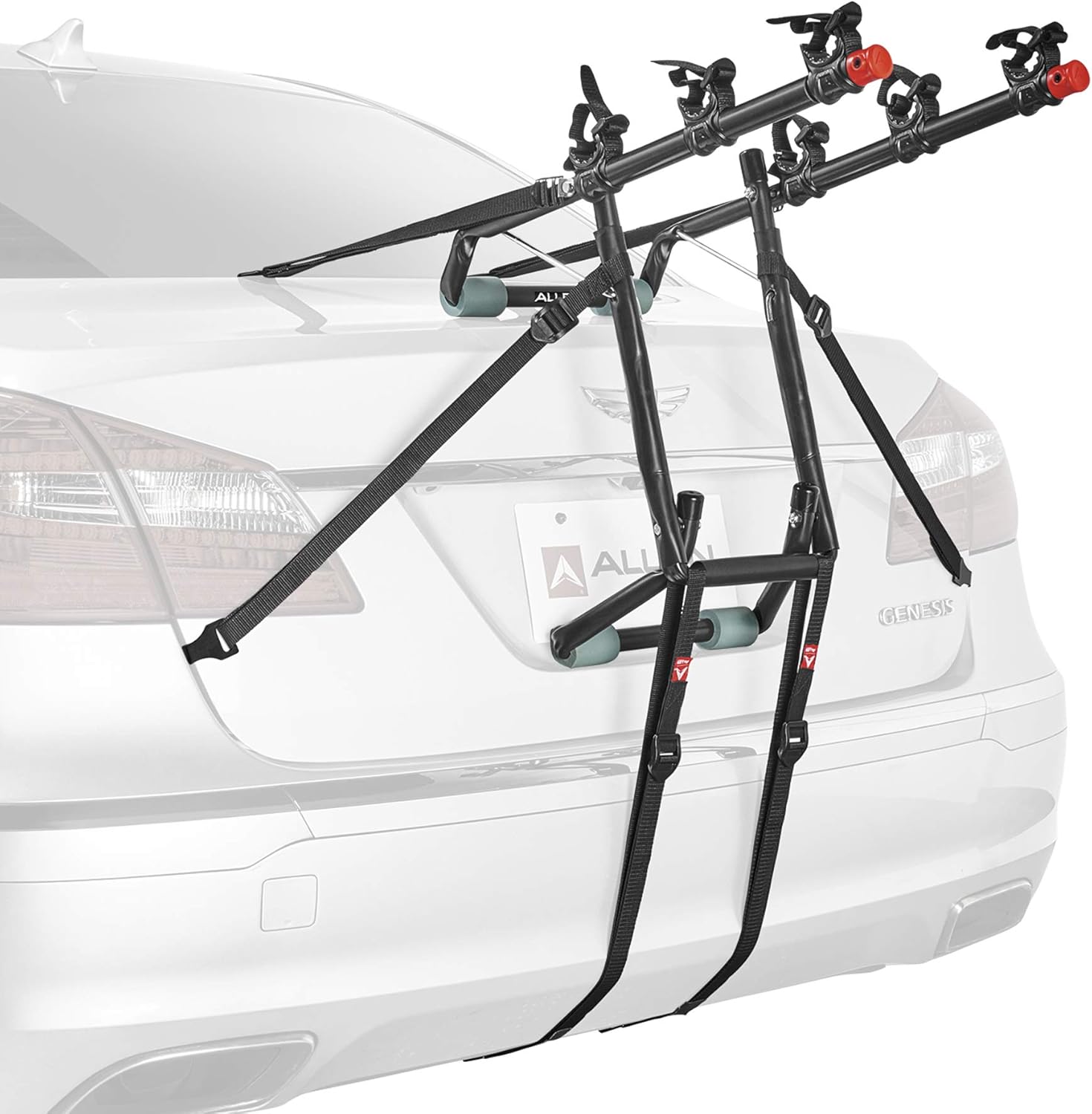
Now, this one again comes from the Allen Sports and it is really durable and stable trunk-mounted rack.
Also, it is made with the high quality alloy steel material that makes them truly durable and highly reliable for the longer-period of time.
Plus, this is just 4 kilogram in weight that is why it is lighter and easier to store than many other big racks.
You can easily carry up to 3 bicycles with ease, even there are padded lower frame that protects the vehicle, even comes with the left and right side straps to manage the lateral stability.
#2. Allen

The Allen Sports Deluxe is very well designed bike rack for Honda Civic, these are just ready to use as you don’t need other kinds of accessories to install this trunk bike rack.
Yes, it comes with the side straps that increases lateral stability, basically it eliminates the inconvenience during the drive as it makes them truly stable.
As well as, you can tie down individual bike and secure them with highly precise way.
Not only this, its lower frame comes with the padded frame that keeps bicycles away from the vehicle as well.
#3. IKURAM R
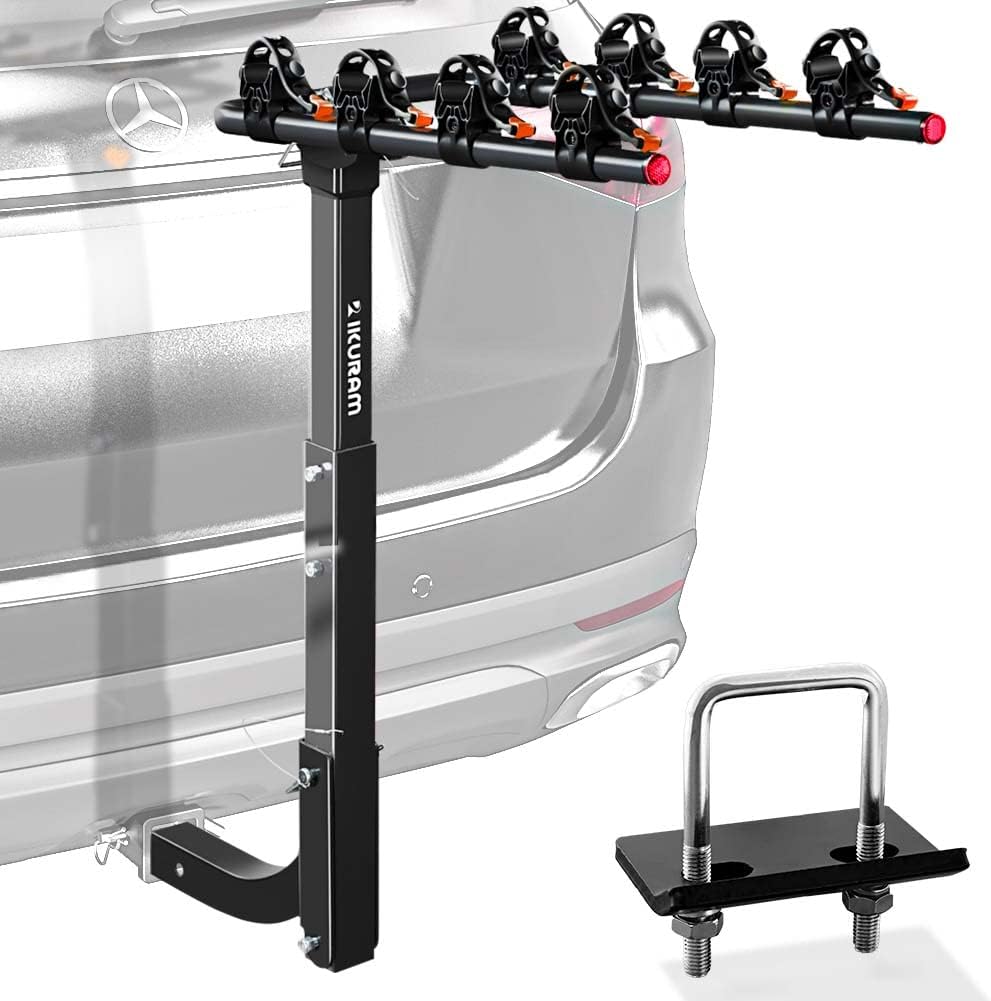
So, this bike rack for Honda Civic is designed by IKURAM R, it supports 4 bikes so that you can easily have the trip with your friends and family without missing out anything.
Additionally, it is made with the Alloy Steel & Rubber materials that makes them truly durable and highly protective as well.
It comes with easy tilt-down access, which means you can access to the rear of the vheicle with easy-to-use tilt and down feature that makes the loading and unloading the bikes quiet effortlessly.
#4. Saris

This stylish trunk bike rack for Honda Civic is manufactured by Saris Bones, the beautiful design and tyle makes them eye-soothing.
As well as, it is designed to fit most of the vehicles, even you can install it on those with the spoilers as well, because the rubberized feet actually protects your car’s finish and there’s coated straps that safeguards your bicycle as well.
It actually supports up to 2 bikes with the weight of each bike up to 35 lbs, even it comes with retcheting anti-sway straps that literally ensures a secure and stable hold for each of the bicycle.
Not only this, it has strong frame with injection-molded arms and legs, that actually provides great strength and rust-free durability for the long term use.
#5. Allen
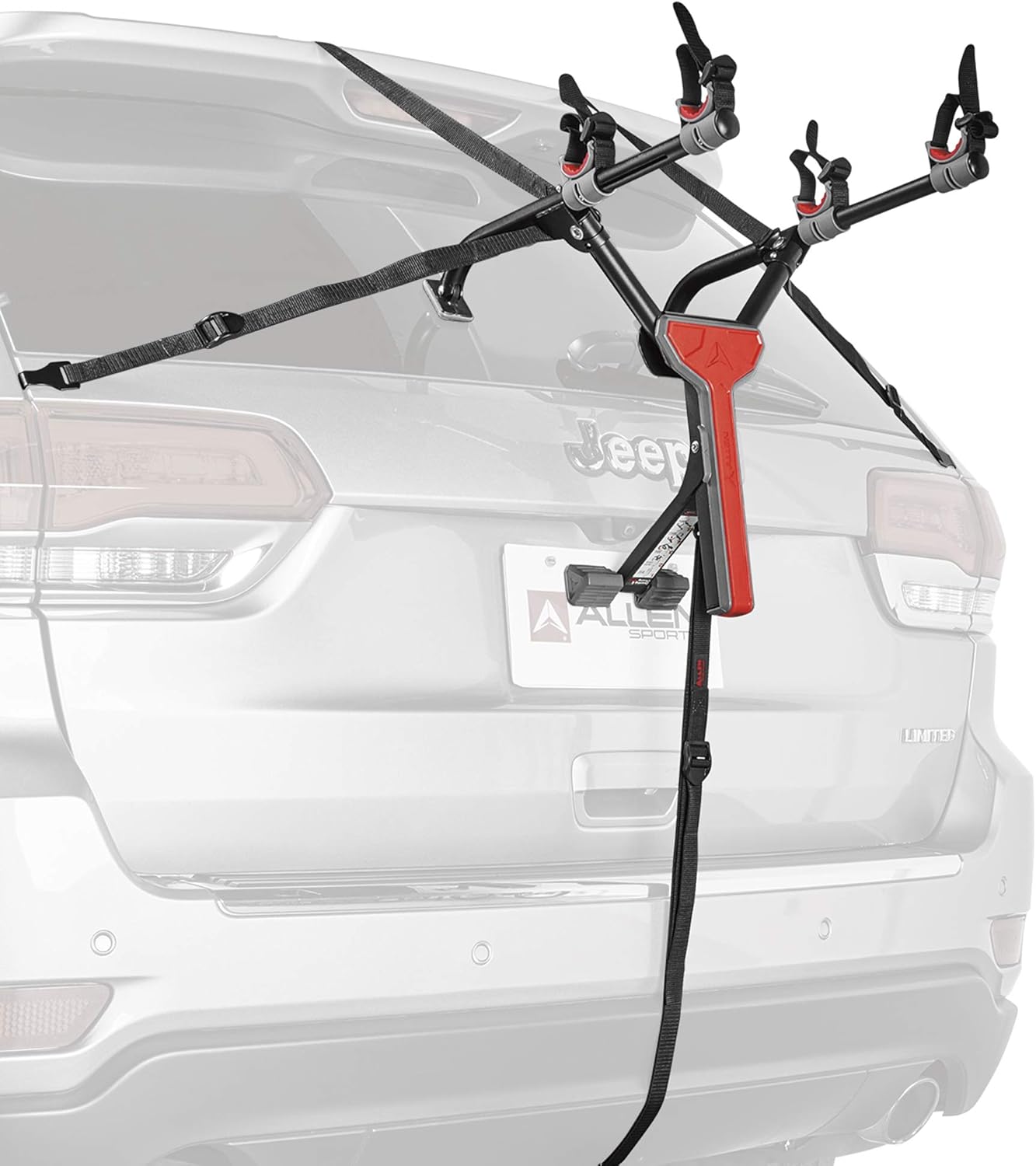
This Allen bike rack comes with the ultra compact folded design, which is why it makes this easy to handle and unloading and loading the bicycles easy.
Because of the compact design it is great for the travel or commuting.
Even, it comes with the padded lower frame that literally keeps bicycles away from the vehicle and you can tie-downs the indivicual bikes to protect your bicycle during drive.
How to Install and Setup Bike Rack for Honda Civic
Installing a bike rack on a Honda Civic is a process that becomes easy once you understand the correct setup steps for the type of rack you are using.
Each rack style has its own installation method, and as the Civic does not come from the factory with a hitch or roof system for mounting, properly preparing the vehicle ensures a stable and secure fit.
Whether installing a hitch rack, trunk rack, or roof system, the main goals are stability, proper weight distribution, and secure attachment points that prevent movement while driving.
Before beginning the installation, it’s helpful to consult the manufacturer’s instructions for the rack, as each model may have slight variations in mounting points, adjustment mechanisms, or required tools.
1. Hitch Rack Installation
A hitch rack is installed on a Civic after a compatible hitch receiver has been installed.
Once the hitch is in place, installation begins by sliding the rack’s mounting shank into the 1.25-inch receiver and securing it using the locking pin or bolt provided with the rack.
Many modern hitch racks include an anti-wobble system that tightens the connection to prevent the rack from swaying during travel.
After securing the rack, the arms or wheel trays are unfolded and adjusted according to the size of the bikes being carried.
The final step is placing the bikes on the rack and tightening the frame clamps, wheel straps, or locking mechanisms to firmly hold the bicycles in place.
2. Trunk Rack Strap Tightening and Alignment
A trunk-mounted rack is installed by positioning the rack’s frame against the rear trunk surface of the Civic and aligning the padded contact points so they sit evenly without putting pressure on the rear window or taillights.
Hooks are attached to the upper, lower, and side edges of the trunk, and the straps are tightened gradually and evenly to avoid uneven pressure.
Correct alignment is crucial because the rack must sit centered and level for secure weight distribution.
After installation, the rack’s arms are adjusted to match the height of the bike frame, and the bike is secured with anti-sway straps or frame cradles.
Because trunk racks rely on strap tension, it is advisable to check the tightness before every trip.
3. Roof Crossbar Measurement and Mounting
Roof-mounted racks require roof crossbars before installation.
The first step is to measure the distance between the crossbars according to the rack manufacturer’s specifications, as the correct distance ensures the bicycle is securely supported and does not vibrate while driving.
Once the crossbars are installed or adjusted, the rack is positioned and clamped onto the bars using the included mounting hardware.
Some roof racks secure the front fork of the bike, while others hold the entire bicycle by the wheels.
After mounting the rack, the bike is carefully lifted onto the roof and secured according to the rack’s design.
It is important to verify that the bike does not block the antenna or exceed a safe clearance height.
4. Tools Needed
Some bike racks require no tools for installation, particularly many trunk-mounted models, but hitch racks typically require basic tools such as a socket wrench, torque wrench, or adjustable spanner when installing the hitch receiver.
Roof racks may require an Allen key or tightening tool, which is often included in the box.
Using the correct tools ensures secure fastening and prevents overtightening, which can damage the rack or the vehicle’s mounting points.
Read More:
Ensure Safety When You Use a Bike Rack on a Honda Civic

Safety is paramount when using a bike rack on a Honda Civic, as the Civic is a compact car, and carrying extra weight outside the vehicle can affect handling, braking distance, and visibility.
A properly installed and maintained bike rack ensures that bicycles remain secure throughout the journey and that no damage occurs to the vehicle.
Because bike racks add significant weight to the rear or roof, it’s essential to follow safe usage practices, regularly check mounting points, and avoid driving habits that could cause the vehicle to sway or vibrate.
Understanding these safety measures helps protect the bikes, the rack, the car, and other drivers on the road.
1. Prevent Damage to Trunk Paint and Alignment
To prevent damage to the trunk paint or alignment when using a trunk-mounted rack, the mounting pads should sit evenly and securely on clean surfaces.
Dirt trapped under the pads can cause scratches during travel as vibrations can cause small particles to rub against the paint.
Using protective film or rubber pads at the contact points reduces the risk of scratches.
Properly distributing the weight on the trunk ensures that the hinges and latches remain in proper alignment, as excessive pressure on one side can lead to wear and tear over time.
If the trunk rack appears uneven or wobbly during installation, it should be readjusted before loading the bicycles.
2. Properly Secure the Bikes
Properly securing the bikes is crucial because loose or unstable bikes can shift, collide with the vehicle, or fall off during transport.
Each bike should be tightly secured using the straps, clamps, or locking arms provided with the rack.
For roof and hitch racks, wheel straps should be tightened securely enough to prevent the wheels from rotating or bouncing during driving.
For trunk-mounted racks, using anti-swing straps helps prevent the bikes from swaying back and forth over bumps.
Checking the frame contact points ensures that pressure is distributed evenly and avoids damage to delicate materials like carbon fiber or lightweight aluminum.
3. Ensure Highway Driving With These Tips
When driving at highway speeds with a bike rack attached, it’s crucial to maintain stable driving behavior and avoid sudden lane changes, sharp turns, or hard braking, as the added weight can alter momentum.
Carrying bikes on the roof or rear of a Honda Civic significantly increases wind resistance, which may slightly impact fuel efficiency.
Paying attention to unusual noises during the drive can help detect problems early, such as loose straps or vibrations.
If strong winds, heavy rain, or poor road conditions are expected, reducing speed helps maintain control and prevents unnecessary stress on the rack and bicycles.
4. Pre-Trip Checks You Should Follow
Before every drive, a quick inspection ensures the rack is secure and ready for travel.
This includes tightening straps, checking hitch connections, confirming all locking mechanisms are engaged, and ensuring the bicycles do not block taillights or the license plate.
Tires, handlebars, and pedals should not touch the vehicle body, as this can cause scratches while driving.
After long drives or rough roads, it’s helpful to re-check the rack to verify everything is still secure.
Making this inspection a routine step ensures long-term safety and reliability when transporting bikes with your Honda Civic.
How to Protect Honda Civic Exterior and Bike
When using a bike rack, protecting both the Honda Civic and the bicycles is crucial, as direct contact, movement during driving, or exposure to the elements can cause scratches, wear, or damage over time.
As most bike racks are externally mounted and rely on straps, clamps, or mounts that touch the vehicle’s surface, taking simple protective measures ensures both the car and the equipment remain in good condition.
The Honda Civic’s paint and body panels are lightweight and aerodynamically designed, so avoiding unnecessary pressure, friction, and movement helps maintain the vehicle’s condition.
Similarly, bikes also need protection from movement, weather, and theft when being transported or parked with a rack.
1. Anti-Swing Straps and Padding
Anti-swing straps are very helpful when transporting bikes as they prevent the bicycles from swaying side-to-side while the car is in motion.
This is specially important for trunk-mounted and hitch-mounted racks where the bikes are close to the rear of the vehicle.
Without these straps, the bikes can move, potentially causing pedals, handlebars, or wheels to come into contact with the Civic’s paint, resulting in scratches or dents.
Padding, such as foam sleeves or soft wraps around contact points, adds an extra layer of protection between the bike rack and the car body.
Many racks already include padding, but additional protection like clear paint-protection film or rubber guard strips helps prevent long-term wear in areas where the rack rests.
2. Security Locks and Anti-Theft Systems
Using security lock systems is essential because bike racks and bicycles can be targets for theft when parked in public places.
Many hitch-mounted and roof-mounted racks have built-in locking systems that secure both the rack and the bicycle frames, preventing them from being removed without a key.
For trunk-mounted racks, separate locking straps or cable locks can secure the bike frames to the rack and the rack to the vehicle.
Locking systems ensure that the rack cannot be quickly removed and that the bicycles remain attached even if someone attempts to tamper with them.
These security measures are specially important during long trips, overnight parking, or when making multiple stops.
3. Weather Effects – Rain, Dust, Road Salt
Exposure to elements such as rain, dust, or road salt can affect the rack, bikes, and vehicle if not properly managed.
In rainy weather, moisture can accumulate on straps, metal parts, or bike components, increasing the risk of rust if not addressed.
Bicycle chains, gears, and bolts may require lubrication after a trip, specially during winter months or long highway drives.
Road salt used in cold weather can accumulate on the rack and the rear surface of the vehicle and should be washed off to prevent corrosion.
Dust and dirt buildup can also cause abrasion and scratch the paint if it gets trapped under rack pads or straps.
Cleaning the rack’s contact points before and after each trip helps maintain the long-term durability of both the car and the bikes.
What are the Legal and Travel Considerations
Understanding legal and travel considerations is crucial when using a bike rack on a Honda Civic, as regulations vary by region and can impact how safely and legally you travel with mounted bicycles.
Many states and countries require license plates to be fully visible at all times, so if the bike rack or bikes are obscuring the plate, you may need to reposition the rack or use an auxiliary plate holder to comply with regulations.
Some areas have regulations regarding lighting visibility, meaning brake lights, taillights, and turn signals must not be obstructed, and if they are, a light bar or auxiliary lighting attachment may be required before driving on public roads.
1. Plate Visibility Laws
Plate visibility laws are enforced in many areas to ensure police, toll systems, and traffic cameras can read your vehicle registration without obstruction.
If a trunk rack or hitch rack obscures the plate, specially when carrying multiple bikes, some states allow temporary relocation, while others require a second illuminated plate, particularly for nighttime travel.
2. Lighting Obstruction Regulations
Legal regulations also apply to vehicle lighting.
If your bikes obstruct the taillights or indicators, it can create a visibility hazard for other drivers.
In areas with strict safety regulations, an LED auxiliary light rack or a power-connected light bar may be required.
Some modern hitch racks already have mounting points for additional lighting if needed.
3. Insurance Considerations – Car and Bike Coverage
Insurance is another important factor, as factory vehicle insurance doesn’t always include coverage for external accessories like racks or bicycles.
Some insurance providers consider bike racks to be aftermarket modifications requiring additional listing, while others only cover them if they are professionally installed.
The bikes themselves may only be covered under separate bicycle insurance, homeowner’s/renter’s insurance, or an optional equipment add-on.
It’s helpful to confirm coverage beforehand to avoid costly problems in the event of damage, theft, or an accident while transporting your bike.
How to Maintain & Store Honda Civic Bike Rack
Proper maintenance and storage of the bike rack used on your Honda Civic extends its lifespan, ensures smooth operation, and guarantees safe transport every time.
As bike racks are exposed to weather, road debris, and direct physical load from the bicycles, they require regular care to prevent rust, loose hardware, or premature wear.
Maintenance also ensures that clamps, locking mechanisms, padding, and metal structures continue to function as designed, specially if you frequently travel long distances, drive in dirty or dusty areas, or switch between multiple bicycles with varying weights and frame designs.
1. Cleaning and Lubrication Schedule
Cleaning your bike rack should be a regular habit, specially after driving in rain, mud, salty winter roads, or dusty environments.
Washing with mild soap and water removes dirt and grime that can damage moving parts.
After cleaning, applying a silicone or bike-specific lubricant to hinges, bolts, tightening knobs, and locking mechanisms keeps them operating smoothly and prevents rust.
Rubber edges should be checked for cracks or dryness, and if the rack has foam pads, they should be kept clean and free of debris that could scratch the Civic’s paint.
2. How to Store the Bike Rack When Not in Use
Properly storing the rack when not in use helps prevent unnecessary damage and ensures it’s ready for the next trip.
The best place to store the rack is indoors in a dry, temperature-controlled area such as a garage, storage room, or basement.
Keeping it off the ground prevents contact with moisture, and hanging it on a wall or storing it in its original box prevents bending and tangling and keeps the metal parts protected.
Trunk racks should be stored rolled up to prevent them from being pulled out of shape, while for hitch racks, it’s beneficial to remove the hitch bolt and keep the safety keys in a designated place so nothing gets lost.
3. Mustard Seed Care – Winter Tips
Caring for mustard seeds is specially important during the winter months or cold weather, where road salt, freezing temperatures, and moisture can accelerate wear and corrosion.
During the winter months, applying an anti-corrosion spray or wax protection to exposed metal parts and checking for loose bolts or seized moving parts more frequently can be helpful.
If the rack is used year-round, washing it after every snowy or salty drive helps prevent hidden corrosion.
If it’s to be stored for the winter, clean and dry it thoroughly before long-term storage.
This prevents moisture from accumulating in crevices and corrosion from forming on metal joints.
Proper seasonal care ensures the rack remains safe, sturdy, and ready for use when warmer weather returns.
Honda Civic Owners Should Avoid These Common Mistakes
Understanding the most common mistakes when using a bike rack on a Honda Civic can help prevent damage to the car, extend the life of the rack, and keep bicycles safe during transport.
Many mistakes occur because owners guess, skip essential safety checks, or assume that all racks are universal, when in reality, each type of rack has its own specific load limits, mounting points, and hardware requirements.
Knowing which mistakes to avoid can help Honda Civic owners improve safety, prevent unnecessary repairs, and experience a smooth and secure journey with their bicycles.
Plus, there’s a research that suggest that Honda Civic owners who actually drives in winter seasons or coastal areas should rinse and dry rack hardware after salty drives and you should really consider having stainless or coated components for having long life of your bike rack, as tests shows that there’s noticeable weight loss and suface degradation on steel samples within the weeks to months of exposure to the salts and other mixes as it literally accelerate the metallic corrosion when it exposes rack’s hardware, bolts and steel frames to the winter climates if you not cleaned them and protected the after use.[¹]
1. Overloading the Rack
Overloading is one of the most common mistakes, and it occurs when users exceed the rack’s rated weight capacity or attempt to carry more bicycles than the system is designed for.
Honda Civics typically handle two bicycles comfortably with most trunk and hitch racks, while roof racks can carry more weight depending on the crossbar rating.
Adding too many bicycles or loading heavy electric bikes without checking the weight limit can strain the mounting area, damage hinges or bumpers, and reduce driving stability.
It’s crucial to always adhere to the maximum capacity specified by the manufacturer, rather than guessing or assuming the car can handle more weight.
2. Using Incorrect Mounting Points
Another mistake is attaching the rack to parts of the car that are not designed for secure mounting.
For example, trunk-mounted racks should only be attached using the correct mounting locations on the trunk lid at specific connection points to prevent crushing the sheet metal, bending the trunk alignment, or damaging trim components.
A hitch rack requires the correct 1.25-inch receiver, and a roof rack requires properly spaced crossbars rated for the necessary weight.
Incorrect or makeshift mounting points may seem functional at first glance, but they can lead to long-term body damage, alignment issues, or sudden rack failure while driving.
3. Failing to Properly Tighten Loose Shafts
Loose shafts can cause excessive vibration, noise, and instability while driving, specially at highway speeds.
When shafts are not fully tightened or properly secured, the rack can wobble, causing the bicycles to sway or potentially strike the Civic’s paint, taillights, or rear window.
Loose shafts can also wear out over time or completely detach in strong winds, creating a dangerous situation.
Taking a few extra moments before driving to double-check torque settings, tighten any loose components, and gently test the rack for movement helps prevent these problems.
4. Ignoring Torque or Weight Specifications
Ignoring the correct torque settings or weight specifications is another mistake that can lead to rack failure, premature wear, or damage to the vehicle.
Hitch-mounted racks often require bolts to be tightened to a specific torque, and roof racks have weight limits that apply both while parked and while driving.
These limits are published for structural safety, proper handling, and the safety of both the bike rack and the Honda Civic.
Following the manufacturer’s instructions and specifications ensures the rack will function safely and reliably in real-world driving conditions.
Conclusion – Best Bike Rack for Honda Civic
Now, you have understand that how important the Honda Civic bike rack is as it is not just to transportation of the bicycle by attaching the equipment, but it make sure that you can conveniently carry your bicycles to have fun anywhere you go and with ease.
Although the Civic is a compact car, it can safely and effectively transport one or more bicycles using the right rack type and installation method.
Whether you choose a hitch-mounted rack for strength and convenience, a trunk-mounted rack for affordability and simplicity, or a roof-mounted system for flexibility, the key to a secure and long-lasting setup lies in proper installation, maintenance, and understanding legal and safety guidelines.
High-quality straps, correct mounting points, secure locking systems, and load limits all play a crucial role in keeping bikes stable during transport and protecting the vehicle.
With regular care, routine inspections, and careful use, a bike rack can last for many years, allowing Honda Civic owners to enjoy exploring local trails, commuting, or embarking on outdoor adventures without worrying about transportation challenges.
By avoiding common mistakes, following manufacturer instructions, and treating both the rack and the bikes as essential equipment, owners can enjoy a reliable setup that promotes safe driving, protects the Civic’s exterior, and ensures peace of mind on every journey.
Now, that’s it from this one and now you can still ask questions by the comment box below.
Frequently Asked Questions
Q1. Can I install a bike rack on any Honda Civic model?
Answer: Yes, bike racks can be installed on almost every Honda Civic model, including sedans, hatchbacks, and coupes. However, the most suitable rack may vary depending on the model year and body style. For example, older Civic models may not support certain trunk-mounted racks due to different trunk shapes, while newer hatchback models often work better with hitch or roof-mounted racks. Before purchasing, it’s always essential to check that the rack is compatible with your specific model year to ensure safe installation.
Q2. How many bikes can a Honda Civic safely carry?
Answer: A Honda Civic can typically safely carry one to two bikes using most trunk-mounted and roof-mounted racks. Hitch-mounted racks may allow for carrying up to three or sometimes four bikes, depending on the rack’s capacity and the hitch receiver rating. The most crucial factor is the weight limit. The Civic is a compact car, so exceeding the recommended load can affect balance, handling, and braking. Lighter bikes, such as road bikes or hybrid bikes, are easier to carry on a Civic than heavier electric bikes. Always adhere to the rack’s official weight rating and do not guess.
Q3. Do I need a hitch to use a bike rack on my Honda Civic?
Answer: A hitch is only necessary if you plan to use a hitch-mounted bike rack. Honda Civics do not come with a factory-installed hitch, but many aftermarket 1.25-inch Class I hitches are available and specifically designed for the Civic. If you don’t want to install a hitch, trunk-mounted or roof-mounted racks are good options and work well for most Civic owners. The choice depends on budget, convenience, and how often you plan to transport bikes.
Q4. Will a bike rack damage my Honda Civic?
Answer: A properly installed and correctly used bike rack will not damage the car. Damage usually only occurs if the rack is overloaded, incorrectly installed, or used without padding or protection. Trunk-mounted racks can cause scratches if the straps are loose or dirt gets trapped under the contact points, while hitch racks can cause stress if the load is too heavy. Using protective pads, tightening all straps, and regularly checking for movement during travel minimizes the risk of damage.
Q5. Can I leave my bike rack permanently attached to my Honda Civic?
Answer: It’s possible to leave a bike rack attached to the car, but it’s not always recommended. Exposure to sun, rain, road salt, and dust can cause straps, hinges, and metal parts to deteriorate quickly. If you do leave the rack permanently attached, it’s crucial to inspect it regularly, clean it frequently, and keep the connections tight. Removing the rack when not needed can extend its lifespan and prevent unnecessary wear and tear on the Civic’s paint and mounting points.
Q6. Do I need extra locks or security accessories for my bike rack?
Answer: Using extra locks is a good idea as most standard racks don’t offer complete protection against theft. Many bike racks have built-in locking systems, but an external cable lock or hitch lock can provide added security. Locking your rack and bikes when parked in public areas, trailheads, or overnight stops can prevent theft. Security accessories provide peace of mind and protect your investment.
Q7. Can I carry an electric bike on a Honda Civic bike rack?
Answer: Electric bikes are heavier than regular bicycles, so not all racks can support them. If you plan to carry an electric bike, a sturdy hitch-mounted rack is generally the safest option as it offers higher load capacity and better stability. Trunk racks and roof racks are not suitable for electric bikes due to their weight. Before transporting, check the weight of your electric bike and ensure it does not exceed the rack’s maximum weight limit.
Q8. Do I need to check the bike rack during long trips?
Answer: Yes, checking the bike rack during long trips is crucial. Vibrations from driving, wind pressure, and movement of the bikes can cause straps or mounting points to loosen over time. A quick inspection every time you stop for fuel or a rest helps ensure everything remains tight and secure. Regularly checking the rack throughout your journey increases safety and prevents unexpected shifting or damage.
References:
[1] An Investigation on Corrosivity of Road Salt and Alternatives on Steel
https://www.tac-atc.ca/wp-content/uploads/an_investigation_on_corrosivity_of_road_salt_and_alternatives_on_steel.pdf

Jonathan, the passionate owner of Bicycle Time, brings a lifelong love for bikes and automotive craftsmanship, that reflects into every corner of the shop. With deep passion in both cycling and automotive accessories, Jonathan is more than just an expert.