
Written By: Jonathan
Fact Checked By: Caroline Dezendorf
Reviewed By: Matt Tanner
It is true in many ways that the Toyota RAV4 is great vehicle for outdoor travelers, cyclists and adventure families, as it literally offers lot of space, comfort Nd compatibility with the multiple high-quality bike rack styles as well.
Without a doubt, a Toyota RAV4 can support several types of bike racks such as: hitch-mounted racks, trunk-mounted options and even roof-mounted systems as well.
As well as, many modern bike racks are actually tested to handle the heavier bikes such as: electric bikes and some models supports heavy bikes with ease and with great stability during drive.
Plus, the safety actually matters a most, as if your bike rack is poorly installed then it can literally damage the car or cause the bikes to shake or fall during the drive as well.
Even, you should consider the rack should offer strong security features, easy to load the bikes and truly compatible with the RAV4’s rear sensors and liftgate system as well.
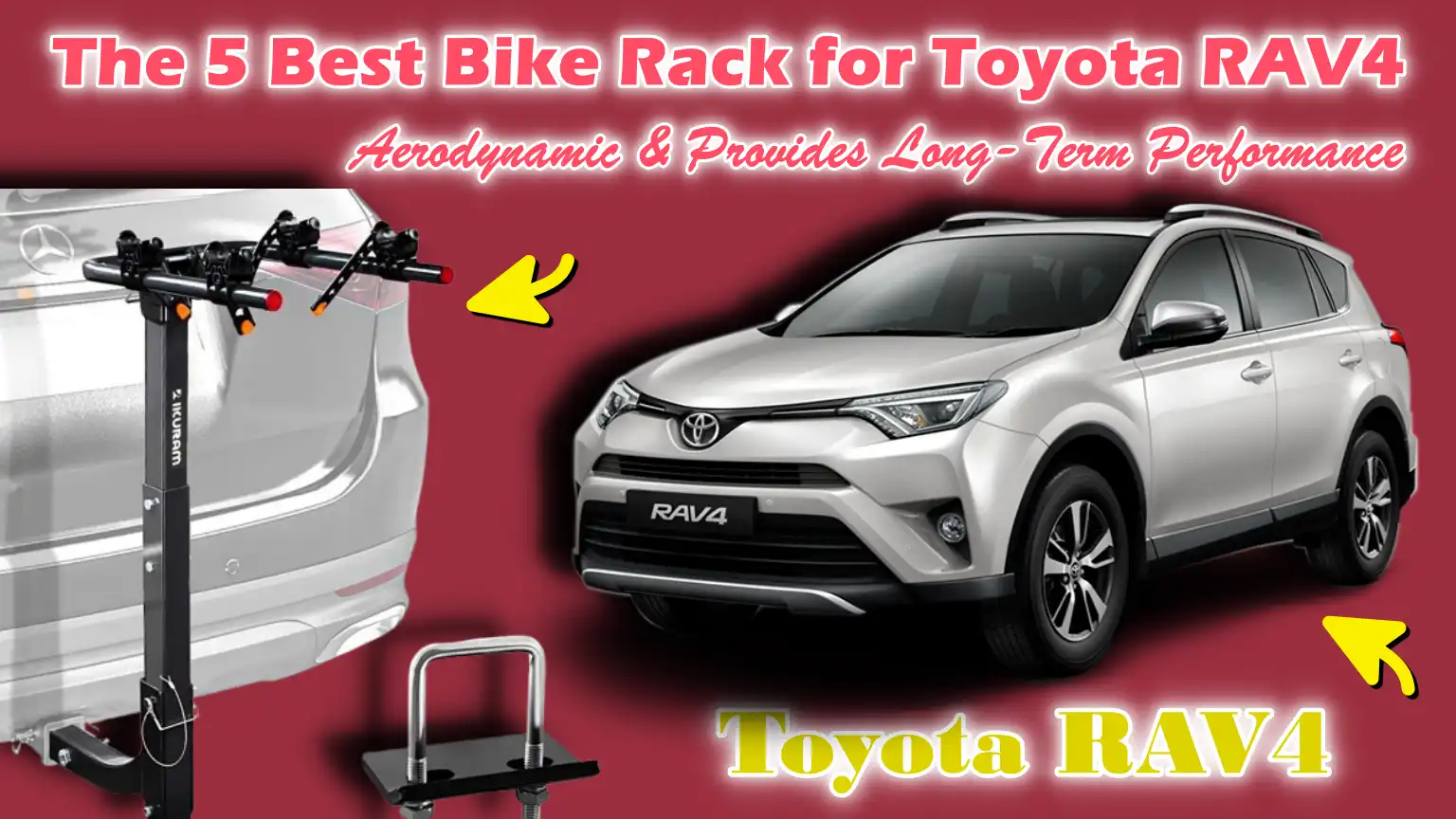
Now, these are the 5 Best Bike Rack for Toyota RAV4 that provides much needed solid stability to ensure a safe trip.
What You Should Consider Before Choosing a Bike Rack for Toyota RAV4
Before choosing a bike rack for your Toyota RAV4, it’s important to understand how different features, weight, and mounting designs affect safety, usability, and longevity.
The RAV4 is compatible with a variety of racks, but not every rack is suitable for every need because different bikes, specially newer electric bikes, weigh more, have wider tires, or come with more delicate frames like carbon fiber.
A good bike rack should not only support the bike’s weight, but also make loading easier and keep the bike stable when driving at high speeds in the city or on the highway.
It’s also helpful to consider how often you travel, how many bikes you need to carry, and whether you need to access the rear cargo area when installing the rack.
Taking time to compare these details will help you choose a rack that protects your car, keeps your bikes safe, and provides the most convenience for your lifestyle.
1. Weight Capacity and Bike Type
Weight capacity is one of the most important considerations because different bikes weigh differently.
A standard road or mountain bike typically weighs around 20 to 35 pounds, but electric bikes can weigh between 45 and 80 pounds, depending on the battery size and frame material.
Many older or basic racks aren’t designed to hold heavy e-bikes, so it’s important to ensure the rack’s maximum weight limit matches the bike you’re transporting.
Frame material also matters because some bikes, specially carbon-fiber frames, require more lightweight support, and racks that put pressure on the frame should be avoided.
Platform-style racks are generally safer for delicate or expensive frames because they support the tires and don’t put pressure on the bike’s body.
2. Rack Type Compatibility with the Toyota RAV4
The Toyota RAV4 is compatible with a variety of racks, but the best option depends on how you use the vehicle and how often you transport bikes.
Older RAV4 models used spare-tire racks with an external rear spare tire, but modern RAV4 designs no longer support such racks because the spare tire is stored under the cargo floor.
Hitch racks are now one of the most popular options because they are sturdy, easy to load, and compatible with electric bikes.
Trunk-mounted racks are more affordable and don’t require extra hardware, but they can reduce rear visibility and put stress on paint or body panels.
Roof racks give you extra space and keep the rear door clear, but they require lifting the bike, which can be difficult for heavier bikes.
3. Hitch Receiver Size
Hitch size also matters when choosing a bike rack.
The Toyota RAV4 can be fitted with a 1.25-inch or 2-inch receiver, and many rugged or premium racks for heavy or electric bikes are designed for 2-inch hitches only.
If your RAV4 didn’t come with a hitch from the factory, you may need to install one.
Installing a hitch is generally easy and can significantly expand your rack options, specially if you want a heavy-duty or platform-style rack for regular use.
4. Number of Bikes
Determining how many bikes you plan to carry now and in the future will help you choose the right size.
Single-bike racks are a good option for solo riders or electric bike users, but families or groups may prefer racks that can hold two, three, or four bikes simultaneously.
Larger racks often require a stronger hitch size, specially if carrying heavier bikes.
5. Clearance and Rear Visibility
Clearance and visibility are important because they determine how easily you can access your vehicle while the rack is installed.
Some racks allow the Toyota RAV4’s liftgate to open, while others block it completely.
Tilt-feature designs make loading and trunk access easier.
Modern RAV4 models have rear sensors and backup cameras, and some rack designs can temporarily block camera visibility or trigger parking sensor alerts when reversing.
6. Security and Anti-Theft Features
Security is another important consideration because bikes and racks can be valuable.
Many good-quality racks have locking mechanisms to secure the rack to the hitch and the bike to the rack.
Some even have built-in steel cables or separate locking systems to help prevent theft during parking or travel stops.
Choosing a rack with strong and reliable anti-theft features provides peace of mind, specially during long trips or when parking in public places.
Basic Types of Bike Racks Compatible with the Toyota RAV4
Several types of bike racks work well with the Toyota RAV4, and each offers different benefits depending on your bike type, how often you travel, and how you use your vehicle.
The RAV4 is a popular choice among outdoor travelers and cyclists because it offers flexibility for roof systems, hitch-mounted racks, and trunk-mounted racks, depending on the model year and installed accessories.
Modern RAV4s, specially those built after 2019, are designed to work best with hitch-mounted and roof-mounted racks because they offer better stability, greater weight-carrying capacity, and improved compatibility with electric bikes.
The right type of rack depends on how much weight you need to carry, how many bikes you transport, and whether you need easy lifting, better visibility, or the ability to open the liftgate even after the rack is installed.
Understanding the differences between rack types will make it easier to choose a rack that suits your cycling habits and keeps both your vehicle and your bikes safe while traveling.
1. Hitch-Mounted Bike Racks
Hitch-mounted bike racks are one of the most popular options for Toyota RAV4 owners because they offer stronger support, higher weight limits, and easier loading than other rack types.
One of the biggest advantages is that these racks can support heavy mountain bikes and electric bikes, with some models easily carrying up to 60 or 80 pounds per bike.
They also offer better stability when riding on highways and rough roads.
However, one limitation is that they can block the rear liftgate unless the rack has a tilt feature or a swing-away design.
Hitch racks are most useful for riders who frequently ride mountain bikes, gravel bikes, or heavy e-bikes and want easy access without lifting the bike.
2. Trunk-Mounted Bike Racks
Trunk-mounted racks are a more affordable and portable option for RAV4 owners and don’t require a hitch or roof system.
These racks attach using straps and padded hooks, making them lightweight and easy to store when not in use.
They’re great for occasional bike riders or those carrying light bikes weighing less than 35 pounds.
However, trunk racks do have some limitations.
They can sometimes put pressure on painted surfaces, which can cause scratches or scuffs if the rack is not installed carefully.
They also have lower weight limits and are not designed for heavy or electric bikes, and they can block the view out the rear window.
3. Roof-Mounted Bike Racks
If you want to transport bikes without blocking access to the rear cargo door, or if you already use the roof for other outdoor gear like kayaks, skis, or camping storage, roof-mounted racks are a useful option.
They’re great for those who travel with multiple bikes or need maximum space.
However, storing bikes on the roof requires lifting them higher, which can be challenging for heavier models or users with less strength.
Another thing to keep in mind is that roof-mounted systems can slightly reduce fuel efficiency because they create wind resistance, specially at higher speeds.
Roof racks are best for lightweight bikes, road bikes, or cycling setups that require carrying a lot of outdoor gear.
4. Spare Tire Bike Rack – For Older Models Only
Spare tire racks were commonly used on older Toyota RAV4 models, specially those manufactured before 2013, as those versions had an external spare tire mounted on the rear door.
These racks attached directly to the tire, providing a convenient and compact solution.
However, newer RAV4 models no longer feature the external spare tire design, as the spare is now located under the cargo floor.
This change means that newer RAV4s are no longer compatible with spare tire-style racks.
These racks are now considered more exclusive and are used more by owners of older-generation RAV4s than current or newer models.
The 5 Best Bike Racks for Toyota RAV4 – 100% Compatibility
Also, these are fully compatible and specific kind of design these bike racks becomes fully stable and truly useful during the drive to carry bikes comfortably.
#1. IKURAM R

Now, IKURAM R is the designer of this high quality bike rack that can carry 2 bicycles easily.
Additionally, Alloy Steel and High Quality Rubber material is used to build this Toyota RAV4 bike rack and these materials actually provides durability and reliability that can carry your bikes safely during drive.
Moreover, you can easily tilt it down to access the bicycles, it is to give you convenient access to rear of vehicle with easy-to-use tilt-down feature.
As well as, you can fold it up quickly whenever the bike racks are not inuse that makes them compact transport and easy to store as well.
#2. Allen

Without a doubt, it is a heavy-duty trunk bike rack that is easy to use and very stable on the road.
Even it is made to carry 2-bike with each bike supported by its wheels, which literally lowers stress on fragile frames and makes loading much simpler.
Also, you can tie downs individual bikes and secure them to protect bicycles during the journey.
As well as, there are padded lower frame that actually keeps your bicycle away from the vehicle to prevent any kind of scratches and dents.
#3. STUDTREX

Now, STUDTREX is the manufacturer of this premium bike that that blends a sturdy design with smooth operation and there are lots of helpful features are available for reuglar riders as well.
As well as, you can carry 2-Ebikes with these racks of 170 lbs capacity that makes them truly useful and highly reliable.
Plus, you can easily fold them, tilt them according to your convenience, even it comes with the anti-theft hitch and wheel locks that makes them highly protective.
#4. Saris
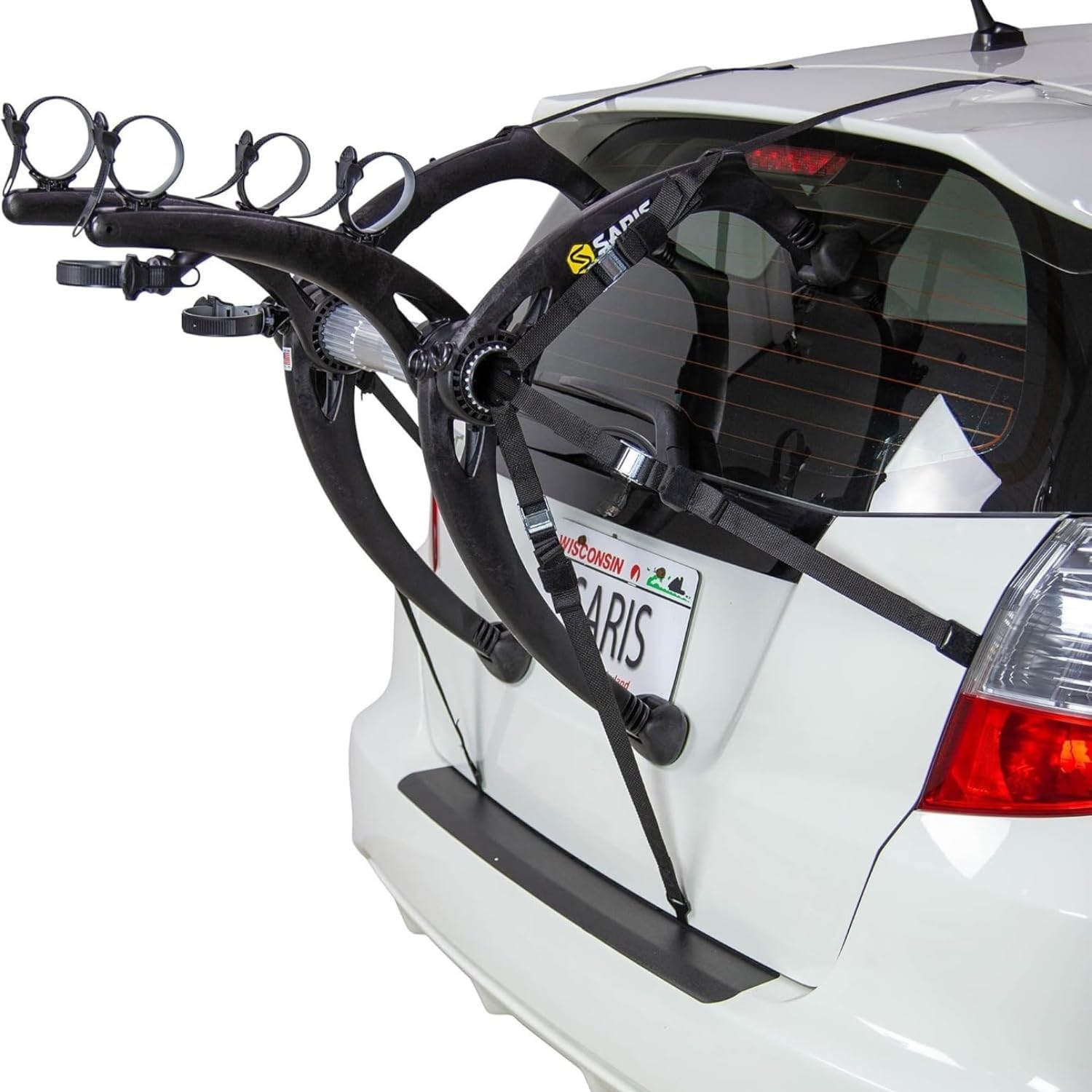
So, this is the Saris Bones EX which is well-known for trunk-mounted bike rack and it is light and easy to carry.
Even, you can install it with the straps and hooks and it is designed to reduce the contact points so it is less likely to rub paint when it properly fit and tightened in the correct way.
As well as, it comes with the injection-molded arms and legs that keeps the rack solid for years to come and there’s rubber feet that articulate to protect the paint as well.
#5. Allen
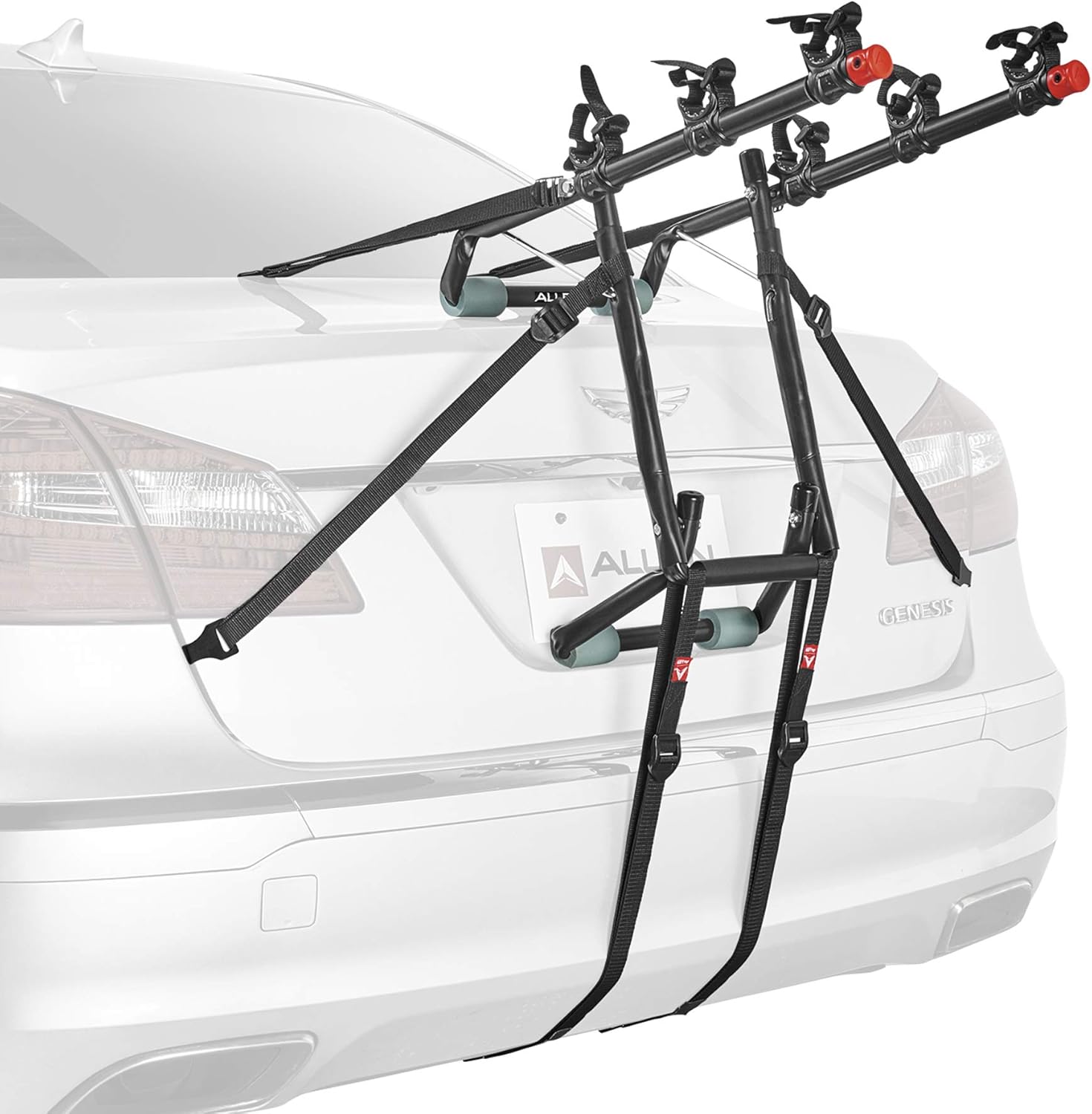
Now, with this Allen Sports trunk bike rack you can carry 3 bikes in one go, also alloy steel is used to give it durability.
Yes, you can also fold it fully flat for easy storage, even it has padded lower frame that literally protects vehicle, and left and right side straps are available to make it truly stable during drive.
Not only this, you can tie-down individual bicycles to protect them.
How to Install Bike Rack for Toyota RAV4
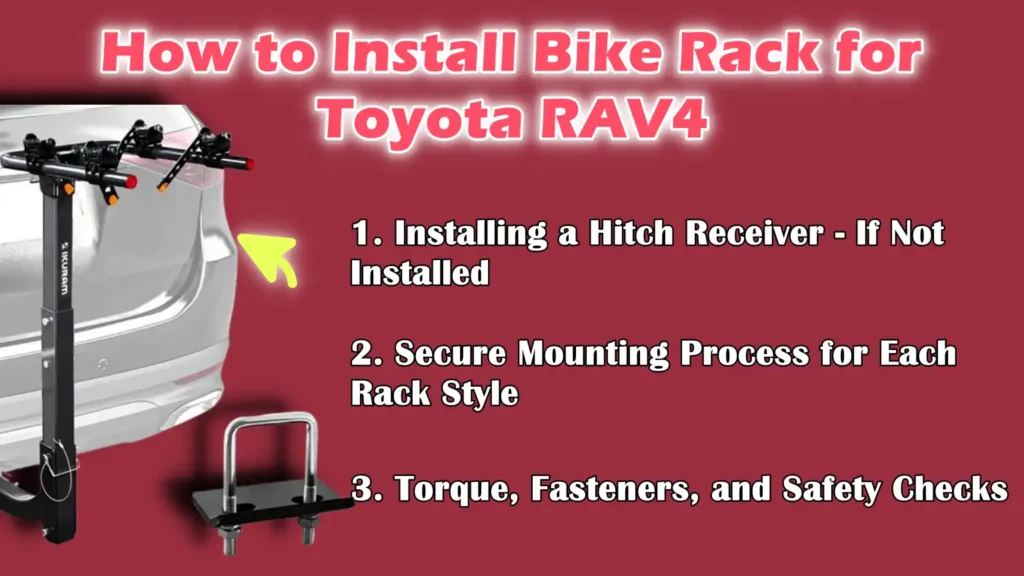
Installing a bike rack on a Toyota RAV4 is easy once you understand the correct steps and the type of rack you’re using.
The installation process will depend on whether you’re using a hitch-mounted rack, trunk-mounted rack, or roof-mounted rack, and each style requires proper alignment and secure attachment to prevent movement during driving.
Taking the time to properly install the rack keeps both bike and vehicle safe, specially when traveling at high speeds or on rough roads.
Proper installation also ensures that backup sensors, liftgates, and camera systems remain functional for as long as possible.
Many bike racks today are designed for quick installation, but even simple racks require careful tightening and testing to ensure they remain secure over time.
Whether you’re installing a hitch, tying it to the trunk, or securing the rack to a roof rail system, careful setup is essential for safety and long-lasting durability.
1. Installing a Hitch Receiver – If Not Installed
If your Toyota RAV4 doesn’t already have a hitch receiver, one may need to be installed before using some bike racks.
You can choose from Toyota’s OEM hitch or aftermarket options from brands specializing in towing and rack systems.
OEM hitches are designed specifically for the vehicle and often provide a more precise fit, while aftermarket versions can be less expensive and still offer strong support.
Installation costs can vary depending on labor and parts, with most installations starting at a few hundred dollars.
Once installed, a hitch receiver simplifies bike rack installation and allows you to transport heavier bikes, including electric bikes.
2. Secure Mounting Process for Each Rack Style
The mounting process varies depending on the style of bike rack being used.
For hitch-mounted racks, the rack slides into the hitch receiver and is secured using a pin or lock system.
Once installed, the rack must be tightened to prevent it from moving or rattling.
For trunk-mounted racks, straps attach to the sides of the trunk, and the hooks must be carefully installed to avoid scratching the paint or damaging the trim.
It is important to check the strap tension and ensure the rack is level and stable.
Roof-mounted racks require proper alignment with the roof rails or crossbars, and the rack must be evenly tightened so that the bike remains upright and secure while riding.
Each rack style should be checked after installation to ensure it is securely attached.
3. Torque, Fasteners, and Safety Checks
Once the rack is installed, one final safety check is necessary.
This includes tightening fasteners to the torque level specified by the manufacturer.
Loose bolts or straps can move during travel and damage the bike or vehicle.
After tightening the fasteners, gently shake the rack to ensure they don’t move.
It’s also helpful to recheck the rack after the first few miles of driving, as vibration can loosen newly installed parts.
Regular inspections ensure long-term stability and help prevent damage or wear from everyday use.
Read More:
How Can You Use Bike Rack on a Toyota Safely
Safely using a bike rack on a Toyota RAV4 requires understanding the limitations of both the vehicle and the rack, as well as considering how the rack affects visibility, aerodynamics, and handling.
A properly installed rack should feel stable and not move or shift while driving.
Safety also includes checking that straps, bolts, or locking systems remain tight over time, specially after long drives or poor road conditions.
It’s important to check how the rack changes the vehicle’s length or height, as this can affect parking, garage entry, and reversing.
Being aware of these details helps prevent accidents, keeps your bikes safe, and ensures the rack continues to function properly even after repeated use.
With proper setup and regular checks, your RAV4 can safely transport bikes during daily commutes or long-distance trips.
1. Checking the Load Limit
Checking the load limit is an important step because every vehicle and bike rack has a recommended maximum weight limit.
The Toyota RAV4 can safely carry a certain amount of weight on the rear or roof, depending on the model year and hitch setup.
The weight of the rack should also be included in the total calculation.
For example, if a rack can accommodate two heavy electric bikes, it’s important to ensure the total weight doesn’t exceed the hitch or rack limit.
Adhering to these numbers helps prevent strain on the hitch, suspension, and rear frame area, and reduces the risk of damage to both the vehicle and the bicycle.
2. Protecting Vehicle Paint and Trim
Protecting vehicle paint and trim is also important, specially when using trunk-mounted racks or straps that touch the RAV4’s body.
Over time, vibration from driving or dust trapped under the straps can scratch or dent the paint.
Using foam guards, rubber padding, or clear protective film can provide more cushioning and protect surfaces from abrasion.
Keeping the mounting area clean before installing the rack also helps prevent unnecessary wear and tear or paint damage.
3. Highway Driving and Wind Impact
Highway driving involves factors such as wind, vibration, and speed-related pressure on the rack.
Roof-mounted racks increase wind impact and can reduce fuel efficiency, specially when the bike is transported upright on the roof.
Wind noise is also common.
Hitch-mounted racks produce less drag and maintain better stability at high speeds because they are located behind the vehicle and face less direct wind flow.
When traveling long distances on the highway, it’s important to ensure all bolts, straps, and locking mechanisms are tight so the vehicle doesn’t move in strong winds or during sudden stops.
4. Rear Camera and Sensor Calibration Tips
Because newer Toyota RAV4 models have a backup camera and parking sensors, it’s important to understand how bike racks can affect these features.
Some racks can block the camera view, and rear sensors may detect the rack or bike as an obstruction, specially when reversing.
While this doesn’t harm the system, it can change how alerts and visual guidance appear.
Some racks are designed to be placed lower or further away from the sensors to reduce interference.
Adjusting the camera angle or temporarily disabling the parking sensors when reversing with a loaded rack may help in some situations.
How to Maintain Bike Rack for Toyota RAV4
Proper maintenance ensures that your bike rack lasts a long time, stays safe, and performs its best on your Toyota RAV4 with repeated use.
Even high-quality racks can deteriorate over time due to weather, road salt, vibration, and the regular weight of your bike.
Caring for your rack ensures that moving parts function smoothly, straps remain secure, and metal components are protected from rust or corrosion.
Simple routine care can prevent breakdowns, protect the rack’s structure, and help maintain safety during long trips, specially on rough or high-speed roads.
With regular maintenance, your rack can remain reliable for many years and prevent unnecessary damage to both vehicle and bike.
1. Cleaning, Lubrication, and Rust Prevention
Regular cleaning is essential because dirt, dust, and road debris can accumulate around joints, locking parts, and straps.
Washing the rack with mild soap and water helps prevent this buildup, which can weaken the material over time.
Metal racks, specially those with exposed steel parts, benefit from a rust-preventive treatment or protective spray coating, specially if you live in an area with salty roads or high humidity.
Moving parts like hinges and locking arms should be lubricated occasionally so they rotate smoothly and don’t lock or creak during use.
Keeping the rack dry after cleaning also reduces the risk of rust on the bolts or metal frame.
2. How Often to Check Strap Tension and Bolts
Checking strap tension and hardware tightness is an important habit,
specially for trunk and hitch-mounted racks.
Over time, vibration from driving can loosen nuts, bolts, or straps, causing the rack to slip or bend.
Checking tightness before long trips or after driving on rough surfaces maintains stability and prevents wear.
Straps, specially those made of rubber or fabric, can stretch over time, so replacing them when they lose elasticity or begin to wear is a safety precaution.
Checking the bolts for rust or looseness ensures that the weight is properly supported and that the rack is securely attached to the RAV4.
3. Seasonal Storage Tips
When not in use, properly storing a bike rack can extend its life.
Storing it in a clean, dry place protects it from moisture, sunlight, and temperature changes, which can cause rubber and plastic parts to fade, rust, or weaken.
Before storing the rack, it’s helpful to clean it, remove dirt, and inspect all parts to ensure they haven’t been damaged during use.
Some racks can be folded for compact storage, while others should be covered to prevent dust accumulation.
Taking a little time to store it properly will keep it less worn and ready for the next cycling season.
Common Mistakes You Should Avoid
When choosing and using a bike rack for your Toyota RAV4, it’s helpful to understand common mistakes so you can avoid damage, safety issues, or unnecessary expenses.
Many problems arise when people choose a rack without considering weight limits, compatibility information, or how the rack interacts with modern features like parking sensors and liftgate systems.
Failure to properly support the rack or bike can also lead to errors during installation or loading.
Knowing about these problems in advance keeps your vehicle safe, your bike secure, and ensures the rack performs safely on both short and long-distance trips.
Understanding these common mistakes helps you make informed decisions and use your bike rack with confidence.
1. Oversized e-bike racks on 125″ receivers
One of the most common mistakes is trying to install a heavy-duty e-bike rack on a 1.25-inch receiver instead of a 2-inch receiver.
While some racks may physically fit, the smaller receiver is not designed to safely support the weight and leverage created by a heavy bike.
Electric bikes often weigh two to three times more than regular bicycles, and using the wrong receiver size can cause instability, tilt, or excessive strain on the hitch and vehicle frame.
Choosing the right receiver size ensures better weight support, safe transport, and longevity for both rack and vehicle.
2. Using a trunk rack with a carbon frame without support
Another mistake is using a trunk-mounted rack to transport a carbon fiber bike without proper frame protection or weight support.
Carbon fiber is a strong but sensitive material, and the pressure of clamps or straps can damage or crack the frame over time.
Trunk racks are generally best for metal-frame bikes or lightweight models, and they don’t always have tire-mounted support systems that prevent contact with the delicate parts of the carbon frame.
Using the wrong rack with a carbon fiber bike can shorten the bicycle’s lifespan or cause structural damage that is costly to repair.
3. Not Checking Compatibility with Spare Cargo Accessories
Some riders forget to check that the bike rack won’t interfere with other accessories attached to the Toyota RAV4, such as roof cargo boxes, kayak mounts, tow-mounted storage systems, or the rear spare tire feature on older models.
A rack that fits the bike may still block the rear cargo door, conflict with backup sensors, or prevent other accessories from being used safely.
Checking compatibility before installation ensures that all equipment works together without obstructing traffic, reducing visibility, or creating unsafe road clearance issues.
You should always first check your Toyota RAV4’s owner’s manual and also Toyota’s hitch/tongue weight guidelines so that you can be sure about the kind of bike rack your vehicle actually supports in ideal way before buying a new bike rack, as the vehicle’s towing and tongue-weight numbers literally determines which racks and how many bikes you can safely carry as well.[¹]
Conclusion – Best Bike Rack for Toyota RAV4
It is 100% true that right bike rack is really importat as it just not to be used as a storage accessories, but it is actually a long-term invement that provides safety and lot of convenience.
A well-built bike rack not only protects the bike but also prevents damage to the vehicle and passengers from instability, poor fitting, or weak materials.
Over the years, improvements in engineering, load-testing standards, and manufacturing quality have made modern bike racks far more reliable than many older designs.
Today, features like rust-resistant metal, secure locking systems, frame-friendly support arms, and vibration-control components help riders transport their bikes safely, whether they’re traveling short distances within the city or on long highway trips.
The most important step when choosing a rack is to find one that suits your vehicle’s style, bike type, and frequency of use.
Some racks are designed for heavier mountain bikes and e-bikes, while others are better suited for lighter road bikes or family use.
No single rack fits every situation, so it’s important to compare durability, weight capacity, compatibility, and safety certifications.
When the right bike rack is chosen, bicycle transport becomes easy, safe, and worry-free — allowing riders to focus on what’s most important: enjoying the ride.
So, that’s all from this one and you can ask related questions as well.
Frequently Asked Questions
Q1. What is the main purpose of a bike rack?
Answer: The primary purpose of a bike rack is to help you transport your bicycle safely and securely in your vehicle, without taking up space inside. A good rack securely holds the bike in place so it doesn’t move, fall, or get damaged during travel. It also protects the vehicle from scratches and reduces the risk of accidents caused by loose objects. With a reliable bike rack, you can travel long distances comfortably, carry more than one bike if needed, and avoid having to disassemble them each time you move them.
Q2. How do I know which bike rack will fit my vehicle?
Answer: The best way to choose the right bike rack is to consider your vehicle’s type, its attachment system, and the type of bikes you plan to transport. For example, vehicles with a hitch receiver can use a hitch-mounted rack, while cars without a hitch may require a trunk-mounted or roof-mounted rack. Most manufacturers provide compatibility details, weight limits, and installation requirements. It’s always important to check that the rack fits your vehicle model before purchasing, as using the wrong rack can cause damage or transportation difficulties.
Q3. Are bike racks safe for long-distance travel?
Answer: Yes, bike racks are safe for both short- and long-distance travel when installed correctly and used with secure fastening systems. Modern racks undergo safety testing, including vibration tests, load capacity checks, and road performance assessments. Many racks have anti-sway features, tie-down straps, locking systems, and shock-absorbing materials to improve stability. Regularly checking straps, bolts, and connections during long trips ensures continued safety and can prevent shifting caused by road vibrations.
Q4. Do bike racks damage bikes or vehicles?
Answer: A properly fitted and installed bike rack will not damage your bicycle or vehicle. Damage typically occurs when the rack isn’t the right size for the bike, the material rubs against unpadded surfaces, or when the rack is overloaded. Nowadays, many racks feature rubber cradles, padded clamps, frame-friendly straps, and a protective coating to prevent scratches. Choosing a rack designed for your bike’s type and weight ensures safe transportation without damage.
Q5. How many bikes can a rack carry?
Answer: The number of bikes a rack can carry depends on the model and weight limit. Some racks are designed for one bike, while others can accommodate two, three, four, or even five. Hitch racks typically have the highest weight capacity, specially for heavier bikes like mountain bikes and e-bikes. It’s important to check both the maximum number of bikes and the total weight capacity to avoid overloading the rack, as this could make it unsafe or unstable.
Q6. Can an e-bike be transported on any bike rack?
Answer: Not every bike rack is suitable for e-bikes, as e-bikes are heavier than standard bicycles. Most e-bikes require a rack with a specifically higher weight capacity, typically a platform-style hitch rack. These racks can carry more weight and help keep the bike stable without lifting it too high. Always check the weight rating and manufacturer’s recommendations before transporting an e-bike.
Q7. Is it difficult to install, and can I do it myself?
Answer: Most bike racks are designed so that users can install them without professional assistance. The difficulty of installation depends on the type of rack. Trunk racks and hitch racks are generally easy to install and remove, while roof racks may require more work, specially if mounting rails need to be installed first. Manufacturers provide instructions, diagrams, and sometimes video guides. Once installed correctly, removing and reinstalling it is usually quick and easy.
Q8. How do I maintain a bike rack for long-term use?
Answer: Maintenance of a bike rack is easy and extends its life. Regularly cleaning the rack is essential, specially after driving in areas with rain, dust, or saltwater. Checking the straps, bolts, and moving parts helps ensure everything remains strong and secure. Lubricating the hinges or locking system, if needed, also helps prevent rust and stiffness. When not in use, storing the rack in a dry place protects it from weather damage and increases its lifespan.
Q9. Are locking systems necessary for bike racks?
Answer: Locking systems provide an extra layer of security and help protect both the bike and the rack from theft. Most modern racks come pre-installed with locks, or users can install locking straps or cables. Even if you live near your vehicle, a lock provides peace of mind and deters theft attempts. This is specially useful during road trips, overnight parking, or stops at restaurants or rest stops.
References:
[1] Main Owner’s Manual
https://cdn.dealereprocess.org/cdn/servicemanuals/toyota/2021-rav4.pdf

Jonathan, the passionate owner of Bicycle Time, brings a lifelong love for bikes and automotive craftsmanship, that reflects into every corner of the shop. With deep passion in both cycling and automotive accessories, Jonathan is more than just an expert.