
Written By: Jonathan
Fact Checked By: Caroline Dezendorf
Reviewed By: Matt Tanner
It is really important to install the bike rack which is truly compatible in terms of fitment, stability and build quality should be great, then it makes bike rack to strong enough to carry heavy eletric or mountain bikes as well.
These Honda CRV bike racks comes with many styles, weight capacities and fully suitability with the CRV models vehicle, which is why the installation is quiet effortless.
As well as, Honda CR-V actually is one of the msot popular compact SUVs in USA and many models even comes with a 1.25-inch Class I or Class II hitch size: which literally means that not every rack will fit safely or support the heavier bikes.
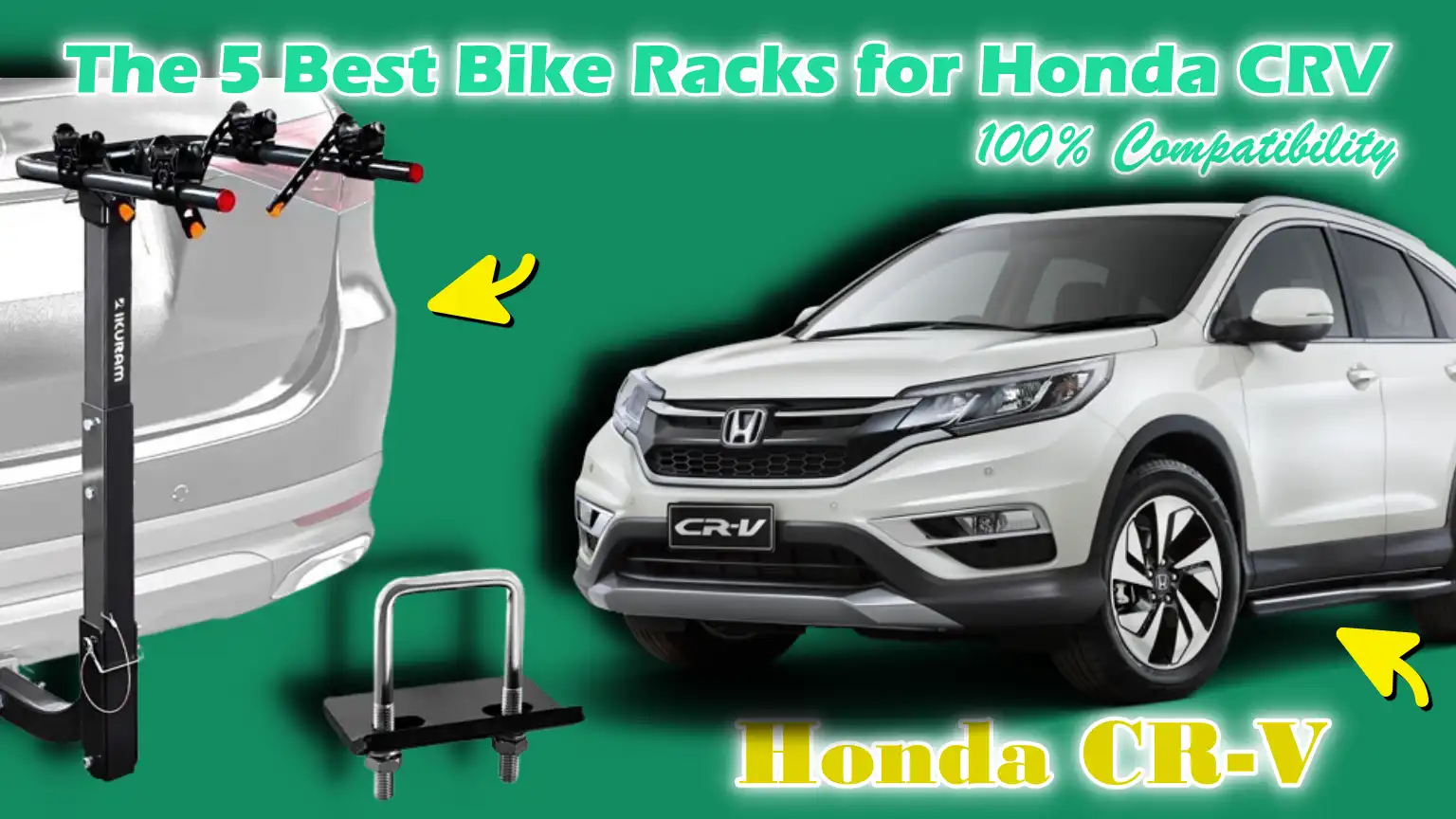
Which is why, we have come up with these 5 Best Bike Racks for Honda CRV that can prevent wobbling, paint scratches, frame damage and unsafe highway travel as well.
Also, these are truly stable, weather-resistant, easy to mount and actually built with solid attachment points, which is why you can easily carry bikes without worrying about anything during drive.
How to Know About The Rack Compatibility with the Honda CR-V
1. Hitch Receiver Size – Typically a 1.25″ Class I/II or Upgraded 2″ Hitch
Most Honda CR-V models come with a 1.25-inch Class I or Class II hitch receiver from the factory.
This hitch size works well for light to medium loads—usually enough for two standard bicycles or one heavy bike.
However, if you plan to transport a heavier mountain bike or electric bike, you may want to upgrade to a 2-inch hitch receiver.
A 2-inch hitch is more robust and gives you more options for racks capable of carrying heavier loads.
Using a hitch size that matches the rack’s requirements is essential for safety and stability on the road.
2. Consider Rear Hatch Clearance and Camera
When installing a bike rack on a CR-V’s hitch, it’s important to consider clearance behind the rear hatch and visibility of the backup camera.
Some racks—specially heavy-duty hitch-mounted types—can be placed near the rear of the vehicle.
If the rack holds the bike so that it protrudes, it may prevent the rear door from opening fully or obscure the rearview camera.
This can make loading the bike difficult or compromise safety when reversing.
Before purchasing, always check how far the rack and loaded bike protrude behind the car, and whether the rack’s design allows the hatch to open without obstruction.
3. Roof Load Limit vs Bike Weight
Using a roof-mounted rack on a CR-V means paying attention to the vehicle’s roof load limit.
The roof load limit is the maximum weight the CR-V’s roof can safely support, including the weight of the rack and bike.
Road bikes or light hybrid bikes generally work well on roof racks.
However, heavy mountain bikes, fat bikes, or electric bikes often exceed safe roof limits.
Overloading the roof can put pressure on the roof rails, impair impact handling, or even damage the roof over time.
Always check the roof load rating in the CR-V owner’s manual, weigh the rack, and ensure the total weight doesn’t exceed the vehicle’s weight limit before loading the bikes.
4. Advantages and Disadvantages of Each Rack Style for the CR-V
A hitch-mounted rack is the most stable option.
It’s sturdy, good for heavy or multiple bikes, and generally easier to load because you don’t have to lift the bikes up.
The disadvantage is that it requires a hitch receiver, which may reduce rear hatch clearance or slightly block the backup camera.
A trunk-mounted rack is a budget-friendly option that doesn’t require a hitch.
It works for light bikes and occasional use.
But trunk racks typically hold fewer bikes, are less stable for heavy loads, and can put stress on the vehicle’s paint or rear structure.
Roof-mounted racks keep the rear hatch clear and maintain access to the trunk, making them good for taller bikes and easier to load when you don’t have a hitch.
Their main drawback is that you have to lift the bike over your head, and heavy bikes can exceed the roof’s safe load capacity—which can affect driving stability or damage the roof over time.
What are The Types of Bike Racks for the Honda CR-V
1. Hitch-Mounted Racks
Hitch-mounted racks are one of the most popular options for Honda CR-V owners because they offer sturdy support, easy loading, and secure bike transport.
These racks attach directly to the vehicle’s hitch receiver, creating a stable connection that minimizes shaking, swaying, or unnecessary movement while driving on highways or rough roads.
Hitch racks are specially useful for heavier bikes like electric bikes or mountain bikes, as many models offer higher weight limits, sometimes supporting 60 to 80 pounds per bike, depending on the manufacturer.
However, hitch-mounted racks require the CR-V to have a hitch, which some models don’t come with from the factory.
There are two main styles of hitch racks: platform racks and hanging racks.
Platform racks hold bikes by their wheels and generally offer excellent stability, making them ideal for heavier bikes or those with delicate frames.
Hanging racks hold bikes by the frame and are often lighter and more affordable, but may not work as well with step-through frames, carbon frames, or bikes with different bike shapes.
2. Trunk-Mounted Racks
Trunk-mounted racks attach to the rear of the CR-V using straps and hooks instead of a hitch, making them a good option for those who don’t want to install extra equipment.
These racks are generally more affordable and are great for casual cyclists or occasional use.
They allow for securely transporting most standard bike frames and can be installed and removed more quickly than many other rack styles.
However, trunk-mounted racks generally have lower weight limits, meaning they’re not suitable for electric bikes or many heavier mountain bikes.
Because they use straps and are anchored to the vehicle’s surface, there’s a risk of scratches or paint damage if the rack moves or is overloaded.
They may also not work properly with certain bike shapes or very large frames without additional adapters.
Trunk racks are convenient, but their stability and longevity aren’t as robust as hitch racks, specially during long-distance travel or high-speed driving.
3. Roof-Mounted Racks
Roof-mounted racks attach to the CR-V’s roof rails or crossbars and allow bikes to be safely stored on top of the vehicle instead of behind it.
One advantage of using a roof rack is that the trunk is easily accessible, and there’s no obstruction to the rear hatch or backup camera.
Roof racks are specially useful for lightweight bikes like road bikes, kids’ bikes, or standard mountain bikes that are easy to lift.
They’re also helpful for carrying other outdoor gear like kayaks or cargo boxes if users need a flexible transport system.
However, lifting a bike uphill can be physically challenging, specially for shorter users or those with heavier bikes.
Roof racks also increase wind resistance and drag, which can slightly reduce fuel efficiency and make them noisier at highway speeds.
For best results, users should check the CR-V’s roof weight limit and ensure the combined weight of the rack and bike doesn’t exceed this rating to avoid straining or damaging the roof structure over time.
The 5 Best Bike Racks for Honda CRV – Truly Durable
Because of the compatibility and specific kind of design these bike racks becomes fully stable and truly useful during the drive to carry bikes comfortably.
#1. Allen

Without a doubt, it is a heavy-duty trunk bike rack that is easy to use and very stable on the road.
Even it is made to carry 2-bike with each bike supported by its wheels, which literally lowers stress on fragile frames and makes loading much simpler.
Also, you can tie downs individual bikes and secure them to protect bicycles during the journey.
As well as, there are padded lower frame that actually keeps your bicycle away from the vehicle to prevent any kind of scratches and dents.
#2. STUDTREX

Now, STUDTREX is the manufacturer of this premium bike that that blends a sturdy design with smooth operation and there are lots of helpful features are available for reuglar riders as well.
As well as, you can carry 2-Ebikes with these racks of 170 lbs capacity that makes them truly useful and highly reliable.
Plus, you can easily fold them, tilt them according to your convenience, even it comes with the anti-theft hitch and wheel locks that makes them highly protective.
#3. IKURAM R

Now, IKURAM R is the designer of this high quality bike rack that can carry 2 bicycles easily.
Additionally, Alloy Steel and High Quality Rubber material is used to build this Honda CRV bike rack and these materials actually provides durability and reliability that can carry your bikes safely during drive.
Moreover, you can easily tilt it down to access the bicycles, it is to give you convenient access to rear of vehicle with easy-to-use tilt-down feature.
As well as, you can fold it up quickly whenever the bike racks are not inuse that makes them compact transport and easy to store as well.
#4. Saris
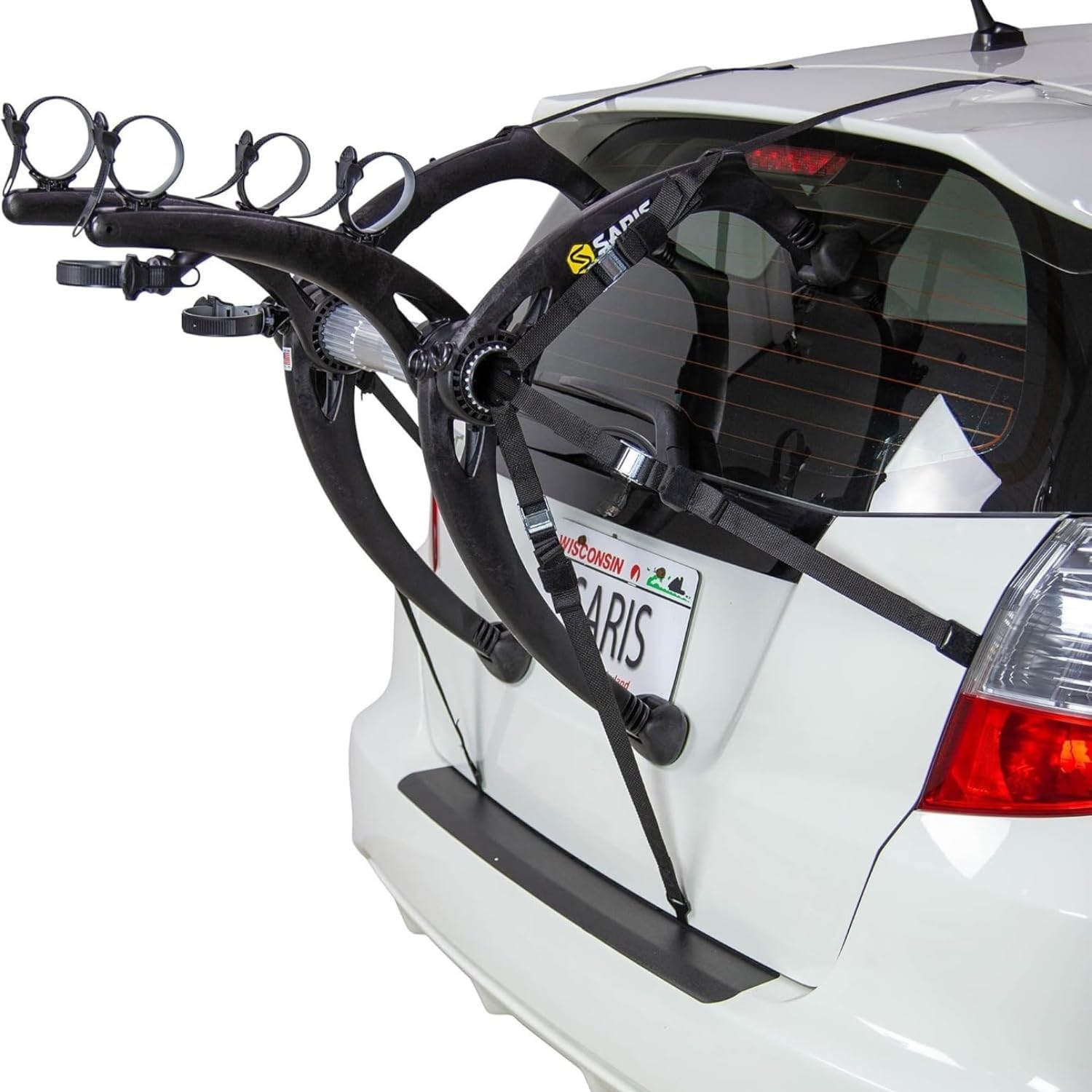
So, this is the Saris Bones EX which is well-known for trunk-mounted bike rack and it is light and easy to carry.
Even, you can install it with the straps and hooks and it is designed to reduce the contact points so it is less likely to rub paint when it properly fit and tightened in the correct way.
As well as, it comes with the injection-molded arms and legs that keeps the rack solid for years to come and there’s rubber feet that articulate to protect the paint as well.
#5. Allen
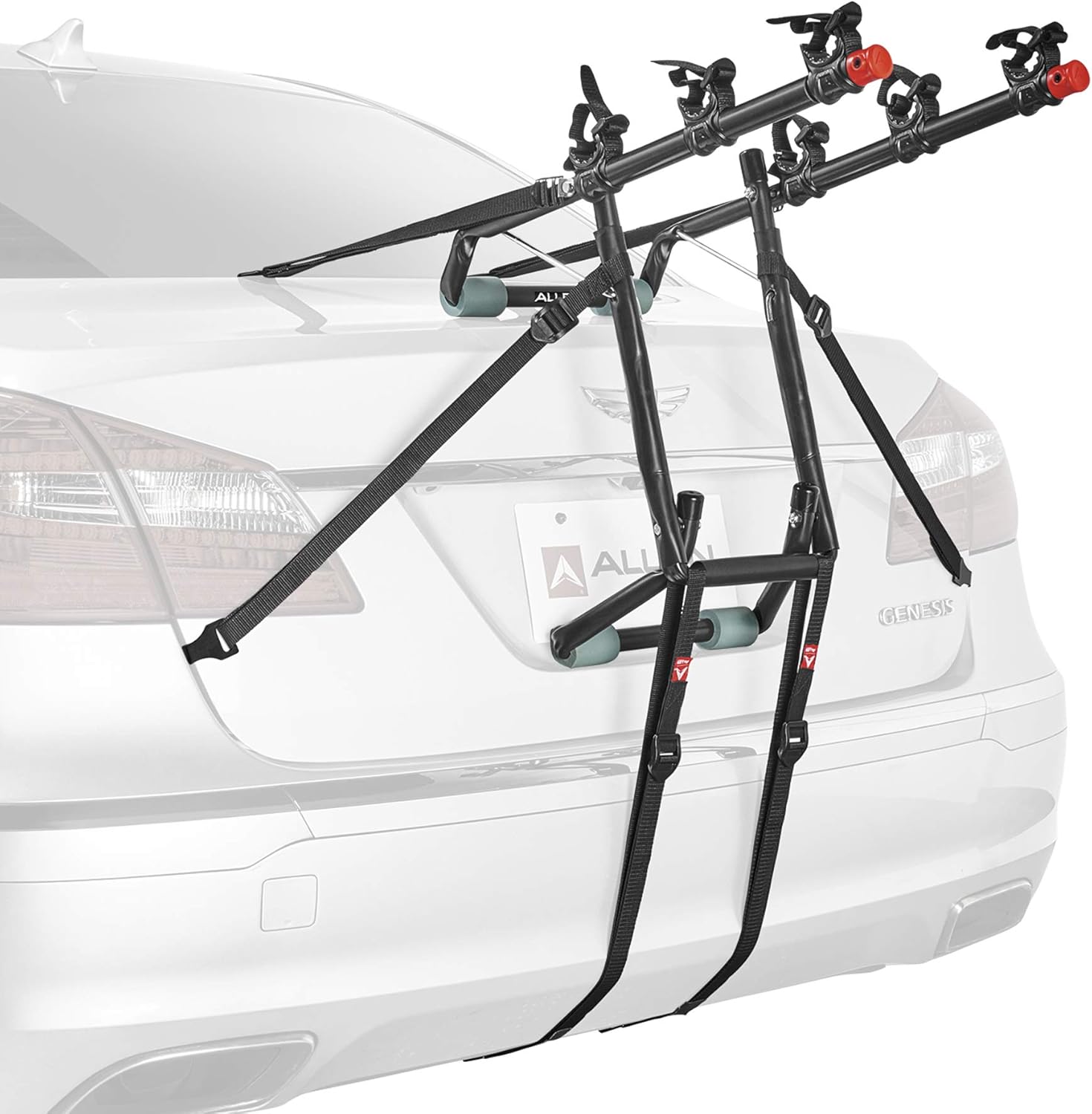
Now, with this Allen Sports trunk bike rack you can carry 3 bikes in one go, also alloy steel is used to give it durability.
Yes, you can also fold it fully flat for easy storage, even it has padded lower frame that literally protects vehicle, and left and right side straps are available to make it truly stable during drive.
Not only this, you can tie-down individual bicycles to protect them.
Really Important Buying Considerations That You Should Keep In Mind
1. Weight Capacity and Bike Type
Understanding the weight limit is one of the most important considerations when choosing a bike rack for your Honda CR-V, as different bikes can weigh significantly.
A standard road or hybrid bike can weigh around 20 to 30 pounds, while a mountain bike can weigh 30 to 45 pounds.
Electric bikes are typically heavier and can easily reach 50 to 70 pounds or more, depending on the battery and frame material.
Fat tire bikes also weigh more due to their larger wheels, wider frames, and stronger components.
Not all racks are designed to hold heavy bikes, and using a rack with a lower rating could damage the bike, rack, or hitch connection.
Always match the rack’s weight rating to the heaviest bike you plan to transport and also check how many bikes the rack is designed for.
If you have a bike with a carbon frame, look for a rack that secures the bike to the wheels rather than clamping it to the frame, as carbon can be sensitive to pressure.
2. Tilt and Fold Feature for Hatch Access
Tilt and fold features are essential for easy access, specially in the Honda CR-V, where the rear hatch is frequently used.
The tilt feature allows the rack to be angled backward so that the rear door can be opened even with a bike attached.
This is helpful when loading cargo, groceries, or camping gear on trips.
The folding feature helps reduce the length of the rack when no bike is attached, eliminating unnecessary extension behind the vehicle and making parking easier.
Without these features, you might have to remove the rack every time you need to open the rear hatch, which can be both time-consuming and frustrating.
3. Locking Mechanisms for Bike and Rack Security
Security is important because bike racks keep valuables outside the vehicle, making them vulnerable to theft if they’re not locked.
Many racks come with built-in locks that secure the rack to the vehicle and the bike to the rack.
If a rack doesn’t have a lock, consider installing a lock to prevent the bike and rack from being removed without a key.
A secure locking system should have a tight connection at the hitch to prevent the bike from moving and a locking arm or cable to prevent the bike from being removed unattended, such as during a stop during a trip or when the vehicle is parked overnight.
4. Build Quality and Weather Protection
The material used in a rack determines its longevity and its resistance to weather, road vibrations, and repeated loading.
Steel and aluminum are common materials, with aluminum being lightweight and rust-resistant.
A powder-coated finish or anti-corrosion treatment helps protect the rack from rain, dirt, and winter road salt.
Well-built racks also use strong welds, durable straps, and stable wheel trays, which help prevent movement or damage during long journeys.
A sturdy rack also protects the vehicle, preventing scratches, dents, or paint peeling due to shifting or poor support.
As well as, corrosion tests actually shows that the pre-anodized aluminum with a quality powder coat or 316 stainless steel lasts far longer in salt and wet conditions more than the untreated steel, which is why it directly reduces the risk of the structural weaking or weld failure over the period of time.[¹]
5. Ease of Storage and Transport
A bike rack should not only perform well during travel, but also be easy to store when not in use.
Some racks fold down to a compact size, making them easy to store in a garage or closet.
Heavier platform racks may require more storage space and, due to their weight, can be difficult to remove and transport.
Lightweight trunk or roof racks are easy to lift and carry, but they may not be as stable for heavier bikes.
The right choice depends on how often you’ll be removing the rack and how much storage space you have in your home.
Thinking about storage in advance helps ensure the rack is practical for everyday use.
How to Install Bike Racks for Honda CRV
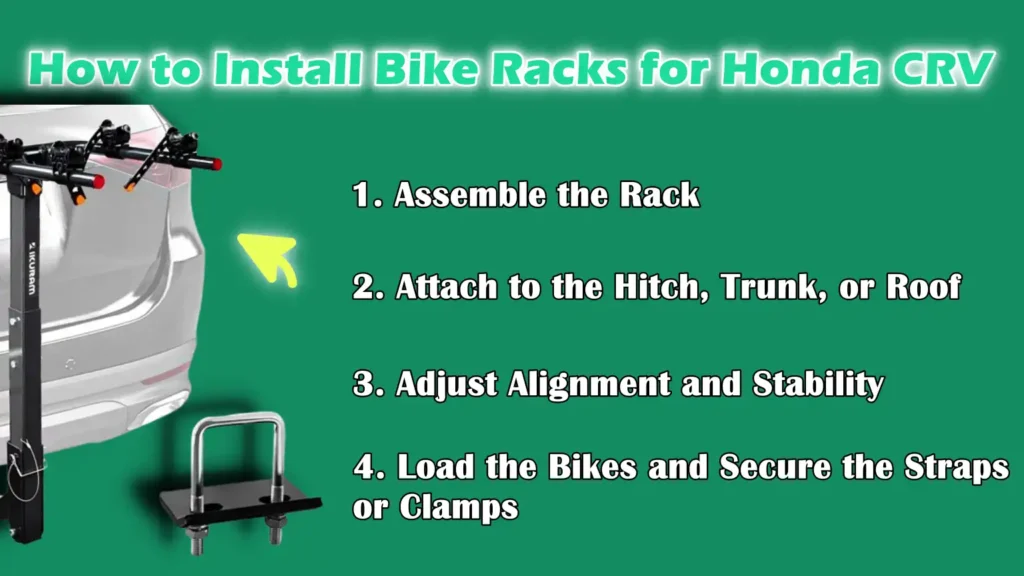
1. Assemble the Rack
The first step in installation is to assemble the bike rack according to the manufacturer’s instructions.
Most racks come partially assembled, but some parts may need to be added, such as wheel trays, support arms, straps, or locking pins.
It’s important to follow the instructions carefully as parts and connection methods may vary between brands and models.
During assembly, ensure all screws, bolts, and attachment points are securely tightened, but not too tight, specially if the rack contains plastic or lightweight aluminum parts.
This step ensures the rack’s base is sturdy before installing it on the Honda CR-V and helps prevent parts from shifting or loosening during travel.
2. Attach to the Hitch, Trunk, or Roof
Once the rack is assembled, it’s time to attach it to the hitch receiver, trunk mounting point, or roof rail, depending on the type of rack you’re using.
If it’s a hitch-mounted rack, slide the rack arm into the hitch receiver and secure it with a locking pin or anti-wobble mechanism.
For a trunk rack, wrap the straps around the trunk door and securely clip them in place, ensuring the pads rest flat on the vehicle’s surface.
For a roof rack, attach the rack to the roof bars or crossbars and tighten all clamps or mounting brackets.
Take your time with this step, as proper connections ensure the rack remains secure, even at highway speeds or on rough roads.
3. Adjust Alignment and Stability
After installing the rack, check its alignment and stability before placing any bikes on it.
The rack should be straight, centered, and level with the vehicle.
You should check for movement by gently shaking the rack with your hands.
A little movement is normal, but the rack should not wobble or jiggle excessively.
If it feels loose, tighten the hitch knob, screws, straps, or clamps until the rack feels secure.
For roof racks, also ensure there is enough space above the vehicle so it doesn’t hit low areas like garages or parking spaces.
Testing stability now will prevent problems later when the bikes’ weight increases.
4. Load the Bikes and Secure the Straps or Clamps
Once the rack is stable, you can begin loading the bikes.
If placing multiple bikes on the rack, place the heaviest bike first, as this helps balance the weight.
Lift the bike onto the rack and position it so that the wheels fit into the correct tray or line up with the frame holding arms.
Then secure the bike using built-in features like straps, wheel holders, clamps, or locking arms.
Make sure all contact points are tight enough to prevent movement, but avoid applying excessive pressure to delicate parts like carbon frames.
Once the bikes are secured, gently shake each one to check for movement.
If any of the bikes wobble or tilt, tighten the straps or clamps until everything feels firm, stable, and safe to ride.
Read More:
How to Do Safety Verification of Your Honda CRV Bike Rack
1. Wobble Test
Once the rack and bikes are fully installed, the wobble test is an important step to ensure everything is secure before driving.
To check, gently push and pull the bike rack from different angles, including from side to side and up and down.
The rack may show some natural movement, specially on hitch-mounted racks, but it shouldn’t feel excessively loose or wobbly.
If the rack wobbles or moves when pressure is applied, it means something needs tightening.
This test helps prevent vibrations while driving, reduces stress on the hitch or mounting points, and prevents bikes from hitting or rubbing against each other or the vehicle.
2. Strap Tension
Once the rack itself feels secure, check the straps, clamps, or locking arms that hold the bikes in place.
The straps should feel strong, tight, and sturdy to the touch, without any looseness or movement.
If the rack uses wheel straps, make sure they fit snugly around the wheel and don’t slip out of place.
If the rack has frame clamps or locking arms, make sure they are tight enough to prevent the bike from moving, but not so tight that they put excessive pressure on sensitive materials like carbon fiber.
Proper strap tension helps prevent scratches, bike contact, or movement that could damage the bicycle or CR-V when driving over speed bumps, potholes, or uneven surfaces.
3. Check Rear Visibility
The last part of the safety process is to check visibility and clearance behind the Honda CR-V.
Many bike racks, specially those mounted on the hitch or trunk, can slightly block the backup camera or taillight when the bike is loaded.
Before driving, take a moment to check that the camera view is clear enough to use and that brake lights and turn signals are still visible from a safe distance.
If the view is significantly blocked, consider adjusting the position of the bike or rack, or relying more on the mirrors when reversing.
Ensuring visibility keeps you, your passengers, and others on the road safe, and it prevents accidents caused by blind spots or hidden signals.
How to Maintain Bike Racks for Honda CRV
1. Cleaning and Rust Prevention
Regular cleaning is essential to keeping a bike rack strong, safe, and long-lasting.
Over time, dirt, mud, winter road salt, and moisture can gradually accumulate on the rack, causing rust or weakening of metal parts.
To prevent this, gently wash the rack with mild soap and water, specially after long rides or after rain or snow.
It’s important to thoroughly dry the rack after cleaning, as trapped moisture is a major cause of rust.
For metal racks, applying a little silicone spray or rust-preventing lubricant to bolts, hinges, and moving joints helps prevent rust and keeps mechanical parts functioning smoothly.
If the rack is made of aluminum or stainless steel, rust is less likely, but cleaning and lubrication ensure it functions and looks its best.
2. Strap and Bolt Tightening Schedule
Bike racks experience vibrations during driving, even if they’re properly installed.
Over time, straps, bolts, and clamps can loosen slightly, specially after long drives, rough roads, or frequent loading and unloading of bikes.
To avoid unexpected malfunctions or unsafe situations, it’s helpful to establish a simple tightening routine.
Before every trip, check that the bolts are properly installed and that the straps feel tight and secure.
Every few months or after several long trips, check all joints, hinge points, and fastening systems to ensure nothing is worn or stretched.
A simple tightening check takes just a few minutes but can prevent accidents and extend the life of the rack.
3. Safety Check for Long Trips
For long-distance road trips, a quick safety check during a fuel stop or rest break helps ensure nothing has shifted or become loose while driving.
Weather conditions, such as strong winds or heavy rain, and changing road surfaces can cause more movement than is typical during a short city drive.
Gently shake the bikes and rack to ensure no straps are frayed or slipping.
Also, check that the bikes are still in the correct position, without tilting, rubbing, or touching each other.
These minor checks help prevent unexpected problems and keep trips safe and stress-free.
4. Seasonal Storage Tips
When the bike rack won’t be needed for several months, specially during winter or long holidays, proper storage can prevent damage.
Removing the rack from your Honda CR-V prevents unnecessary exposure to moisture, sun, snow, ice, or road salt, which can gradually weaken the material.
Ensure the rack is thoroughly cleaned and dried before storing to prevent mold or rust.
It’s best to store it in a dry indoor location, such as a garage, basement, or storage shelf.
Covering it with a cloth or plastic cover can help protect the straps from sunlight and dust.
When warmer months return, lightly lubricate the moving parts and check the bolts and straps before reinstalling it.
This routine keeps the rack in good condition and ready for safe use year after year.
Conclusion – Best Bike Racks for Honda CRV
It is really important to keep your bicycles secure, which is why you should always have to chooce the fully compatible and high quality bike rack for Honda CRV so that the journey can be truly effortless, predicatbale and enjoyable as well.
Each rack style has its own advantages and disadvantages, and the best option depends on your lifestyle and the type of bike you have.
A hitch-mounted rack is specially helpful for heavier bikes, including electric bikes, as it provides more robust support and requires less effort to lift.
A trunk-mounted rack works well for casual riders or short trips because it’s cheaper and doesn’t require a hitch.
A roof-mounted rack keeps the rear of the vehicle open and is great for lighter bikes like road models, although it requires the bike to be elevated and may be more exposed to wind while driving.
Understanding these differences helps avoid problems like a blocked rear camera, scratched paint, exceeding the weight limit, or unstable mounting.
The installation process also plays a major role in safety and performance.
Proper setup ensures that the rack doesn’t move, put pressure on the car, or damage the bike.
Checking straps, bolts, and locking systems before and during long trips helps prevent shifting or loosening caused by road vibrations.
Regular maintenance—such as cleaning, tightening parts, and properly storing the rack in the off-season—extends its life and maintains consistent performance.
Over time, these habits save money, prevent repairs, and improve overall reliability.
Choosing a bike rack is more than just a purchase—it’s a long-term investment in convenience, safety, and travel freedom.
With the right rack, your Honda CR-V becomes a reliable companion for cycling adventures, whether you’re riding in the city, exploring trails, or going on long road trips.
A good rack provides peace of mind, helps protect your equipment, and motivates you to spend more time outdoors with friends, family, or on solo rides.
When chosen wisely and well maintained, a bike rack can improve the way you travel with your bike and make your cycling lifestyle easier and more enjoyable for years to come.
Now, you can ask questions in the comment section realted to this one.
Frequently Asked Questions
Q1. What type of bike rack works best for the Honda CR-V?
Answer: Many Honda CR-V owners prefer hitch-mounted racks because they are sturdy, stable, and can handle heavier bikes, including electric bikes. Hitch racks also reduce the lifting height, making loading easier. However, if your vehicle doesn’t already have a hitch installed, a trunk-mounted rack or roof rack may work. A trunk rack is more budget-friendly, while a roof rack keeps the rear area free and doesn’t block the backup camera. The best option depends on your needs, budget, bike type, and how often you plan to travel with your bike.
Q2. Do I need to install a hitch to use a bike rack?
Answer: You only need a hitch if you plan to use a hitch-mounted bike rack. Many Honda CR-V models can support a 1.25-inch or 2-inch hitch receiver, but many users prefer the 2-inch size because it’s stronger and more stable. If you don’t want to install a hitch, you can use a trunk-mounted or roof rack instead. These don’t require any permanent modifications to the car.
Q3. Will bike racks block the Honda CR-V’s rear camera?
Answer: Some racks, specially hitch-mounted and trunk-mounted models, may slightly block the backup camera when a bike is loaded. Without a bike, most hitch racks don’t block the camera, but this depends on the design and size. Roof-mounted racks don’t affect the camera’s view at all. It’s always a good idea to test the camera after installation to see how much visibility is reduced before driving.
Q4. Can the Honda CR-V carry an electric bike?
Answer: Yes, the Honda CR-V can carry electric bikes, but you need to choose a rack that can handle their weight. Many electric bikes weigh between 50 and 70 pounds, and not all racks are designed for that load. A hitch-mounted platform rack is generally the safest and most stable option for electric bikes. It’s also easier to lift an electric bike onto a platform rack than onto a roof rack.
Q5. How many bikes can a Honda CR-V hold on a single rack?
Answer: Most bike racks designed for the Honda CR-V can hold two to four bikes, depending on the rack style and weight limit. Hitch-mounted racks can often hold more bikes and more weight. Trunk-mounted racks can generally hold fewer bikes and have a lower weight capacity. Always check the manufacturer’s limit, as overloading the rack can damage both the rack and the vehicle.
Q6. Will a bike rack scratch my Honda CR-V?
Answer: A properly installed rack shouldn’t damage the car, but trunk-mounted racks have more contact points with the paint and can cause marks over time if the straps are dirty or rubbed. Using protective film, cleaning the contact area, and properly tightening the straps helps prevent scratches. Hitch-mounted and roof racks have less direct contact with the paint, so they’re generally less prone to cosmetic damage.
Q7. Can I leave the bike rack on my CR-V year-round?
Answer: You can leave the bike rack on, but if you don’t plan on using it long-term, it’s best to remove it. Exposure to the weather can cause the straps and bolts to rust, fade, or wear out. Keeping racks on all the time can also slightly reduce fuel efficiency, specially roof racks, as they increase wind resistance. Removing the rack during winter or when not in use for long periods of time extends its life.
Q8. Do bike racks affect fuel economy on a Honda CR-V?
Answer: Yes, some types of racks do. Roof racks draw air and can reduce fuel efficiency more than hitch or trunk racks. Racks without bikes have less impact on fuel economy, but roof systems still affect airflow even when empty. Hitch racks generally have the least impact because they don’t change the shape of the vehicle or block much air.
References:
[1] Investigation of Corrosion Resistance in Powder-Coated 6060 Aluminum Alloy: Effects of Powder Coating and Pre-Anodizing Followed by Powder Coating
https://www.mdpi.com/2075-4701/15/10/1062

Jonathan, the passionate owner of Bicycle Time, brings a lifelong love for bikes and automotive craftsmanship, that reflects into every corner of the shop. With deep passion in both cycling and automotive accessories, Jonathan is more than just an expert.